
Another Internet is Possible
Let the Corporations have THEIRS, and the People have OURS

I am far from what was once called a “computer scientist,” nor did my programming knowledge grow beyond BASIC
but I know generally how the internet works, and I know there can be more than just one set of protocols. The “world wide web” is merely one way of organizing the operation of billions of computers. With unique sets of protocols, we can establish multiple webs. The developers of the www created the means of differentiating the intentions of the host: “.edu” was reserved for education; “.gov” reserved for government, “.org” reserved for nonprofits, and “.com” to let the user know they have entered the capitalist marketplace. At least that was the idea.
A full thirty years down the road, and the www has been “enshittified,” with content created and presented more and more for the sake profit, an increasing number of formerly-free movies, songs, and articles locked behind paywalls, and a multi-trillion dollar industry in data collection, analyses, and sales, fed by social media.
Capital now makes profit off basic human social interactions.
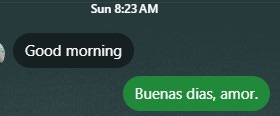
Wishing someone a “good morning” is now worth money to a third party.
But I recall in the earliest days of the www more than a few tech pioneers shared a vision of vast amounts of information—everything that would come to be digitized from the pre-internet world, at least—would be available to everyone, everywhere, who merely had a connection.
Shawn Fanning was a student at Northeastern University when the file-sharing program he created, Napster, revolutionized music distribution. In the earliest days, you could simply think of a song title, search, and if there were any computers on the network that had a copy of the file, start downloading.
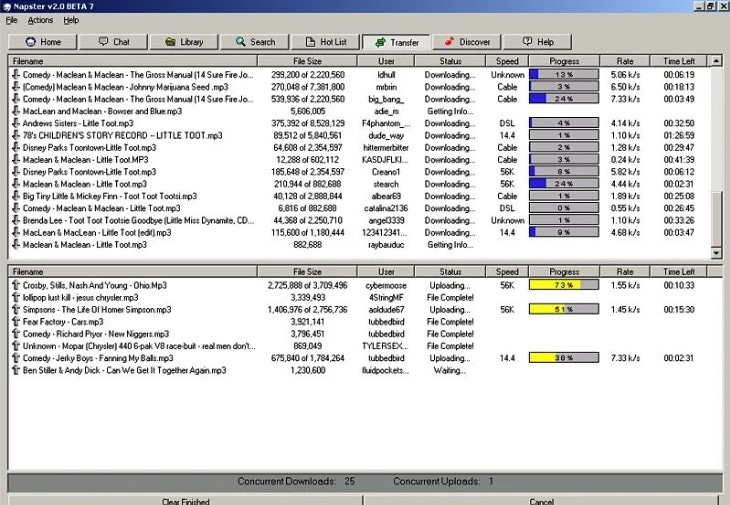
My academic department at the university had something like 1,600 songs on the administrator’s desktop computer before the first piracy lawsuits came down.
The new technology and the brand new formats for data have caused recurring labor disputes, with recording and video production companies working under the (absent) letter of their contract and distributing their content without paying royalties. Of course, as the consumers copied this very same content in these very same media the companies had said kept them from having to pay those who produced the music or film, the companies went after the consumers hard.
We are not going to see a de-commercialization of the www. It’s unimaginable. Once the for-profit model is introduced, we know of no antidote other than the failure to profit. But failing to profit after orienting for-profit kills the institution, regardless of its origins or the intentions behind it.
The shortcoming of capitalism is that it is incapable of producing anything that is not profitable for very long, and there are lots of things—saying good morning, for one—that are necessary for social cohesion but were never before made profit-making.
If America’s government was not directly bought in 2024 by Thiel and Musk I would suggest that it create a public alternative to privately-held, for-profit social media; kind of like how we have a public broadcasting system. Removing the profit motive will remove motivation to monetize subscribers’ data, or to fill their feed with more advertising than friends’ posts. With those two having bought the presidency and the vice-presidency, however, we are not going to see social media that does not exploit users.
What they mean by “free speech” is their ability to grab your data.
The TikTok controversy is telling in this regard. It has the American ruling class demonizing China for doing exactly what THEY DO. “Oh, my god! SECURITY RISK!!” they squawk, like the average American does not know how ALL our current social media work.
I suspect there’s a good bit of racism behind it (white oligarchs seizing our data is GOOD, somehow?), and calling China “communist” as the foundation for the fear ignores that the Chinese Communist Party is perhaps the largest capitalist corporation on earth. It has a presence in all the industries needed for the maintenance and operation of a 1.3 billion-person social body. They might run the domestic operation as a authoritarian political regime, but once we get into the global markets, the CCP is as capitalist as they come.
I’ve said that Marxists make the best capitalists because they harbor no illusions. China has spent the very same time period (1982 - 2022) the U.S. capitalists were lowering the quality of life in America building a 21st century nation and generally raising the quality of life for Chinese citizens. In 2022, Chinese life expectancy began to exceed U.S. life expectancy.
Instead of this silly game of “shutting down” TikTok if it isn’t “sold” to a different owner (i.e., no longer Chinese), why not clone the program and create a publicly-held version? We know that public options make profit scarcer, and if the non-commercial version is ultimately more user-friendly for the lack of commercialism, people will abandon Communist Platform for American Platform. It just won’t be Capitalist Platform—which is why no politician who relies on big money donations will ever seriously make the proposal. No matter how much it might improve national security or data privacy.
That would be the other tack: Regulate data. The TikTok ban is the ham-handed way of doing this, and politicians are stuck, because once they mention we could just regulate social media datamining out of existence (criminalize it, even), there goes their keep-my-job money.
The internet is the confessional, and just as the Catholic church established hegemony through parish maps and maintained localized control through having Eternal Salvation possible only through telling the church representative ALL YOUR DIRTY SECRETS, Musk, Thiel, Zuckerberg, and their ilk imagine they will become the new Techno-Popes.