
Corruption and Spectacle
Sports leagues seek profits from gamblers and risk integrity when doing so


I think about the cosmic snowball theory. A few million years from now the sun will burn out and lose its gravitational pull. The Earth will turn into a giant snowball and be hurled through space. When that happen it won’t matter if I get this guy out. — Bill “Spaceman” Lee.
My favorite lefthanded baseball philosopher, Bill Lee, gets the details wrong—the sun will expand and take the Earth, whole. In either case, nihilism about a particular at-bat can be a comforting thought when you’re “standing in the middle of a diamond, all alone.”
Coping with the psychological pressures of performance, in an undertaking where nothing matters but performance (“You are what your record says you are,” according to former NFL coach Bill Parcells) is a skill that can be taught and improved upon. Still, even with the calmest demeanor imaginable, performers make mistakes. Coping with the weight of failure, and moving beyond it, is less a skill than a mindset.
To develop a skill, a performer must practice; it must be repeatable. High-pressure performance situations can be simulated, and success may be reinforced. A mistake, however, should not be practiced; they should be eliminated from practice. There is no apparent reason to reinforce failure in a high-pressure situation: Imagine our team is an out from going to the World Series and you only need one strike to end the game. You give up the home run that costs our team the game, and ends our season.
The rewards for success in the commercial North American professional sports can be astronomical. Professional athletes are among the highest-paid laborers in America, along with some actors and musicians, earning millions of dollars across careers typically spanning less than twenty years.
The six-figure minimum salaries for the major professional leagues were thought to offer a buffer against corruption. What an athlete stands to lose for being caught intentionally making mistakes and causing their team’s performance to suffer was thought to be so large that there was no benefit that would outweigh it.
Major League Baseball was notorious for their crackdown on gambling, following the 1919 World Series, where eight members of the Chicago White Sox were found to have accepted money to lose games. Shoeless Joe Jackson was among them, though his statistics from that World Series offered no indication of him throttling his performance.
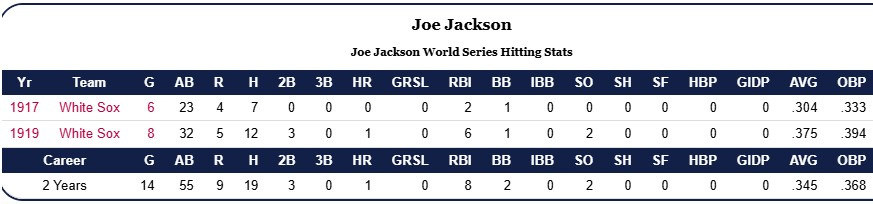
Jackson and the seven others were banned for life from Major League Baseball. Seventy years later, the all-time hits leader, Pete Rose, was also found to have bet on Major League games and was also banned for life. Neither player has been enshrined in the Baseball Hall of Fame in Cooperstown, NY.
Technological changes over the past decades have changed the nature of sports betting, once legal only in Las Vegas and Atlantic City. Today the majority of states allow in-state wagering on a variety of sports competitions—with those in royal blue offering betting through one’s mobile device.
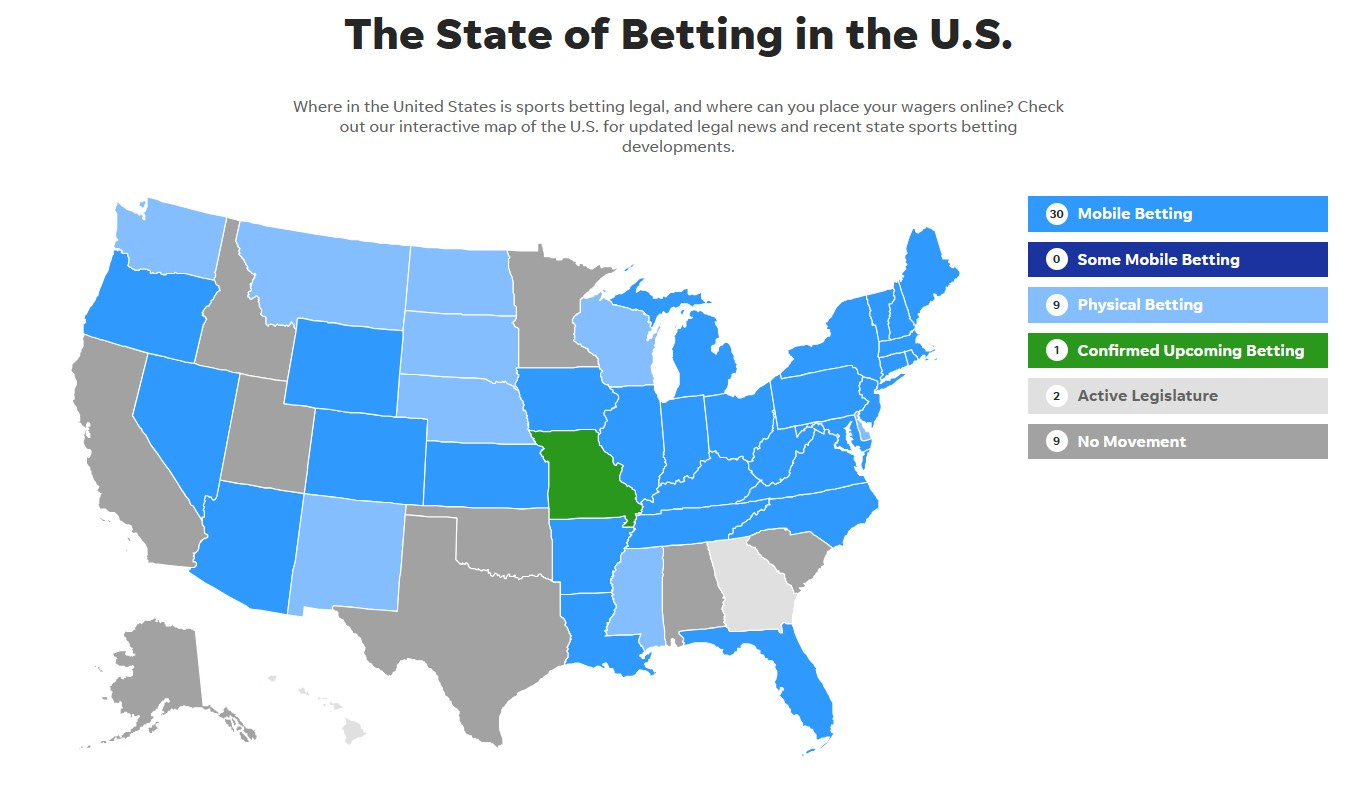
Tying sports betting into a national network of mobile devices offers another degree of surety to book makers. The traditional way of corrupting a sporting event pays best when the odds are long; when one side is strongly favored, the payout for the upset is greatest. The favorite is offered incentive to lose—or, in the case of point-spread betting, to “shave points” from the winning team’s total. When a team is favored to win by 12 or more, the conspirators make sure the lead never gets to be more than 8.
By far, the easiest sporting events to corrupt involve just two competitors, such as a boxing or MMA match. Team sports pose more difficulty; more players mean that each one of them could “carry” their team, so more players need to be involved in the conspiracy to throw games. More conspirators increase the odds of detection.
Another safeguard for the book makers involves the algorithm that sets the odds, which weighs all incoming bets in real time. The traditional method of laying a ton on money on an underdog at the last minute, through a network of underground book makers now throws up red flags. Book makers’ algorithms can and have rejected such bets that would upset the odds with no time for the betting market to recover. In a sense, the book makers are fixing the bets to their own advantage.
This leads to questions of integrity. Are the competitions we are witnessing on the up-and-up? Sociologically, what are the implications of a corrupted sporting competition? As Bill Lee noted, the outcomes of plays and games ultimately make no difference. Sports as cultural practices have meaning, but those meanings are usually as fleeting as the victories and losses. Who suffers, when a team throws a competition?
Those members of the team that did not gain from the fixed outcome are certainly among them. The opponents were cheated of their opportunity to face legitimate competition. The game officials (if not themselves on the take) suffered neither a gain nor a loss. The sporting league can no longer offer a guarantee that the outcomes of their competition are “pure” measures of athletic performance. (The purity of athletic competition itself is a mythos). The fans can still root for outcomes and have their rooting interest satisfied; and if they don’t win, it’s a shame.
The current administration much prefers spectacle over substance. If you can blow something up, do it on camera, and show it to everyone. Was that explosion to the benefit of public health? Who cares? It was a boat, we say they were smuggling drugs, drugs are bad—BOOM! Gunboat drug policy won’t do a thing to reduce lethal overdose, but it sends a message: We don’t give a shit about policy, we just want the show.

Ultimately, it does not matter to most of the public if an athletic exhibition is a competition under traditional framing or if it is a spectacle. Getting down to dollars and cents, the market for spectacle is easier to enter (no legal cartels to challenge), and more lucrative to independent promoters.
Red Bull “extreme athletes” are traditional daredevils, like Evel Knievel, putting on shows to sell caffeinated beverages. Professional wrestling lived in the breach between legitimate sporting competition and dramaturgy until Vince McMahon (husband of current Sec of Education, Linda) was sued and had to testify in a New Jersey court. To protect himself and his company, he gave up the truth—pro wrestling is not and has never been a legitimate sporting competition. The Harlem Globetrotters made basketball into a spectacle, and more recently, the Savannah Bananas have brought a similar show to the game of baseball.
Ultimately, when a sporting competition is corrupted, those who suffer most directly are the gamblers who were not in on the fix. Professional (and amateur) leagues’ concerns about integrity are directly tied to maintaining and growing appeal among gamblers. This is why leagues that once banned players for life now welcome business partnerships with sports bookmakers—it is a traditionally-untapped source of league revenues: Vigorish on their own games.