
Covering Stigma
Mark Epstein says "Bubba" was not Bill Clinton

In the course of my work among marijuana policy reformers and other consensual deviants, Erving Goffman’s Stigma: Notes on the Management of Spoiled Identity has proven to be a useful tool in dissembling motivations and “seeing through” social interactions.
The theory resembles a flowchart:
The world consists of the Normal and the Stigmatized;
The Stigmatized hold at least one of three different types of stigma: Abominations of the Body, Defects of Character, or Tribal;
Stigmas may be obtrusive or innocuous, depending on the interaction;
The Stigmatized are of two types: the Discredited and the Discreditable;
The Discredited must manage interactions, the Discreditable must manage information.

Importantly:
In conclusion, may I repeat that stigma involves not so much a set of concrete individuals who can be separated into two piles, the stigmatized and the normal, as a pervasive two-role social process in which every individual participates in both roles, at least in some connections and in some phases of life. The normal and the stigmatized are not persons but rather perspectives…And since interaction roles are involved, not concrete individuals, it should come as no surprise that in many cases he who is stigmatized in one regard nicely exhibits all the normal prejudices held toward those who are stigmatized in another regard. (137 - 138).
It is as concise a social theory as can be, approachable, and despite outdated terminology and case studies, is a good introduction to Symbolic Interactionism.
Small groups of people who regularly work together develop an industry jargon—hospital orderlies refer to obese patients as “mountains,” restaurant expediters indicate first priority on order preparation by saying “fire,” Maine lobsters are universally called “bugs” by those who make money catching and selling them. Those engaged in below-board dealings do this as well, but to them it is more than insider-talk, it is a means of covering (a concept from Goffman), but also a means of marketing.
Ganja. Hemp. Hanf. Cannabis. Weed. Smoke. Muggles. Mezz. Tea. Gage.
Michoacan. Maui-Wowie. Acapulco Gold. Panama Red.
Purple Haze. Skunk #1. Northern Lights #5. William’s Wonder. Chocolope. Super Silver Haze.
In late September, Oregon and their Cannabis Control Commission decided to ban the use of particular terms when marketing cannabis strains to adults via retail. Their concern being that some of them might be mistaken for other drugs, not that we have a legal LSD market or a legal crack market, but those names have been wiped out. Or that they reference things that might be thought of as fun for children or appealing to kids, such as “Grape Ape,” which was a cartoon that went off the air in 1978.
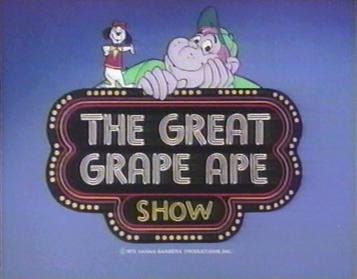
I remember watching it; I was ten.
Which means that the person who is most likely to recognize Grape Ape for being a cartoon character is in their forties or older.
A lot of people are worried and the funniest damn thing is that the codes that are gonna be recognized by children, the adults won’t recognize. Kids use different words than their parents do to describe things that they don’t want their parents to know they’re talking about.
Duh.
So, what we did with regard to naming cannabis, we gave it a whole bunch of different names because it was under prohibition. But if you look at how these names changed over time, first it was ganja and cannabis, the broader hemp type of broader, generic term for the plant. And then we start decarboxylating in the West. We start taking tetrahydrocannabinolic acid, we loosen the carbon dioxide molecule from it, we render it into a psychoactive substance, THC, and that THC then is volatilized; turned into a vapor of a sort, inhaled, crosses through the lungs, the capillaries, crosses the blood brain barrier, goes into the brain, the cannabinoids attach to their natural receptors in the brain and you feel high! (YAY)
And, once we started doing that, people started going to ‘Muggles’ and ‘Mez’ and ‘Tea’ and ‘Reefer.’ Particular references because you couldn’t call it cannabis or hemp because the law was starting to crack down on those things and then, suddenly, in the 1960’s, 30 years after prohibition, there’s this massive explosion of the retail/wholesale global cannabis market. And global importers want to set their products apart from others so they start identifying the regions, the nations the cultures the locations where their plants are coming from.
‘Jamaican Lamb’s Bread’ is different from ‘Durban Poison’ which is different from ‘Thai Stick.’
So these become means by which you identify strains, they become commonly known, they enter into the lexicon. You can find them in Cheech and Chong films, you can find them in comedy albums, National Lampoon and other stuff they talk about in the 1970’s into the 1980’s. And, then we get into the 1980’s and the drug war and all of a sudden the penalties from importing and the risk of importing become much greater, the problems with cultivating outdoors in the domestic United States becomes more difficult with fly-overs that continue to this day, 30 years later.
So, much of our cultivation of cannabis for the sake of producing psychoactive flower tops was moved indoors. And when you move it indoors, now it doesn’—you don’t have what’s known as the ‘Terroir.’ You don’t have the locale, you don’t have the land race, ecology, and climate that you would find in Panama or in Colombia. Instead, you have a grow room and grow room, well, the lights are set on timers, and the humidity is controlled, carbon dioxide levels are controlled, the nutrient drip is controlled. Everything, as much as possible is under human control. So, a grow room in New York City and a grow room in Amsterdam and a grow room in Los Angeles and a grow room in Tokyo and a grow room in, in, wherever, Bali, will more or less produce similar growing conditions. And therefore the genetic traits of whatever of that strain is will be expressed more or less uniformly.
So that’s when we see the names shift into more esoteric things like ‘Williams Wonder’ and ‘Northern Lights’ and ‘Skunk’ and uh, ‘Kush’ and things like that.
Now we’ve moved into another realm where we now have the commercialization of regulated market. The state is now stepping in saying what you may and may not call your product. That’s part of regulation. It’s part of bringing the market above board. and the state’s concern, whether it’s misplaced (as this is) or if it’s legitimate, the state’s concern is real and they have the authority. So, you will not be able to market ‘Green Crack’ or ‘Bruce Banner’ any longer or ‘Grape Ape’ any longer in Oregon under the current rubric. You will be able to rename it; you can ask your budtender, “Hey, you got any Green Crack?’ and the budtender’ll say, “Yeah, sure, we’ve got some of that right over here. It’s ‘GC.’” Right? Just call it the ‘GC.’ Or call it ‘Oregon Ape.’ Because we can’t call it ‘Grape Ape’ on the receipt, we’ll just call it ‘Oregon Ape.’ Everybody knows ‘Oregon Ape’ is just ‘Grape Ape’ given the Oregon name.
So, that’s where we’re moving now. And, of course you have the branding. Willie’s weed, Snoop’s weed, uh, who else? Uh...all of them. Everybody who’s gonna have their own strain, uh, those strains are their own strains of cannabis that could’ve been called something like ‘Hollywood Kush’ but instead it’s name is ‘Snoop’s.’ Or it’s named after Willie or it’s named after Melissa Etheridge or somebody like that.
And that’s where we’re going. We’re gonna see much more direct commercialization of product. These names we’ve come to know and love over the past 25 or 30 years are still gonna stick around in the lexicon, just like ‘Reefer’, just like ‘Tea’, just like ‘Gage’, but they’re not gonna be as common. People are gonna start to become more proprietary with the genetics and you will see, um, perhaps less appealing: Just simply, “This is the Seed Company and this is #22.”
And that’s what you get. You get, you ordered #22. #22 is an indica/sativa hybrid that’s got a high concentration of THC, it’s got about a .2 % CBD, it’s got a nice pinene terpene profile with a lot of myrcene in it. That’s what people are gonna be buying in the future, the differentiation between high-grade cannabis is very small.
Yes, there are connoisseurs and connoisseurs will be able to tell the difference, like with fine wine they can tell the difference between a Malbec and a—pick another—Pinot. They they do it by scent, they do it by appearance, they can do it by texture. Cannabis users, the advanced cannabis users can do that. Most cannabis users will not just. Just like most tobacco users don’t differentiate between, aside from the brand of cigarette. Most beer drinkers don’t really differentiate much besides the style of beer. Most people who consume other products; organic, agricultural products don’t really differentiate between this apple and that apple in any grave degree.
It either gets you high or it doesn’t.
All of which to bring me to this point:
Mark Epstein, Jeffrey Epstein’s brother and the author of the line “Ask Steve Bannon if Putin has the photos of Trump blowing Bubba,” has issued a clarification of a sort where he denies that “Bubba” refers to Bill Clinton.
Some observers have pointed out Epstein’s clarification does not deny “Trump blowing Bubba” happened. True.
I wonder if the Epstein brothers had an insider term for “cocaine.”