
Data Points
Information and social caste formation

People are generally familiar with surveys capturing demographic measures: age, sex, race, place of residence, education level, et cetera. Along with the “demos” social researchers design the instrument (the form that is filled out) to gather social information: beliefs, practices, opinions, relationships, and such.
Our elections are surveys, which were the cutting-edge means of conducting social research, at the time the Constitution was written. Prior to the advent of mechanical counters (punch cards, scanners) this data was processed by hand. We counted votes, tallied them on paper, and produced results.
The mechanisms by which votes are tallied have always come under scrutiny, because we cannot trust each other. We all know the machines don’t have the will to lie and cannot produce results in any way other than those they have been programmed to do so. Mechanical or digital, these objects themselves are not of concern.
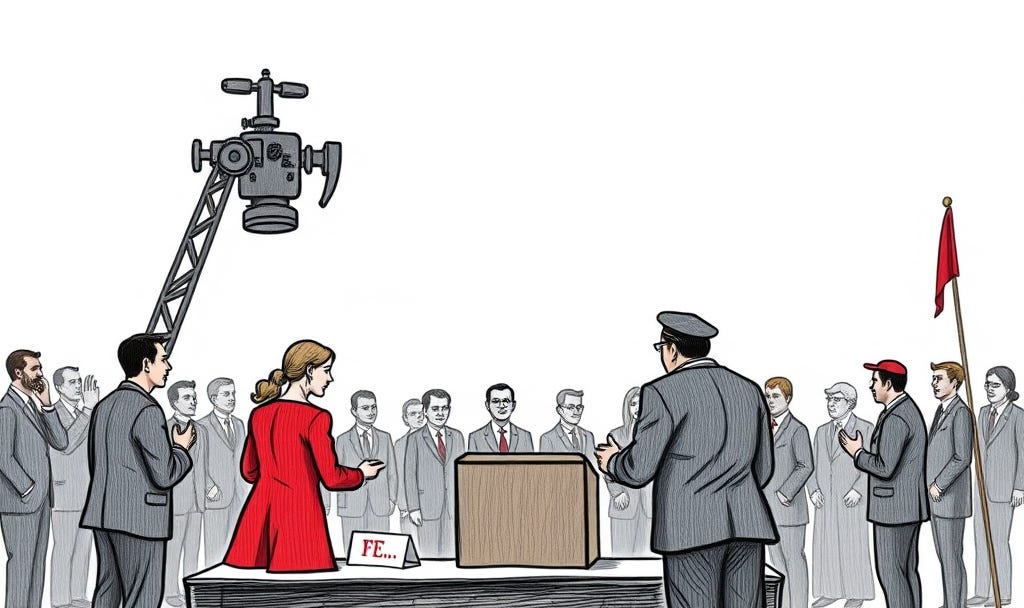
It was decided, in principle, that majority rules in elections. Who may vote, how much those votes may each weigh, and what counts as a vote are extraneous to this first rule. Philosopher John Rawls postulated that in any logically-ordered rule system, the first rule is the most important, because all other rules must follow it, and thus all practices within the rule system.
The majority rules. Every bit of voter fraud, gerrymandering, election interference, and other corruption of the electoral process recognizes the first rule and holds it sacrosanct. By limiting who may vote (or whose votes are counted) a minority can rule, by winning the majority in the election.
American elections were the original information wars. The battles fought over the internet and through commercial media in our time are far from new.
What fundamentally is new is the frequency of collection, the volume and diversity of information, the speed by which it is processed, and what entities are in control of that information.
We built a sorting machine and have rendered the world into data points to be sorted. How small is a data point? It is any discernable delta (change) in the research subject’s status. Any.
When a hundred different measurements (location, web activities, communications—and their contents, to the word—purchases, photos and their content) are being undertaken, tens of thousands of data points will be generated in a day.
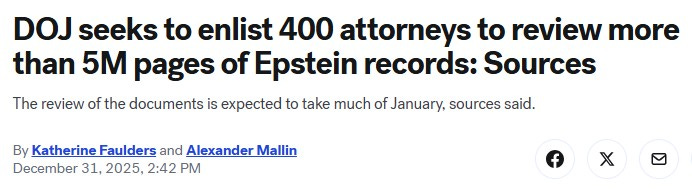
This is how the FBI generated what is now estimated to be over 5.2 million additional “pages” in the Epstein Files.
This should terrify anyone concerned with privacy. Not because the government obtained these records—he was a once-convicted, twice arrested sex trafficker with thousands of victims, after all—but from where most of these records were generated. If 21st century life is mediated through the internet, then one has no choice but to assent to the EULA, no matter what it says. Sure, one can still utilize the internet through public means, but one cannot operate on any platform without an account—which cannot be obtained without crying “Uncle!” to a private corporation that will begin creating a personal data file.
Many of the protections against state intrusions must be “voluntarily” surrendered to the corporation, which uses them to create a caste system of those who produce data and those who capture it.
It is astounding to think there could be 5 million pages of information that could be compiled by a government agency about a person. We each produce more data than we are able to recount. Our lives have all been made larger than ourselves—our sociality captured and rendered back to us in immensity.
And all of it traces back to the social research method we chose to employ, as our form of self-governance. We needed to publicly gather and tally data. We have made it so that information has a value, and the source of that information—that person who produced it—has no claim upon it.
The United States needed court orders to seize Jeffrey Epstein’s information, and most of that data came not from his premises, but from the corporations he contracted with in order to communicate with others.
Correction: Until 10 a.m. EST 1/1/2026, Jeffrey Epstein was misidentified as “twice convicted” for child sex trafficking. He was only convicted once. Oops, my bad.