
Denaturing Cannabis
Commodification kills culture

Nature produced cannabis. To our best understanding, the species originated on the Indian subcontinent and evolved into three primary subspecies, termed "Sativa," "Indica," and "Ruderalis," as it spread throughout Asia and the rest of the world. Each subspecies evolving and adapting to different geographical and ecological conditions. Neither plants nor the environments that produce them have intentions, but develop complementary relationships that may make it look like there was a design. The evolutionary reality is, plants with genomic and phenomic qualities that make them better able to reproduce, will outpace their cousins that lack those qualities.
Sativa developed narrow, lighter green fan leaves and buds that were thin and somewhat stringy. Sativa flowers took a long time to mature, over 10 weeks, and the plants grew tall in their vegetative stage. For a plant native to the tropics and subtropics, where sunlight is consistently strong, daylight is always close to 12 hours long, and it rains everyday, a plant that allows air to circulate will less likely suffer mold. Tropical sunlight does not require the plant to produce as much chlorophyll.
Indica developed broader, dark green fan leaves and buds that are dense, chunky, and mature in as little as 8 weeks. Indica plants were shorter and stouter, growing out as much as up. Indica thrive around the 40th parallel
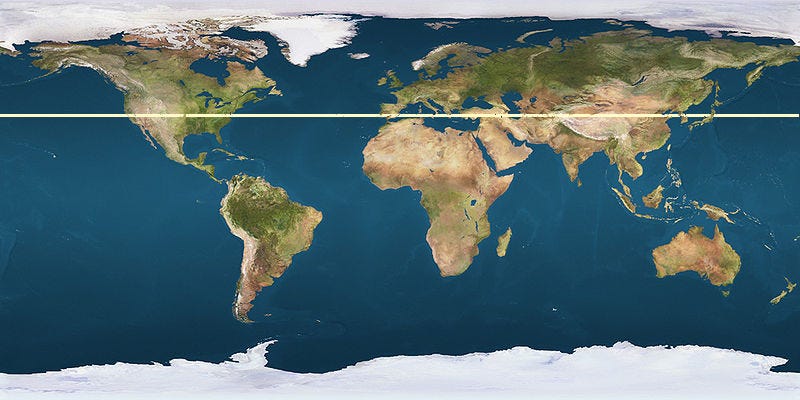
with greater leaf surface and more chlorophyll, and faster-maturing because the stretch between the first day of fall and the first killing frost can be short. This combination of latitude and temperate autumns make the Pacific Northwest an ideal location for outdoor growth. Those of us in New England play the outdoor cultivator's lottery every October—where hurricanes, droughts, and snowfall are all possible during flowering.
Ruderalis is the funky cousin, the shortest, darkest green, and the one that flowers on its own time schedule, regardless of the light cycle. Ruderalis is from north of the 55th parallel, where daylight becomes scarce quickly. Ruderalis also produces very little THC-a, but can produce significant concentrations of CBD-a.
Without human intervention, these subspecies would be localized and easily identifiable. However, as cannabis is a very useful plant, it became one of the first to be domesticated by the earliest agricultural societies. Humans began to learn how to cultivate the plant for desired products; fiber and seed to start. There is nothing intrinsic to cannabis that would guide people to decarboxylating it prior to consumption, and without decarboxylation we would never have discovered how to use it to get high.
Getting high, then, is a fundamentally social act. Everyone who has become a marijuana user has learned from others what need be done to get high. Getting high is such a pleasurable activity that people have risked jobs, jail, and other social stigmas, for the opportunity to be so.
But getting high from cannabis radically changed the relationship between people and the plant. The maturation of the global (prohibited) cannabis market in the 1960's began to bring genetic crosses among 'land races' by breeders. Imported stocks would regularly contain seeds, which daring growers (or careless college students) would plant. Outdoor crops would be unintentionally crossed in some cases, giving rise to genetic combinations that would not have otherwise occurred, without human activity.
By the time Reagan declared his Drug War, American breeders and Dutch growers were already doing most of their work indoors, under HID lighting. The disadvantages of outdoor cultivation (pests, herbivores, travel to & from, inclement weather, pot thieves & police) were eliminated in the case of indoor cultivation. The ability to isolate genetics, to avoid cross-pollination with your neighbor's grow, combined with a burgeoning market for rapid-maturing, heavy sinsemilla flowers led breeders to blend Sativa and Indica lineages. Cannabis Ruderalis was incorporated into the profiles of some cultivars for the auto-flowering effect, despite ruderalis' cutting the THC-a potency from its breeding partner.
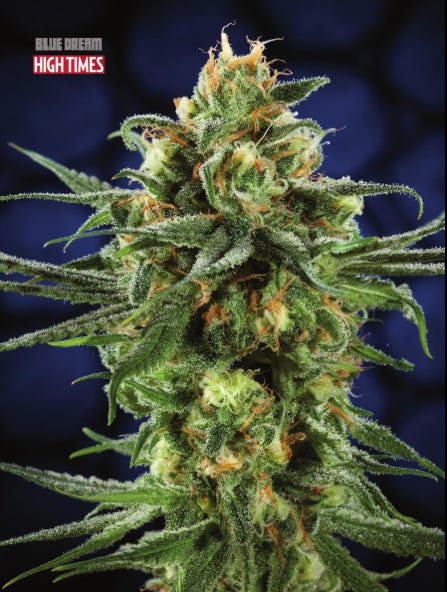
With the emerging legal cannabis market, commercial growers will continue to intermingle Sativa, Indica, and Ruderalis genetics, in search of the next "Blue Dream," a strain originally stabilized by DJ Short in the very early 2000’s that matures rapidly, produces flowers prodigiously, and resists rot.
In the Modern era, cannabis has been cultivated for profit, but a global prohibition kept restraints on the McDonaldization of cannabis products. With legalization and time, we will see breeding for the sake of producing more profitable cannabis, as McDonalds maximized the profitability of the hamburger product. George Ritzer has shown that prioritizing efficiency, calculability, predictability, and control in the product and the process has bleed from the fast food industry to a plethora of consumer goods and services.
The Big Mac is a blind item, purchased without prior inspection. Much cannabis retail is arranged in the same way, with state laws sometimes requiring sealed, opaque packaging of flowers and other products. There was an epochal overlap as cannabis retailers adopted online pre-ordering and automated, in-store kiosks at the same time McDonalds and others began automating their ordering processes. Some states allow cannabis vending machines inside stores, reducing the need for employees. The budtender, once considered a necessary “guide” to peoples’ cannabis journey, is being replaced by AI.
What was once an intrinsically cultural learning experience, knowing where to find marijuana, and how to decarboxylate THC-a to get high, is featuring less and less human interaction. This should be readily perceivable by anyone in a legal state with experience buying weed and getting high under prohibition. It is more than symbolic, I think, that the first permissible form of cannabis use was medicinal. Under scientific medicine, drug use is individualized to the patient. If we pay attention, we can see a de-socialization of much of the process that built the marijuana-user identity group of just over a decade ago.
If you have not already, please do subscribe. It’s free, though paid subscriptions are most appreciated and sustain this public sociology for just $5 a month or $50 a year.