
Ethnographic Access
We cannot build a methodology from randomness, but we do

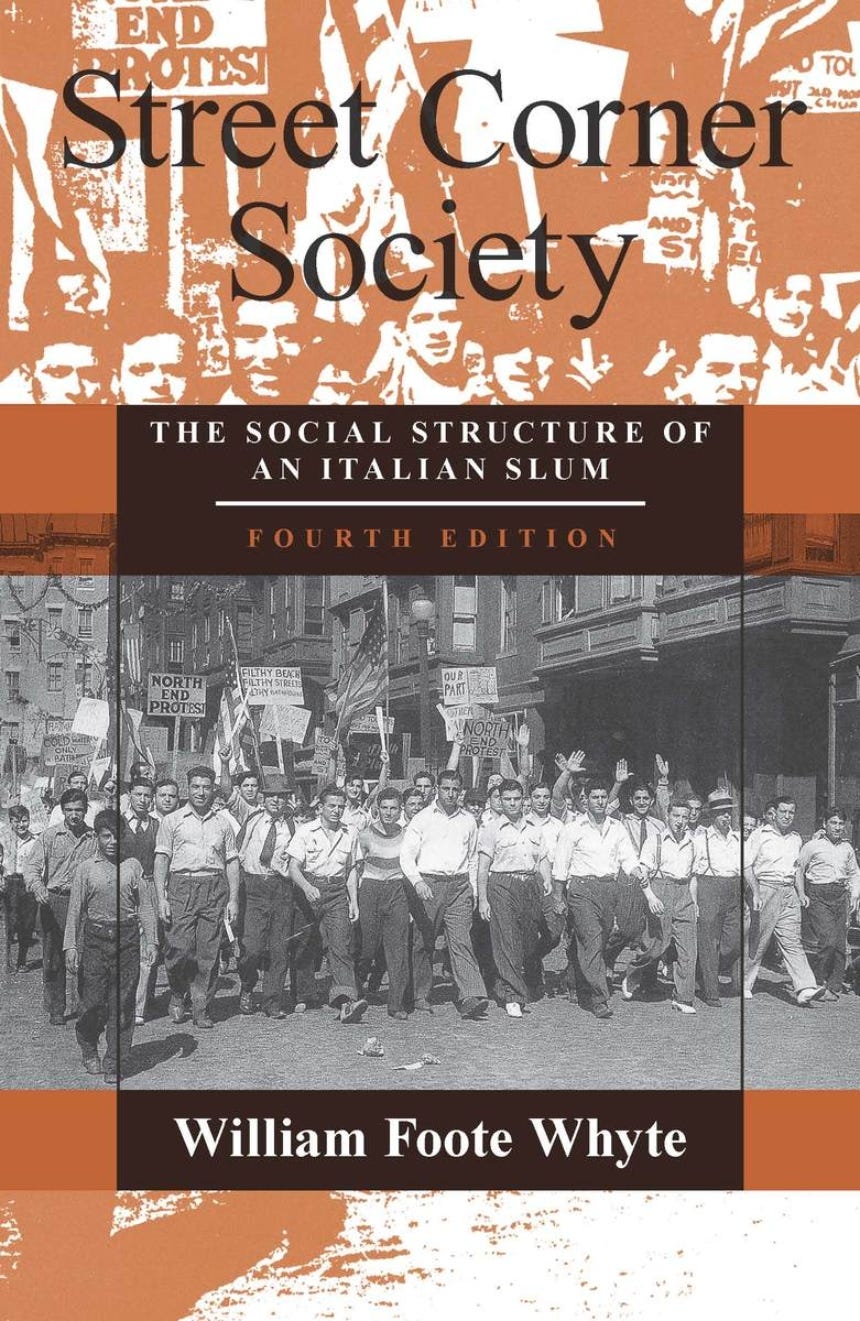
Every ethnographer doing work with marginalized, criminalized populations needs an insider with status, and who trusts them enough, to gain access. Street Corner Society by William Foote Whyte provided the canonical example of “Doc,” Whyte’s primary contact in and among the criminals he was studying in Boston’s North End.
“Boston!” happened to be the name Jim Matheissen called out to me, the morning of August 18, 2001, as he spotted me walking through Myrtle Edwards Park in Seattle. We had met the prior afternoon, and in our conversation I explained I was in town to do field observations for my dissertation on the legalization movement. “Far out,” he had replied, “Come see me tomorrow and I will take care of you.”
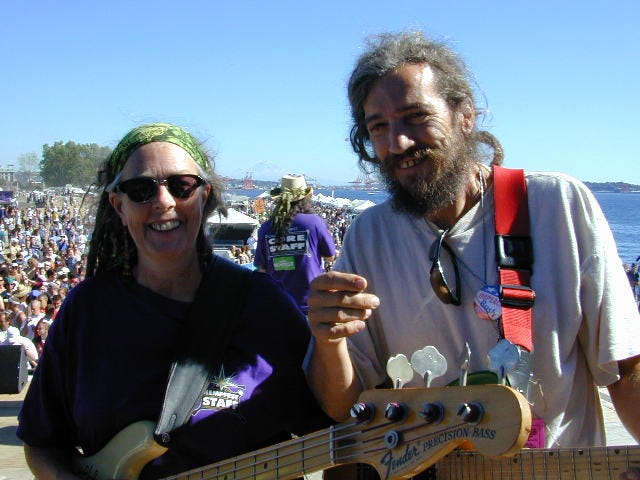
I took it to be a polite gesture without much behind it, and I was not searching for him that morning. He called me over and signed me up as a volunteer, handing me a red All-Access pass, “You’re with me.”
“Cool,” I said, “What do you want me to do?” While I had a field of study, a setting, and I was beginning to amass a collection of subjects, ethnography is largely unplanned and requires spontaneous adaptation to new situations. I had not planned to spend time as an official volunteer (and had I signed up to do so independently, I never would have been given an All-Access pass), but I could gain access (no pun intended) to other insiders simply by being assigned to a task or station, that day.
“Have FUN, man.”
Jim had no expectations of me. He was assisting a film crew in the production of No Prison for Pot, a documentary of the 2001 Seattle Hempfest, as well as performing—neither of which I could have helped with at that time.
That “miracle” (a gifted ticket to a Grateful Dead show was called a “miracle,” after the band’s song I Need a Miracle) exposed me to what Erving Goffman called “the back places,” where my data pool got far deeper and my understanding of the movement and its mobilizations changed dramatically. I also got to first know the tribe of about 100 people that I would, in the ensuing years, come to identify as my own.
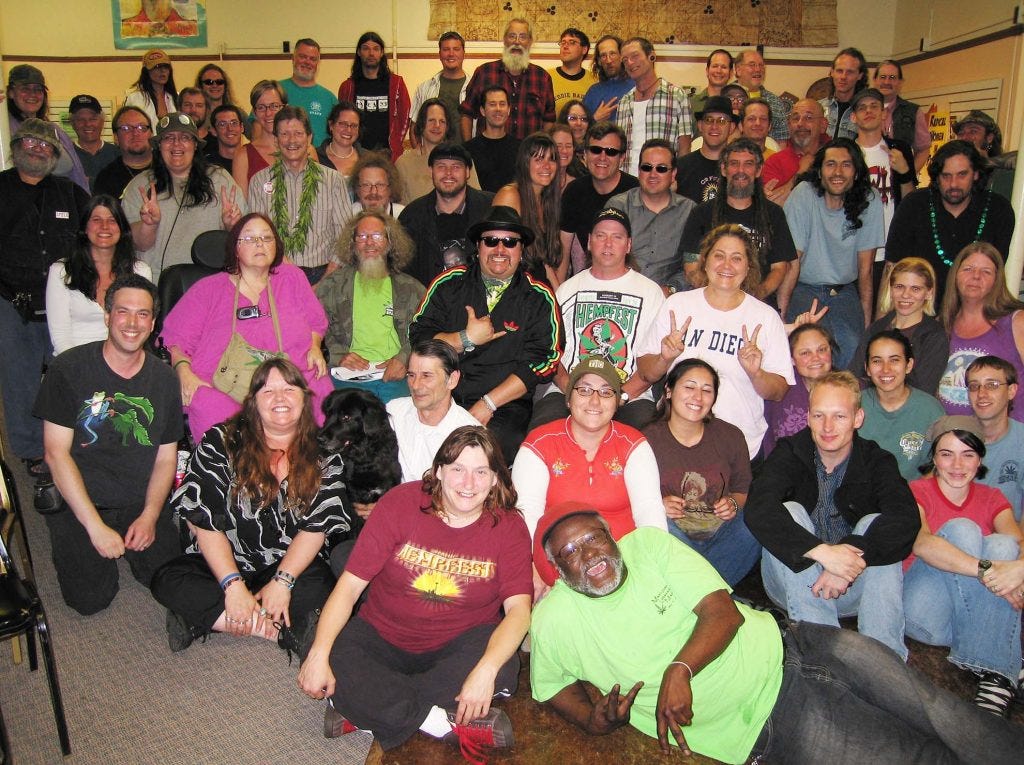
Jim was Doc, for my connection to Seattle Hempfest, and I learned this morning that he passed away yesterday (5/2/2023). His simple act of kindness had a profound effect on my life.