Fighting Above One's Weight
Desperate times call for desperate measures

“ln a sluggish economy, never, ever fuck with another man’s livelihood.” — Guido the Pimp. Risky Business (1983).
After posting a decade-long record of 2 wins and 22 losses in matters of state cannabis legalization, Kevin Sabet has decided to take a couple steps up in weight class.
Anyone familiar with fighting sports knows a fully-grown fighter moving up in weight class poses a huge challenge. Most fighters keep their weight as low as they can manage, for the sake of just qualifying at the maximum weight for their division. A fighter stepping up one weight class is meeting opponents who have been fighting at 7 - 10 pounds heavier weights, who have greater mass and strength, and longer limbs.
Moving up more than one weight class puts the newcomer at an even greater disadvantage, unless they were able to add 14 pounds of muscle and an inch to their arms’ length since their last fight.
One of the personality characteristics common among the Old School marijuana policy reformers is they were proud deviants who spoke up when they believed they had been wronged. They divided the world into those who supported legalization and those who either opposed it or appeared indifferent to what they knew to be injustice.
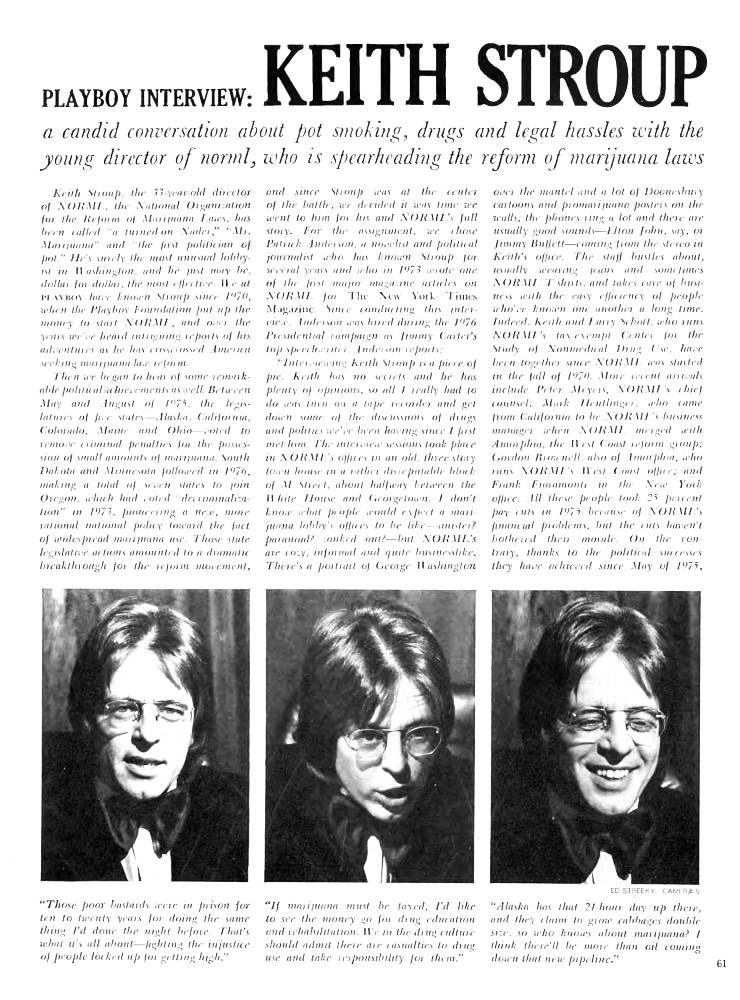
While there was a sliver of reform activists who had either never used marijuana or who had merely tried it out of curiosity—fiscal conservatives such as William F. Buckley, Jr. and George Will or Libertarians such as former NORML board member David Boaz—most all of the vocal reformers were themselves big fans of the herb and regularly consumed it.
The people I first met and began working with on marijuana policy reform projects were committed to the plant as well as ideals of personal freedom, liberty, socialism, or anti-fascism. There was an entrepreneurial core to U.S. marijuana culture under prohibition—members had to not only produce and distribute the supply through a series of small businesses, but the “straight” work leading reform activists engaged was similarly self-directed.
Sociologists talk of “crimes of accommodation” which are those committed by people to survive in an economy that criminalizes those suffering deprivation. The stereotypical example is the person who steals food to eat; but any illegal activity that goes toward providing sustenance would qualify as a crime of accommodation.
As a Modern identity the Marijuana-Users, those who became self-actualized under criminal prohibition, required a supply of marijuana. This was a crime of accommodation for a lifestyle. No one was ever forced to become a public advocate for marijuana legalization—it was always a choice.
Marijuana reform advocates were proud deviants with an ornery streak, focused on what they saw as injustice. That was who Kevin Sabet had chosen to take on, over the course of his career, and on balance, his career in advocacy has a losing record. In Massachusetts and elsewhere, he fought decriminalization, medicinal, and legalization reforms. He can hang his hat on the two legalization votes that did not succeed, though there is no evidence his efforts made any difference in that regard.
Sabet and Project SAM are Two-and-Twenty-two, since 2016.
Howard Becker termed folks like Sabet “moral entrepreneurs” because they plant cultural seeds they hope will proliferate. Post-prohibition Moral Entrepreneurs are similar to the Old School legalizers, but with a significant difference: The former readily enlist or otherwise work alongside institutions and the state to create top-down disciplinary policies. They seek a disciplined population and demand the state take control of other people’s bodies when they fall out of line.
But as Americans have repeatedly shown we no longer want to criminalize marijuana users, the One-Trick Pony kept performing his one trick: Tell people the world is going to hell, that marijuana is the reason, and offer state authority to control people as the solution. In other words, swap the threat of marijuana for the threat of incarceration.
Perhaps it is the consistent losing that has driven Sabet to consider stepping up in weight class. He has to find some wins, otherwise his backers are going to decide they are no longer wasting their money on this loser.
It was much the same situation for Rob Kampia in 2007, after the Marijuana Policy Project’s Colorado legalization initiative (among others) had failed. The executive director was desperate to show his funders a win, and despite his aversion to working in states with a strong NORML presence, he had to run the 2008 decriminalization initiative in Massachusetts. Kampia went where a win was all but guaranteed (63% would vote in favor of decrim).
Rob Kampia had the advantage of a growing rejection of criminal marijuana prohibition, and rather than step up in weight class, he instead stepped down to where he was most likely to triumph. MassCann had run over 70 non-binding, reform-focused public policy questions in Representative districts across the state—rural, suburban, and urban—and won every time. Decriminalization in Massachusetts was as sure a victory as could be found in any state.
One-Trick Sabet seems just as desperate as Kampia was, but instead of seeking what might look like a sure win he has remodeled his strategy. Strategy is established before the contest, it includes the tools and techniques one has acquired and practiced as well as one’s “battle plan.” Tactics, how one uses the tools and techniques, are employed within the contest and change as the conditions of the engagement change.
The reformers are running out of states with voter initiatives with which to legalize, and their organizations have focused on federal legalization now that the majority of the populous lives in legal states. Sabet’s business model was raising money to take on reform campaigns; never mind that he lost, it was the fight that brought in the cash. Without the fight, his business fails.
Project SAM’s new strategy is to fight for claw-backs in legal states. For whatever reason, Sabet has targeted Massachusetts; it’s where he lost against decrim, medicinal, and legalization—all on the first ballot—in 2008, 2012, and 2016. Perhaps he is setting low expectations, telling his funders that he will judge their prospects in other states by how recriminalization performs in the Commonwealth. The outcome will not be close; I expect about 1/3 of votes will be in favor.
Zealots care not about costs, so stripping state coffers of over $700,000 a day in voluntary cannabis taxes by recriminalizing sales was barely given a thought. Further, there are currently business and income taxes being collected, storefronts and other commercial properties being rented, and people in Massachusetts now depending on jobs in the cannabis industry. The global bourgeoisie has made an investment, and they are not going to allow some punk prohibitionist to step on their new vein of Capital accumulation.
Sabet could not win when the fight was against a bunch of outspoken stoners claiming their lifestyle was not a crime. Now he wants to take away people’s livelihoods.
I don’t rely on the cannabis industry to make my living. But if I did, and someone threatened me like this, I would make it a point to put him out of a job.
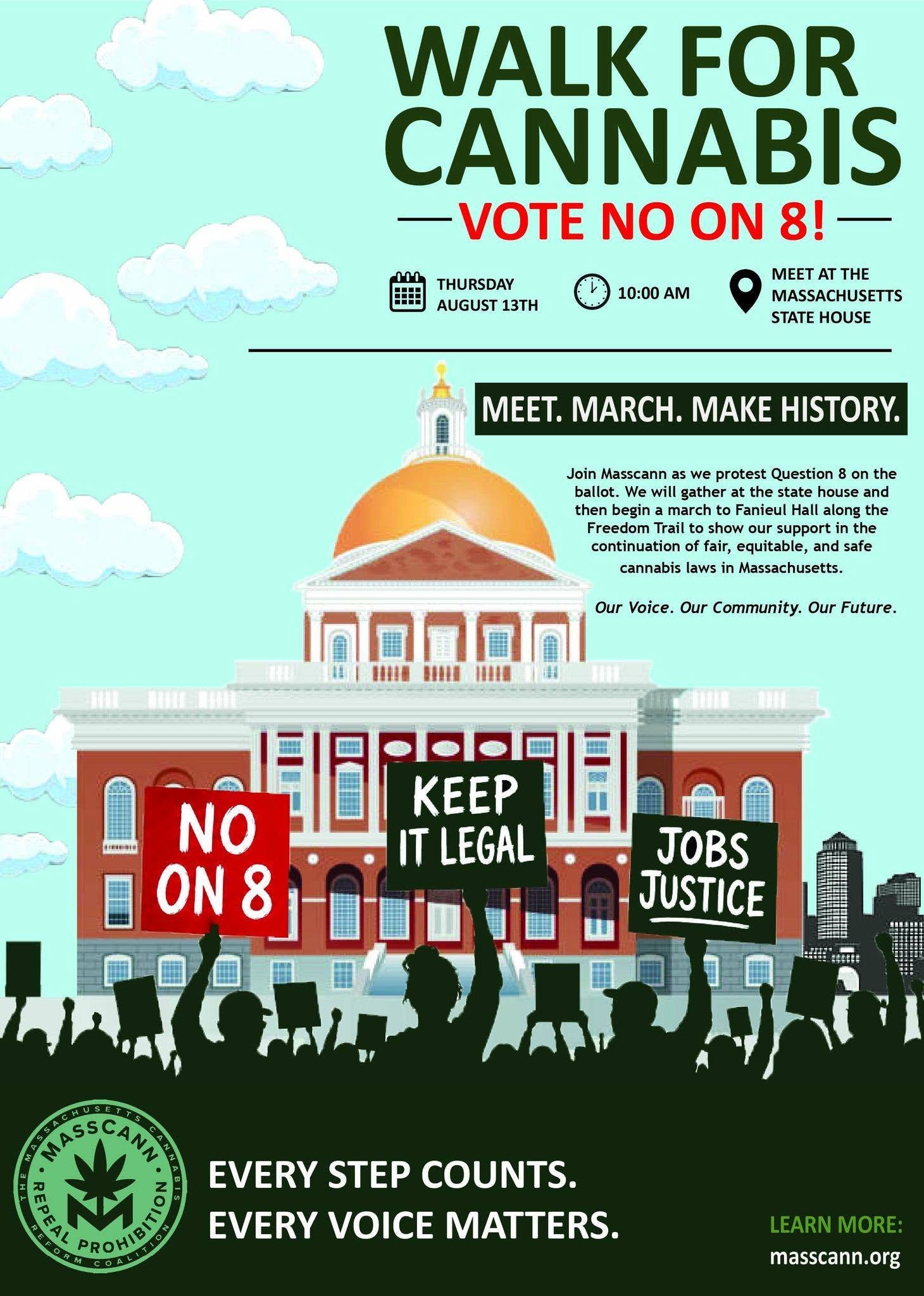
If you are in the Boston area on Thursday, August 13th at 10 AM, join MassCann at the State House steps, and take a Walk for Cannabis to help spread the word: Vote NO on 8! Keep it Legal.