
First They Came
Niemöller was right, but his focus was too narrow.

First, they came for the labor-power. They knew no peasant would abandon the land that offered them everything needed for their survival, so they made it illegal to gather wood. The wood-gathering laws started by making it illegal to cut living trees and the felled wood that was legal to gather was limited by its diameter. Housing stock degraded and collapsed over time, as it was against royal decree to take any wood large enough to repair a house.
But that did not move the population into the cities sufficiently to meet labor demands. The first assembly line was in a 14th century London bakery—those who once ground grains, kneaded dough, and made their own bread were relegated to just one of the steps in production. This new layer of specialization, where the trade was broken into the tasks that together made the trade, began the alienation and deskilling process that would continue for centuries.
So it became illegal to gather wood with a diameter greater than one’s wrist. It may have been enough to repair a piece of furniture or to build a barrow, but it was felled wood and had begun decaying, as it lay on the ground. Still, the people were reluctant to move from the land they had been legally and practically bound to. That was when the feeding of sheep was prioritized over the needs of people.
Recall at this time, there were no “People” in the Modern sense. The oil painting was a new medium and its subjects were exclusively Biblical or royal. In due time, the emergent social class that would commission oil paintings eschewed the saints and chose instead to focus attention to their possessions. We do not see depictions of peasants in oil paintings until the 17th century, and then it was alongside livestock.
Shepherding required grazing lands, and the Enclosure Acts sought to drive those remaining peasants from the land. Gathering wood thick enough to build a hearth was prohibited, with peasants relying on thin branches and twigs as the remaining fuel for their fires. In the 16th century, London’s population tripled, as peasants were displaced from the countryside.
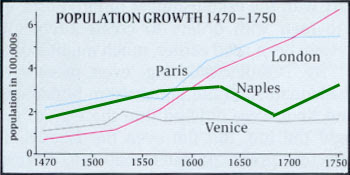
A growing population of proto-Proletarians brought with them the demands of urban life. Food for a city with a population of London’s size could no longer be produced within the city itself. The economic contrast of urban and rural life was brought forth by the relations of production themselves, with cities becoming commerce-based, while the countryside was forced into a dependency.
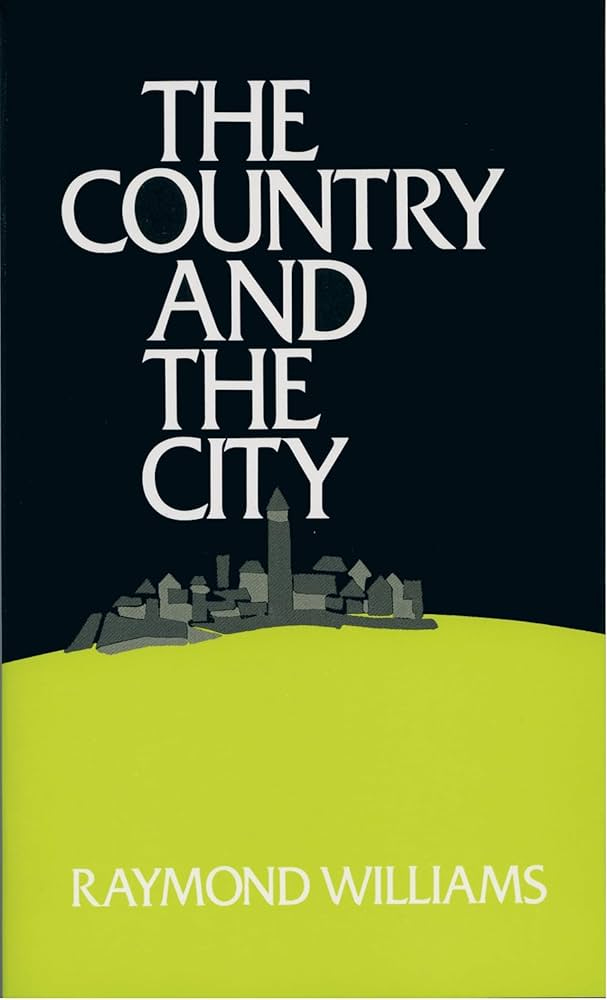
For the first few centuries, an emergent capitalism found feudal relations of production to be its biggest challenge. New economic forms emerge from the contradictions and shortcomings of the older form. Feudalism was an individualized mode of production, where each was responsible for providing their own needs. What a serf needed—food, shelter, clothing—they made for themselves. Mobility was low and commerce was hyper-localized, which resulted in recurring shortages.
If your food crop suffered a blight, chances were very good that all your neighbors’ crop were also stricken. Trade was physically limited such that there was no choice but to abandon the area in search of food. As cities drew commerce to them, like a magnet, pulling from the surrounding land area and attracting sea trade (all the ancient cities were built on bodies of navigable water), they became capable of sustaining a population through socialized labor.
The new urbanites would find themselves situated in divisions of labor where their specialization no longer provided them with their needs, but instead with a universal equivalent that they could then exchange for their needs. The new, rising mode of production meant workers no longer produced for themselves, but instead necessarily produced for others.
I recommend Sir Thomas More’s Utopia for an quasi-historical accounting of how this transition took place, and More’s recommendation to King Henry VIII that instead of parceling royal lands among various lesser nobles (who would utilize the Enclosure Acts to claim territories as their own) that he should instead apply a version of monastic communalism to the lands of the Kingdom, permitting access and utilization by all royal subjects.
A proto-capitalism was developing in England and elsewhere in Europe, when passage to the New World became a more common practice. Colonization by the Spanish, Dutch, English, French, and Portuguese all began under a royal, feudal order. The British colonies, by dint of fortune more than planning, grew to claim what would become the original thirteen U.S. states.
The small class of Bourgeoisie that had come to recognize each other and their shared conflict with the Crown decided to forge a new social institution, based on this relatively new mode of production. The Constitution they wrote sought foremost to preserve their form of property, while utilizing the (new) nation-state’s political organization to insulate the propertied class from the masses. The class of elected public officeholders would be elevated to responsibility for maintaining and promoting a civil life where the People (narrowly defined) would govern themselves.
In the 250 years that followed, the liberal democratic ideals of civil equality and suffrage would go at the remnants of social caste (race, sex, being landed) the new rulers failed to consider eliminating, from the class society they sought to create.
In a way, we may consider the political strife that runs through the history of the United States as a conflict between who would seek to preserve social castes, against those who favor eliminating them.
As the exploitation of labor-power became the dominant mode of production, laborers themselves became a new political and economic entity. For decades following the Civil War, interstate corporations were further institutionalized, and the nation-state grew to become dependent upon them. While the Constitution restricted state intrusions upon persons, property, and privacy, the corporation’s private economic relationship spared them from having to grant workers a say in their daily governance, how they would produce, what they would produce, how they would dress, how they would communicate, and to whom they would be the rough equivalent of royal subjects.
While the state could make no claim upon the citizen, outside of the Constitution, the corporation suffered no such restrictions.
After they secured the labor-power and monopolized the relations of production, then they came for the Communists. I was not alive at the time, so I could say nothing.
The Red Scare began about thirty years after the United States had first sent military incursions into Russia, in a futile attempt to thwart the October Revolution. From the very beginning of state socialism, the global Bourgeoisie fought against it. The hearings of the House Un-American Activities Committee brought that war home—claiming those who would challenge existing property relations were enemies of the state. The Soviets, people were told, hated “free markets,” and were a threat to “the American way of life.” The FBI ran a surveillance (spying) program, where informants were recruited (or coerced) into “naming names.”
While Communists remained a grave concern for the duration of the Soviet Union’s existence, the Cold War took up the cultural focus. Americans needed to be concerned about mad Russians who “do not value life in the same way” and who would be willing to destroy the world, if they could not claim it all. The Communists were very capitalistic in that way, despite not favoring a mode of production whose Prime Directive (from Asimov’s Three Laws of Robotics, not Star Trek) was to exploit all resources, human and natural, for maximum value.
After the Communists, they came for the dopers. I was too young to have noticed the first wave, beginning with 1970’s War on Drug Abuse, but the sequel, Reagan’s (1984) War on Drugs commenced as I had just entered the age cohort of heaviest non-medicinal drug use (15 - 25 years of age). While I had not used any illegal substance at the time Reagan declared the war, it would be a matter of a couple years before I made the conscious choice to Just Say YES! and become an enemy of the state.
I can recall reading about the waves of new police hires, the creation of “drug-free zones,” and the inevitable mistakes in enforcement that led to people being killed.

On March 26, 1994, 75-year-old Reverend Acelynne Williams was sitting in his living room in Boston, when 13 men with sledgehammers broke down his front door. Screaming as they entered, the heavily-armed intruders threw Rev. Williams to the floor, twisted the old man’s arms behind his back, and roughly handcuffed him. Then they proceeded to utterly ransack his home. Rev. Williams went into cardiac arrest and died.
Reverend Williams died due to the moral panic of the Drug War, which had dehumanized those involved with certain drugs, justifying their criminalization, extending their prison enslavement, and excusing their having been killed in the name of a “Drug-Free America.”
When they came for the dopers, most Americans said nothing, because their drug use had not been criminalized—either because they did not use prohibited drugs, or because they were not the targeted social class, even though they used prohibited drugs.
State-led moral panics justify new, special criminal categories and new penalties to be applied to their targets. They also lean heavily into thought-crime, and other moral condemnations.
Thirty years following the War on Drug Abuse, they came for the terrorists. Like the Drug War, the War on Terror did not target all terrorism, but instead foreign and Islamic extremist terrorism. Habeas corpus has been suspended for “Enemy Combatants,” “enhanced interrogation techniques” (torture) of suspected terrorists was legalized, and the “terrorists” could face the death penalty for conspiring to commit terrorism, even without an act of terrorism having taken place.
But again, most Americans said nothing about the new waves of surveillance, restriction, and penalties—either because they were not a foreign terrorist or Islamic, or because they were not the targeted social class, even though they sympathized with domestic, white supremacists’ terrorism. As the sense of danger dwindled, the FBI released data showing the greatest terroristic threat to the people of the United States came from domestic racial supremacists. The folks who signed up to make money off the next state-led moral panic—the War on Immigrants.
The incursions on our right to be secure in our person and individual property, the right to speak and associate, and the right to peaceably assemble, were done in the name of making Americans “safer” from drugs and terrorists. They also socialized generations of Americans to accept diminished versions of rights unquestionably held, just decades prior.
The War on Immigrants can be traced directly back to the the prior “Wars on…” and it is working in much the same way. A moral enemy is created, and since it excludes most Americans, they do not see what is happening to be an attack on their rights. Alongside the War on Immigrants, there is a direct action to modify and reinforce social castes, to which immigrants are merely one.
The legal status of the immigrant is immaterial, to the Fascists, just as the enemy drug user included both those who used an illegal drugs as well as those who could potentially use them in the future. Emerging from the Drug War we saw medicinal marijuana policies enacted in a handful of states. To this day—more than a decade following legalizations—it remains a thought crime for a state-registered patient to use their cannabis for a non-medicinal purpose (i.e., to get enjoyably high).
Over the past eighty years, the owning class and state authorities have expanded surveillance and discipline across the general population, done in the name of “protecting” people from ideologies and the “dangerous classes.” Each phase adopted increases in surveillance, the creation of new criminality and attendant penalties, and relied more and more on utilizing the nation-state for general population control.
It is not a coincidence that the privatization of computer technologies would result in utilizing them for the sake of maximizing exploitation and policing labor, despite the liberatory potentials of that same technology. Rather than the free exchange of information, it is being used to gather and claim value from information by restricting it, and the source of information, themselves.