
Freedom is Free
Your bumper sticker is wrong, patriot, and so are you

Hegemony is the consent to be ruled. Every ruling class produces it. Some of it is overt and in-your-face like the association of American nationalism and professional sporting events,
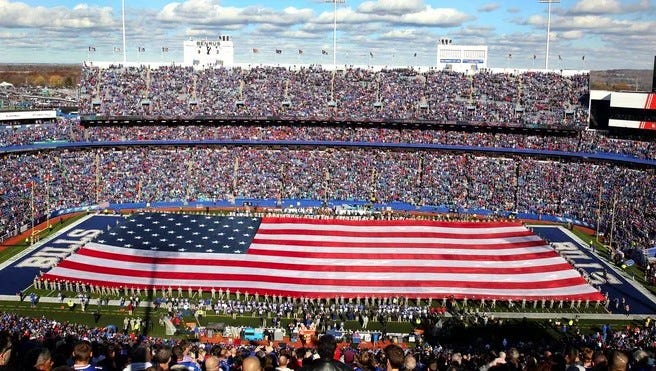
but most of it—and all of its most insidious elements—appears as context and framing.
Concepts of Rights and Freedoms create a framework of social organization. The conditions by which these philosophical constructs are put into praxis are materially limited. The U.S. Constitution outlines the theories. The state grants rights, regardless of the useful illusion that they come from a source supra the ruling class, referred to as “Creator” in the Declaration of Independence. This was itself an accusation of idolatry, since the British monarchy had previously claimed the hegemony of religious authority when Henry VIII crowned himself and declared himself head of the Church of England.
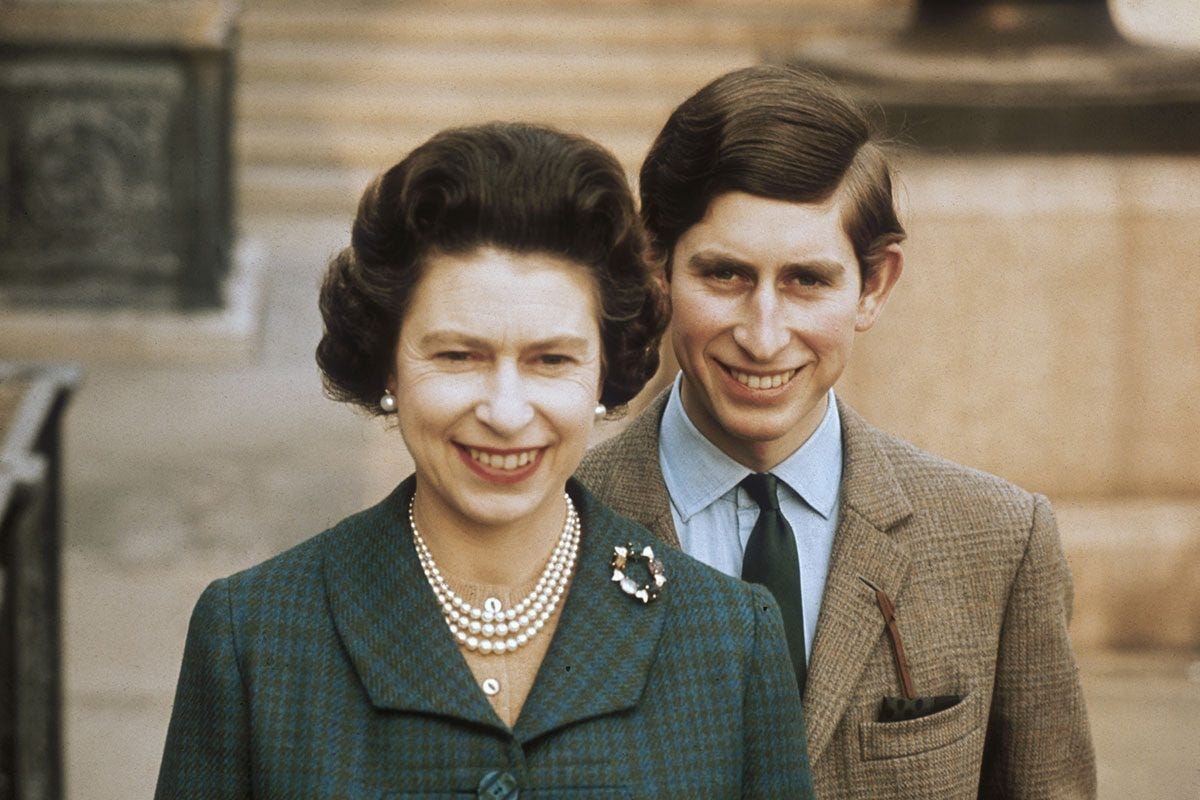
King Charles III retains that title, today.
The Bourgeois revolutionaries claimed to be operating as the Creator intended. Monarchic rule had been ordained for over a millennium in Europe. The printing press had led to the “reading revolution” and changes in social structures and authority. The Gutenberg press played a central role in the Protestant Revolution, requiring Bibles to be printed in local vernaculars, as salvation under this epistemology required a lifelong demonstration of moral worth.
Claiming rights came from God, while specifying the state could neither respect nor prohibit any particular religious philosophy, sets the state apart from the Rights Scheme. Rights are outside the state, and the Bill of Rights is an itemized list of powers the federal government does not have. The 10th amendment’s default that rights not specified belong to the States, or to the people is not an assertion that individual states confer rights, but that states as discrete entities must also hold rights that the federal government does not necessarily have. Perhaps theoretically, states could hold rights the federal government could not.
We choose to live under the illusion the nation-state does not confer rights upon the People. But when rights are withdrawn, through which entity must this happen? As we witness further encroachments upon citizenship, suffrage, security in one’s person, papers, and travel, they are being done through state channels and by state operatives. Whether these incursions have been constitutional will also be determined by state operatives.
The idea was to separate those who make the rules, from those who enforce the rules, from those who judge the rules and rule-breakers. At every turn it was made such that the state—not some outside, default force such as “nature” or “God”—created, perpetuated, and could destroy the Rights Scheme.
If the Rights Scheme comes from the state, and the authority of the state is derived from the governed, then the entire American Rights Scheme is action in Bad Faith. We recognize we create the conditions by which rights are realized and at the same time claim they are not of our doing.

Rights exist, and we have not comprehended all of them, so inevitably our government must be in a constant state of violating our unrecognized, yet real, rights. This is what happened with those once enslaved by race or gender, or those who turned 18 before 1971. We have a right to traffic in alcoholic spirits, so to restrict that we needed the 18th amendment (ratified before women’s suffrage), and thirteen years later we repealed that amendment. Nothing needed to be done to otherwise restore the right to traffic in alcohol.
We must ask, what do these unrecognized rights consist of? If they originate from outside society there is nothing we can do to make them—they are like the Force, running through all living things in the galaxy. Because even if we do not know the specifics of an unrecognized right (what happens when we discover we all have the right to claim ownership of the social means of production?) we know they are universal. At least as to how we define people (and Americans?), at this particular point in time.
Did you catch that contradiction? The right to be a person has never been apportioned equally, no matter what we write down. The history of granting liberty comes through a series of discovered rights, and not from the rights themselves. Liberty is not a default condition. Freedom isn’t free.
When that slogan is on a bumper sticker, it means the owner of the vehicle believes—as Charlie Kirk did—that freedom means having to kill and die. I take a more Existential leaning; freedom is what we do with what is left, after we tell each other what freedom is not.
If rights do not exist outside of our recognition and formalization, then those who control the state control the rights. Those who control the rights, control the conceptual boundaries of freedom.
Freedom exists independent of actions, though. It is the default condition of existence, not rights.
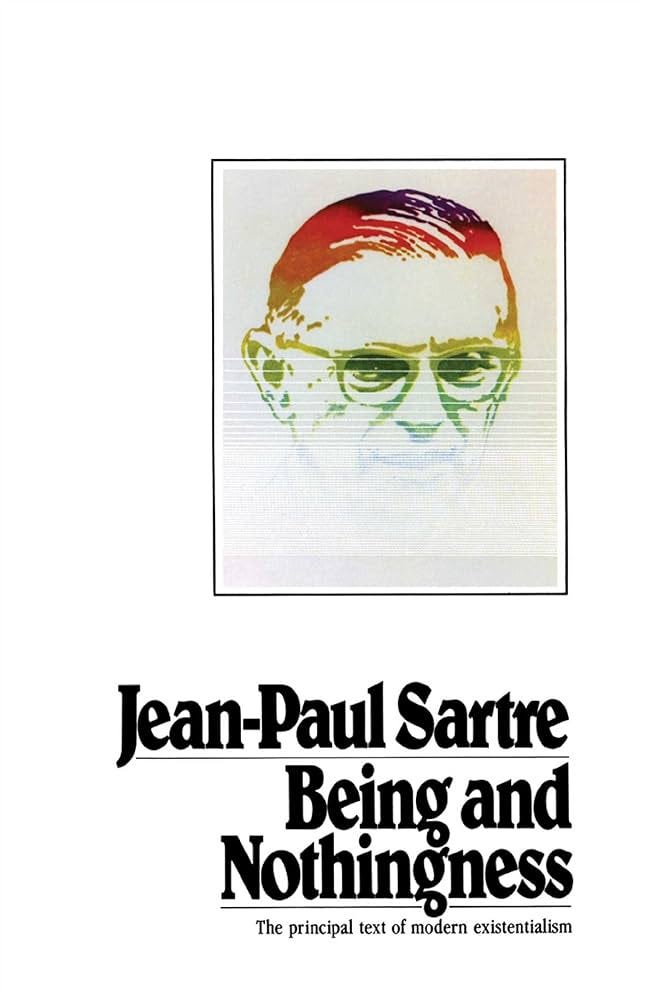
We are seeing gross assertions of power and privilege cast as special rights, while American global capital is working out how to recast the nation-state, subordinate to their corporations. We will never, ever have the right to effectively resist. For that we have to rely on our freedom, independent of social structures.