
Imaginary Enemies
Not buying the War on Immigrants? How about Drug War III, then?

March 4, 2012
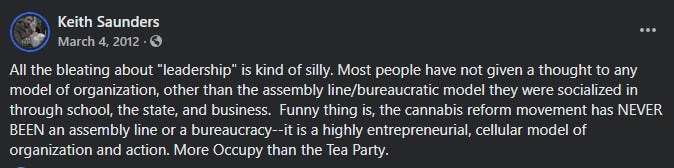
All the bleating about "leadership" is kind of silly. Most people have not given a thought to any model of organization, other than the assembly line/bureaucratic model they were socialized in through school, the state, and business. Funny thing is, the cannabis reform movement has NEVER BEEN an assembly line or a bureaucracy--it is a highly entrepreneurial, cellular model of organization and action. More Occupy than the Tea Party.
Criminal drug prohibition is a civil rights violation, wrapped in propaganda, designed to marginalize a segment of society, and then punish them for being there.
State incursions on buying and consuming are of particular concern to economic Libertarians, as are state expenditures on criminalizing victimless behaviors. Civil libertarians concern themselves with both as well, but prioritize concerns over criminalization in general; its expense, secondarily.
In my decades working among and on behalf of marijuana-users under prohibition, I can also vouch for the concerns of the less politically-conscious among them who simply do not want to be arrested for getting high. They are not focused on philosophical principles as much as personal enjoyment. Nonetheless, they understand marijuana is illegal and they take necessary steps to hide their use, when they have to.
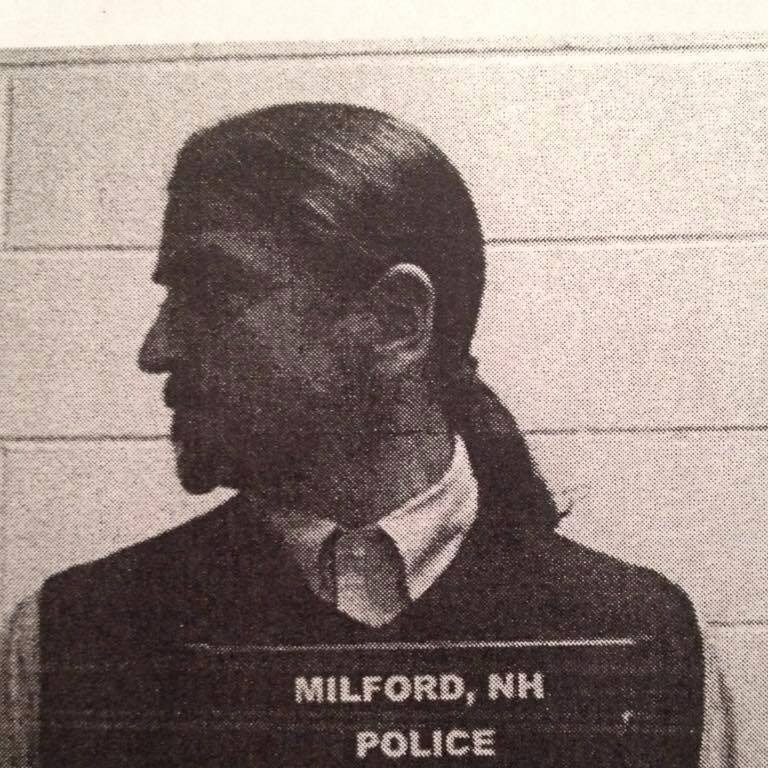
They do not consider themselves criminals, but they understand they risk being labeled such. They know that to be made a marijuana criminal results in arrest, fines, and a record, at the very least. Those who grow the plant are treated more harshly, with many incarcerated.
Despite two dozen states legalizing cannabis since 2012, there remain 26 states without it, and a federal prohibition of “any detectable amount” of marijuana.
Twenty-two of the 24 legal states allow personal cultivation. There is debate among reform activists whether states without personal cultivation should be counted among states with legalization. After all, gardening is never a crime—except where it is made into one.
How is it sensible for legal cannabis to exist, but only when cultivation happens at a commercial scale?
The lone point of overlap between my support of legalization and Project SAM’s opposition to it is this: We are both concerned with the over-commercialization of cannabis. The difference being that I accept commercial-only legalization as a step toward allowing personal cultivation, while P-SAM’s position is we must ban cannabis commerce because people are too stupid to handle legalization.
P-SAM was founded just as the legalization wave took shape. Watching P-SAM founder, Kevin Sabet, modify his public advocacies across these many years is a lesson in what his sponsors are willing to believe possible. While he was working for the Office of National Drug Control Policy, in three stints, between 2000 - 2011, he spoke and wrote in opposition to medicinal marijuana and advocated total prohibition. As medicinal marijuana found substantial public support (70% and above) Sabet softened his stance and focused on fighting legalization campaigns.
Sabet’s entire career has been spent supporting prohibition as a public policy. The last time he was a regular in Massachusetts (c. 2016), he was working out of the University of Florida’s Psychiatry Department, despite not holding a medical or public health degree. His 2007 doctorate, Toward reducing total harm: Analyzing drug policies in Baltimore and New York, is in public policy, and not available online. [If anyone has a link, send it to me, and I will attach it.]
In the 1990’s and early 2000’s, if you wanted to work in drug policy and be funded, it was a much easier career path to do your work in support of prohibition. Indeed, the NIH and other government agencies had bans on supporting researchers that did not frame their projects in ways that held the potential to make marijuana use look bad.
Long before Trump started demanding censorship of DEI language in federal policies and grants, government censorship was practiced in the name of the Drug War.
So a proposed study of marijuana use and high school dropouts would not be disqualified on its face, while a study of how marijuana users had formed a multi-generational, self-actualizing identity movement would be rejected with a two-line email. Ask me how I know.
For prohibition to work, the state needs to take an interest in personal behaviors. The Founders were quite concerned about such intrusions and Amendments 3 - 5 involve keeping the state out of one’s domicile, out of one’s papers, and out of one’s thoughts.
In order for drug prohibition to have any effect, the state must detect violations perpetrators wish to keep secret, that produce no victims. This is part of why prohibited drug distribution is treated far more harshly than commercial offenses—such as price-fixing or profiteering on non-prohibited goods—with victims. To the prohibitionist, the lack of victims makes drug crime all the more nefarious.
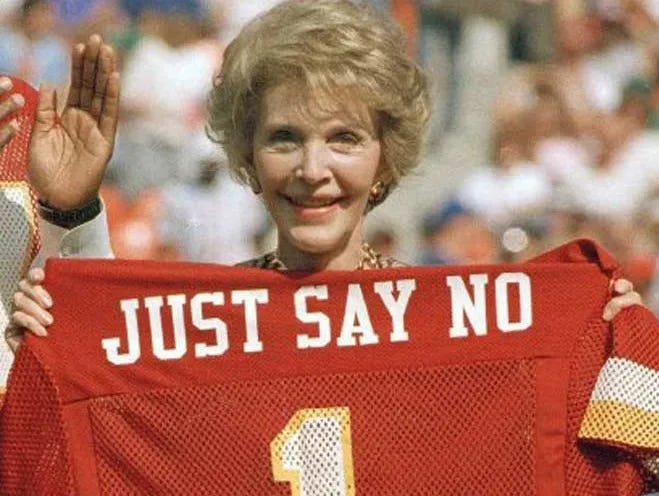
Prohibition propaganda tells us “Users are Losers” and will never succeed. If the class valedictorian is caught smoking a joint outside the prom, she will not be allowed to speak at or attend graduation. When school officials say marijuana interferes with school performance, and then a student proves them wrong, the other students must be shown it interferes with school. To acknowledge the false premise of the propaganda is to put the nation’s future at risk, you see.
Does any of this sound familiar, now that we are living under a fascist regime that values appearance over effectiveness, messaging over facts, and treats civil rights as an impediment to its authority?
That is what P-SAM and Sabet want: A return to arresting people for weed, based on prejudices against cannabis users. They want to rebuild prohibition infrastructure and recriminalize people for getting high. Look at what they were saying ten years ago—that legalization was to bring all sorts of bad shit upon us—and compare it to what actually happened. They were wrong then; they are wrong now, too.