
Informal Education
Marijuana Use and Moral Careers

Some say that marijuana use impairs memory, but if that is true, then how do people recall that they like its effects?
Marijuana use may impair rote memory, but not sensory or phenomenological memory. One of the obstacles to becoming a marijuana user, as noted by sociologist Howard Becker, is obtaining supply. Becker did his research in the late 1950’s when marijuana use was largely subcultural, and supply was the greatest obstacle. But by the late 1980’s supply was much less of an obstacle in my hometown of Scituate, MA.

Fishing limits had been placed on George’s Bank, and the local commercial fishing industry was in danger of collapsing. “Square groupers” could be caught, and topped with the paltry catch limit; no one watched too closely, once the fish were out of the hold. Occasionally, the brick weed that came in smelled of the sea.
I moved from Scituate to NYC in 1990. I did not put any effort into establishing a marijuana supply network in the City, but it found me. Through my job and random encounters, I learned how to find marijuana in public or semi-public places, as well as have it delivered to my street corner or doorstep.
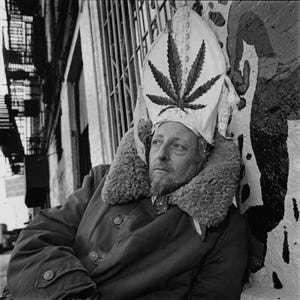
People would casually smoke it on park benches, or while walking down an avenue. It seemed almost legal, especially to a white guy working in midtown for a large law firm whose attorneys included legalization advocates.
I left NYC and returned to Scituate, to live with my parents in my first year of graduate school at Northeastern University. The climate had not changed much, but there was a difference in some of the marijuana that was available. Most of what came through town was brown, compressed, had stems and seeds throughout--weed packaged for smuggling. But this new supply was green and fluffy, and sticky, and smelled like skunk. I had seen some of it during the late 1980’s, but by 1992 in Scituate “kind bud” was easy to find in my networks, and we loved it. It was cleaner, tastier, and you did not need to use much of it to get to your desired level. We also started smoking out of glass at this time, and the combination of the two made for a previously-unmatched enjoyment.
I would use weed through graduate school, with my peers, with some professors, and with at least one high-level administrator from a globally recognized top-tier university.
My weed connections brought me close to the originators of the Chem and Cough lines, and I ran a side hustle for a bit, helping fulfill the desires of some well-renowned scholars, and helping pay my rent. One day, after sharing a joint with a friend at his nearby apartment and putting it into the open pocket of my jacket, I went back to my department, where I was called into a professor’s office for a chat. Another professor was in the room, and was sitting right next to me. I could smell the roach, as could she. Two days later, she requested me as her teaching assistant for Drugs & Society, a course I would go on to teach more than 40 times.
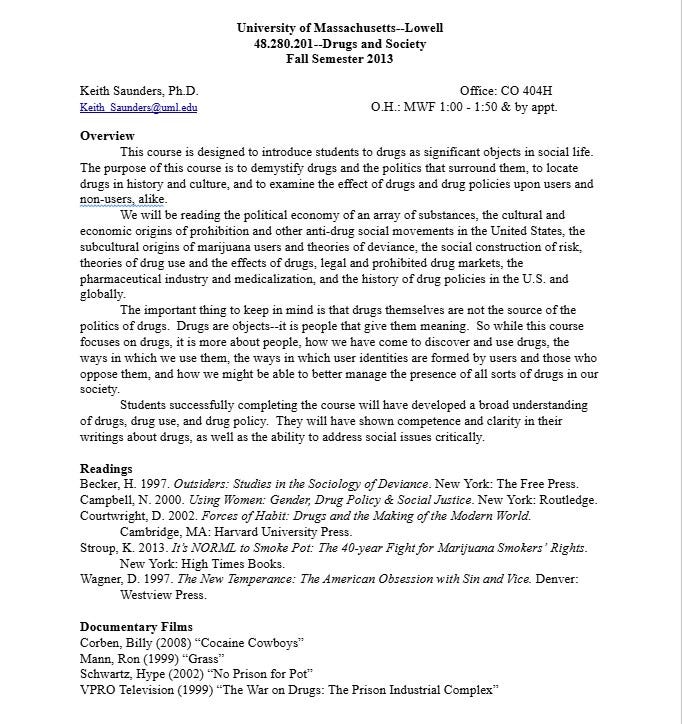
When it comes time to research and write a doctoral dissertation, the student must find a compelling and engaging subject that they deeply desire to learn more about, to the point of intellectual nausea. Find something that you know, that you want to know more about than anyone else, and that you will not grow sick of and give up on, but upon which you will gorge yourself. I chose drugs and social policy, specifically the marijuana policy reform movement and popular marijuana culture in the United States.
I gathered data for more than 18 months, traveling the country, interviewing dozens of people, researching archives. I found an entrepreneurial culture; these were not hippies in communes. There was a thriving marijuana industry, and auxiliary industries in paraphernalia, social parody, political activism, food, music, literature, and so forth. Tens of thousands of small capitalists, united by their love of a plant so strong they were undeterred by criminal prohibition. Small business and community -- this milieu felt just like home.