
Information Control
"Privacy" was a quaint, pre-21st century concept

Failure to Adapt
Sometime in the second Clinton Administration, a forward-thinking Postmaster General would have begun constructing an email platform as a USPS service—a public option.
Some would reject this idea, outright, thinking it dangerous to give the state access to the content of their emails. What they fail to consider, however, are constitutional protections; and how they have always willingly surrendered their privacy to corporations when using their email accounts.
While prosecutors had to obtain search warrants in order for the state to capture Jeffrey Epstein’s private emails, the corporations that host the platforms are scanning them, in real time. Unlike gmail and the sort, the USPS could not legally monitor email content at any time, without a warrant.
Is it better to be under constant surveillance by corporations, or specific, warranted surveillance by the state? Keep in mind the corporate surveillance can itself be subpoenaed.
Something’s Got to Give
Capitalism commodifies everything. While historically-speaking, all sorts of relationships are payment-based, what sets the current era apart from all others that came before is the commodification of sociality itself.
Interactions and exchanges with no commercial motivations are captured and splayed on an information nexus—cross-tabulated and multiply-regressed with a billion other bits of data, then disaggregated down to an identifiable market trope, which is then sold to merchandisers and political organizations as if it was manufactured by the data-gatherer themselves.
The frequency with which you tell your mother you love her is now an object only YOU could produce and only YOU make happen, rendered to the equivalent of a natural resource with no owner.
As capital must exploit labor, it must also exploit nature. Now you are exploited at work, sent to your second job purchasing things so as to realize the surplus-value taken from others, and when you finally have a moment to catch up with a friend—what was once a non-alienating, life-affirming activity has been invaded by oligarchs for their own enrichment.
The selfsame protections from public tyranny the Framers carefully crafted to shelter the People from the state are routinely surrendered in private, contractual requirements for which the state has not provided a public option, so as to protect the People from private tyranny.
Corporations are rarely democratic in their operation—most often, they are dictatorial. They impose speech and dress requirements, they monitor actions and communications, their schedules determine where people must be and for what periods of time, and their owners spend considerable resources keeping the state (democracy) out of their business, as much as possible. Corporations are antithetical in practice to democracy.
When a society is organized around a privatized, tyrannical corporate model, the owning class will encourage anti-democratic practices. Some of this will take the form of dominating the electoral process through their disproportionate monetary and communications resources. But the greater and more insidious incursions will be when public options are eliminated, or when they are never created, in the first place.
It’s not too late for a public option email. It would serve Americans who do not want to have their data taken from them, without compensation.
Consensual Deviance and Selective Disclosures
I remember the dance well. NORML chapter meeting, new person. We all introduce ourselves, explain who we are and what we do as a chapter. Ask them how they found us, a little about their background and why they came to the meeting. Friendly, cordial. All the while engaged in a ballet of disclosing (or not) signs and identifiers speaking to legitimacy or illegitimacy of claims being made.
We know you came to the meeting because you are looking for weed and you know we all know how to get it. But it’s illegal to ask, illegal to offer, and there’s a war being waged where the other side is well-known to use spies.
It is astounding the lengths they went to, trying to keep us from organizing as a community.
Marijuana prohibition involves its own information control, and prompts a particular form of information control among marijuana users. Beyond this legal framework, there are arrays of stigma affiliated with non-criminal deviance; deviance that stands apart due to folkways or mores.
It is apparent, however, that these two extremes, where no one knows about the stigma and where everyone knows, fail to cover a great range of cases. First, there are important stigmas, such as the ones that prostitutes, thieves, homosexuals, beggars, and drug addicts have, which require the individual to be carefully secret about his failing to one class of persons, the police, while systematically exposing himself to other classes of persons, namely, clients, fellow members, connections, fences, and the like. — Goffman (1963): 92.
Goffman here focuses on what were criminalized behaviors. But for the thieves, what he describes falls into consensual deviance—deviant behaviors that do not inherently cause harm to or victimize others, but that are considered deviant when discussed by or disclosed to “normals,” nonetheless.


A husband with cross-dressing and cuckold fetishes would be on the periphery of Gayle Rubin’s “Charmed Circle” of sexuality.

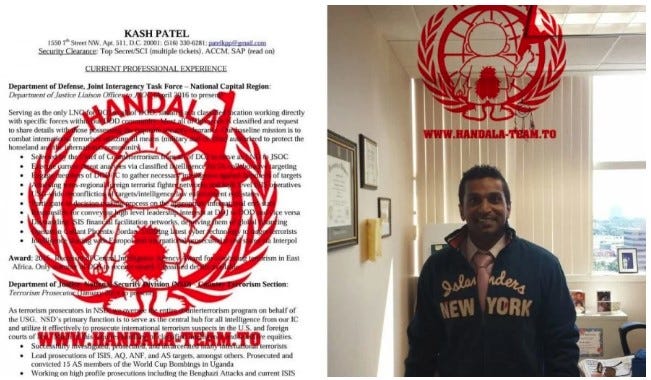
The cutthroat nature of DC politics leaves the source of the disclosure in question. Could it have been someone who worked to get Noem ousted from the Administration and was upset she got a soft landing, “shielding the Americas”? Was it Kristi Noem herself (she knows he digs the cucking, does it matter what he fantasizes while jerking off?) looking for a public eye “neutralizer” for leaving Bryon for Cory? Could it have been Mrs. Lewandowski? Or maybe it was the Iranian hackers, who mined Kash Patel’s photos from the Google.
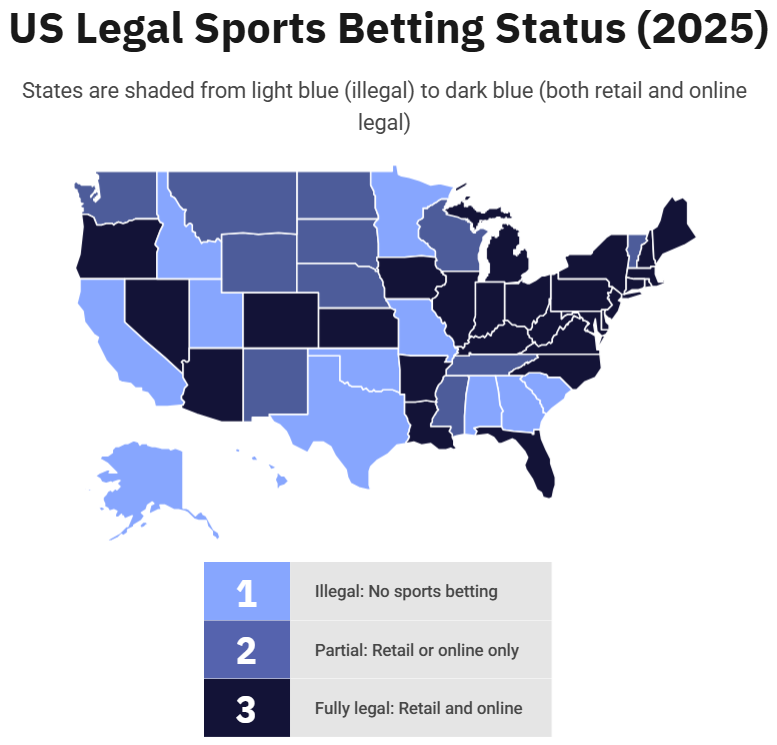
Regardless, someone got into Bryon Noem’s “private” internet data and disclosed his participation in a particular form of private, consensual deviance. Despite the recent cultural and political push against tolerance (“woke”), the trend in the U.S. in the 21st century has been acceptance of many forms of consensual deviance. Since 2004, it is no longer illegal to engage in homosexual activities, twenty-four states have legalized cannabis, and casino gambling and sports betting enterprises are spreading across the nation.
Those who would still hold moral objection to Bryon Noem’s behavior should take solace for there is no mention of children in his emails, unlike with another “private” collection, disclosed to the public.