
Medium Cool
Musings on culture and legitimacy

Culture is a medium.
The stereotypical framing of “primitive” cultures in early 20th century anthropology was captured by National Geographic, with flowery language about non-white, native peoples whose “culture has remained unchanged for thousands of years.” The Noble Savage is a European construction (along with “feral children”) of a “natural” human state of being, untouched by what the speakers considered culture, until their discovery.
Of course, even children who wandered into the woods to be raised by wolves left people who had named and been raising them. Surely, they had a presence in the tribe, village, or family that was left unfilled. Someone went missing. Social adaptation occurred: Roles were adjusted, statuses affected, the local economy was impacted, and social cohesion was challenged.
While lionizing the “human nature” forced from the savage body through an absence of cultural constructions, not one bit of attention was drawn to the human nature revealed through a closer examination of culture, itself.
What is it to be “with” someone?
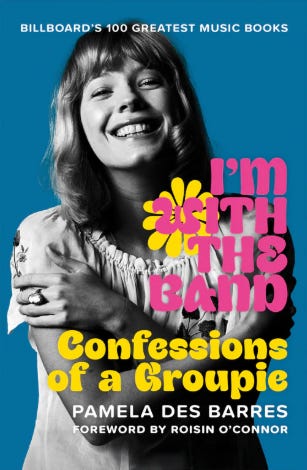
By making the statement, “I’m with…” the speaker is announcing they are to be treated as if they are of those others being referred to. Rather than be relegated to the wilds, the speaker declares their membership among the in-group. The utterance performed to make their membership clear to an outsider; for all those on the inside know the speaker to be of their group.
Here there is a counterpoint to the Noble Savage—the atypical insider, one who is of the culture but not one outsiders would understand to be of the group. In Goffman’s theory of stigma, these would be among “the wise.” The wise not only understand the conditions of the stigmatized group and its members, they are not burdened with the same collection of expectations that weigh upon the so-stigmatized. Very often the advocates for the most strongly stigmatized can only be from the wise, as the stigmas themselves disqualify the stigmatized from legitimate self-advocacy.
I’m Over There
The phrase “I’m over there” also conveys a belonging-to. In this regard, we affiliate with a space, making a connection between our person and a place or a thing. The self has a physicality that is outside the body. I am me, but I am also objects and the spaces they occupy.
Is placing one’s objects inside the concept of one’s self a grammatical requirement, say, as in Spanish one has hunger (tengo hambre), whereas in the English language one is hungry? Or is the self in a Modern context actually materialized in objects?
If I have an ethnicity, it is Suburban American. It’s where I was raised and have lived for considerable stretches of my adult life. Suburbia is at root a technological achievement, made possible only with machine-assisted transportation: Automobiles, primarily. In high school, students came to be able to identify each other by the cars they drove. The student did not have to be in the car, in order for a person to note, “Rob’s here.”
The qualities of one’s possessions are often used to stand in for the qualities of the self, and in this way we have status objects that reflect not only our roles but also, to a degree, our selves.
Crises of Authenticity and Legitimacy
This relationship of the self and the object comes to a crisis point with the consumerism that has been utilized to produce economic growth beyond needs. Fundamentally, human economy involves the transformation of natural resources for social purposes—from hunter-gatherer societies, through agrarian and pastoral modes of production, from tribes to kingdoms to nation-states. Basic social purposes are all that is required for the production and reproduction of a society: Water, shelter, food, adornment, and companionship. From this sustained society a companion culture coalesces. Culture is its own generative force that explains and contextualizes the actions and social orders that fulfill needs.
Transcendentalists noted the social usurpation of the natural and considered it threatening. Whitman and Thoreau bemoaned the loss and retreated to the wilds surrounding Boston—seeking to, in our current parlance, “touch grass.” Urbanization was a threat to something essential about human beings. Frederick Law Olmsted’s urban parks (including New York City’s Central Park, Boston’s Emerald Necklace, and Montreal’s Mount Royal Park) brought designed nature to expanding cities.
The urban park is an artifice of nature; much like the suburban lawn. The landscape is living, but tamed, plotted, bordered, and planned. An urban park is not an authentic natural setting—it is a fiction.
The consumerism of the post WWII era drove us into a crisis of authenticity, where human creativity was channeled into a highly-specialized division of labor and where the self was re-presented, whole cloth, in the form of an object, service, or event, available for exchange.
Our popular cultural recognition of authenticity was distilled to one word/concept: “Cool.”
As happens, later generations displaced “cool” with a new term: “Real.”
The collapse of Neoliberalism under its own contradictions has brought about new, deeper crises. We are in multiple, overlaying crises of legitimacy. Including, but not limited to: The legitimacy of the liberal nation-state and its democratic form of government; the legitimacy of the speech and religious freedom recognized as fundamental to that nation-state; the legitimacy of currency, banking, and trade essential to markets, and; the legitimacy of citizenship and the constitution itself.
The authenticity of the creation matters much less if what has been produced cannot be established as a legitimate version of what was created. If the 2020 election was illegitimate, then we must question whether any election could ever be legitimate. If democracy cannot be practiced, then why bother with the exercise?
If the second Trump term no longer resembles an American presidency (granting Executive-level authority to private citizens like Musk and Voght; leveraging the office for massive personal fortune; preparing the military to occupy the cities held by his “enemies”) it is because it is not a legitimate American presidency. It is something else.