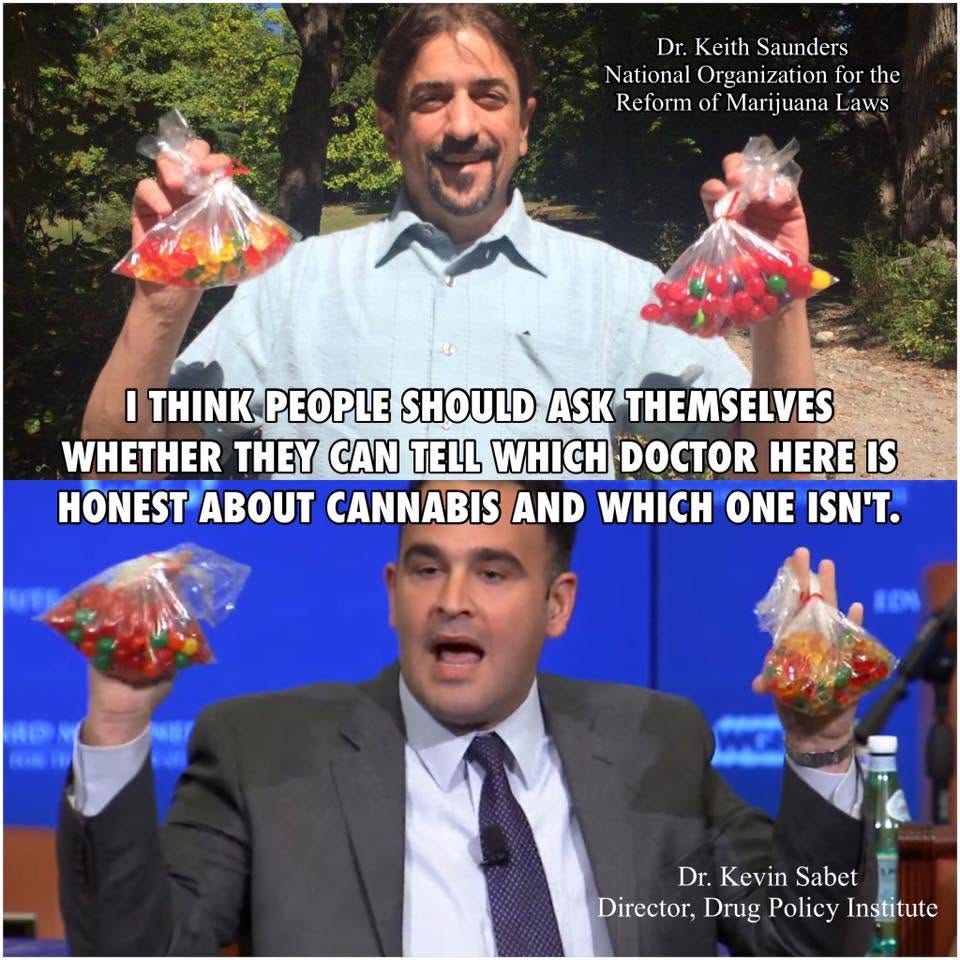
I doubt Kevin Sabet bothers to read my work, and he does not strike me as one critically attuned to cultural dynamics (moral entrepreneurs are largely one-trick ponies), so I wonder if the Wannabe Drug Czar has the capability to comprehend that criminal marijuana prohibition creates the cultural conditions of its own negation.
Beginning in the early 1960’s a self-aware, self-directed, multi-generational “marijuana-user” identity group began forming in the United States. They showed persistence through the official government backlash against them, and over the course of more than sixty years mobilized cultural and economic resources sufficient to advance two principal forms of legalization. First and always most prevalent by the number of states, was “medical marijuana” (medicinal cannabis); second came “adult use,” with the adjective neutralizing the prohibitionists’ concern for “the children.”
Both conditions were a step away from criminal prohibition, though medicinal legalization replaces police with physicians, whose prohibition-induced ignorance of cannabinoids kept most of them erring on the side of prohibition.
Prohibition relies on censorship for self-perpetuation. At the same time prohibition is countered, in this particular case, by marijuana-knowledge. Those who hold illicitly-coded knowledge (especially from personal experience) must be silenced, or if that is not possible, delegitimized.
As these legalizations were taking hold, I went from being an ethnographic researcher to building a national network and reputation among marijuana policy reformers, while volunteering for the Massachusetts Cannabis Reform Coalition (MassCann) and the National Organization for the Reform of Marijuana Laws (NORML).
I have discussed accommodating myself to the shrinking pool of sustainable academic employment in the field of sociology in other pieces. Suffice to say that what I did may appear to those in the profession as “Going Native,” though it was not an infatuation with my subjects themselves that motivated me to protect myself from a fascist state.
Criminal drug prohibitions make crime appear where it otherwise does not. These crimes are created at the urging of Capital and its agents, and were traditionally elucidated within racist discourses. As racially-biased as the Reagan Drug War was, regarding crack cocaine especially, its leaders could not legislate race-specific drug laws. Instead, the Reagan Drug War overtly targeted drug users by social class by geographically layering two-tiered justice, across the nation.
“Drug-Free Zones” doubled potential penalties for possession. People in places with the greatest population density were subjected to harsher punishments for exactly the same offenses. Schools, parks, public housing and other federal properties became “drug-free,” which actually meant they were “extra-punitive zones.” “Drug-free” was a symbol, the practical goal was increased surveillance and discipline of the urban working class.
Redlining helped locate racial minorities in cities in the middle of the 20th century. Neoliberalism exported high-paying unionized manufacturing jobs from the cities and replaced them with low-paying, low-security service jobs, at the end of the 20th century. Working people have always committed money-making Crimes of Accommodation such as offering unlicensed/un-zoned child care, hair cutting and beauty treatments, food preparation, automotive repair, selling undocumented labor-power (“working under-the-table”), gambling, sex work, fencing, and prohibited drug sales.
Some of these illegal activities are treated as greater offenses than the others, with drug sales carrying mandatory minimum prison sentences. The creation of a special category of an otherwise-victimless offense that is accompanied by an especially harsh punishment can only serve a moral cause, not a just one, and will not advance public health.
Public health is the reason given for drug scheduling under the Uniform Controlled Substances Act (CSA), which uses medicinal value as its sole positive indicator. Of course, the same Act criminalizes drugs based on abuse potential, without ever defining “abuse” and then locating that indeterminate behavior within an estimate. One might see how such a taxonomy would devolve, as there is nothing excluding any drug from having a “high” abuse potential, based on a single Administrator’s judgment.
The CSA is a prohibition law, dressed up as a public health law; it was created to justify criminalizing certain drugs. The kerfuffle around rescheduling organic cannabis drugs demonstrates this clearly. Drugs are rescheduled all the time, typically from a more restrictive to a less restrictive schedule, and the DEA is the agency that orders it done. It cannot, by law, recognize organic cannabis drugs have medicinal value; this despite having long ago approved Marinol (synthetic THC) and then rescheduling its generic version (Dronabinol) from Schedule II to a less-regulated Schedule III.
I became interested in the marijuana policy reform movement in the late 1990’s, having been a regular consumer since 1986 and witnessing the medicinal reforms beginning to take hold in California. Rhode Island and Maine both had medicinal laws by 1999, when I began to intentionally enter the field in the Boston area, keeping rudimentary field notes and collecting pieces of material culture.
After more than seventeen years of deepening involvement, and following state initiative victories for decriminalization (2008) and medicinal (2012), Massachusetts voters passed legalization, with personal cultivation and the first Social Equity program, in 2016.
I do not suspect Kevin Sabet would care that winning legalization in my home state put me in a personal crisis and suffering a years-long depression. From 2016 - 2022 marijuana reformers went on a winning streak, and it cost me a sense of self. Over the prior decades, I had gone from being a marijuana user (one who uses marijuana) to being a marijuana-user (a political, self-actuated marijuana user), and helped kill the prohibition that gave my identity meaning.
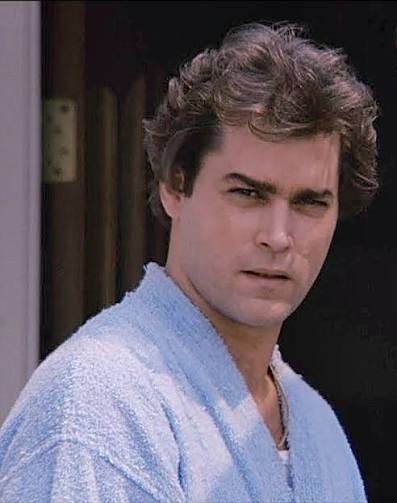
“I’m an average nobody. I get to live the rest of my life like a schnook.”
— Henry Hill
I once created a Taxonomy of Intentional Drug Use for students in my “Drugs & Society” courses. The forms of intentional drug use were:
Religious
Medicinal
Recreational
Habitual
Addictive
Performance Enhancement
I came to discover through later experience that one may also consume a drug politically, that is as a public display in accordance with or resistance to existing authority.
Legalization neutralized the outlaw culture that had formed around marijuana. The reform movement has always had participants who held an economic side-interest in marijuana. Some of them growing and selling themselves, others were involved with manufacturing paraphernalia, and others had auxiliary businesses (magazines, head shops, cultivation equipment). What ran through them at the time was a love for marijuana; their related business ventures stemmed from wanting to build a non-alienating lifestyle around the substance and its users’ culture.
Beginning with decriminalization in Massachusetts I observed a new type of reform volunteer joining MassCann: people who loved money and saw legal marijuana as a untapped market in which they could gain first-mover advantage. Sure, they smoked weed, but they would never have gone public while they might have been arrested for it. I was told by a few members of the MassCann board that their Treasurer once wanted to sic the cops on unlicensed sellers at the Boston Freedom Rally. He left MassCann, and now owns a retail store. That type of asshole became more common.
With legalization, the advocacy shifted to those with the greatest resources—the licensed industry, with their venture capital backing, dwarfed MassCann, NORML, and other reform groups. Trulieve spent more than thirty times the combined annual operating budgets of national reform groups NORML and MPP, on a failed 2024 Florida legalization initiative.
I have never had much interest in other people using marijuana. From time to time I would supplement my income and/or consumption by purchasing a larger volume and selling off the surplus to friends. But it was never a part of my advocacy to encourage others to use it. That is what licensed retailers do, and I have little interest in entering the licensed market. I am a sociologist and social critic, not a salesman.
I got through the legalization wave and have been carving out a public sociology that draws heavily from what I learned through participating in the marijuana reform movement. I have looked to colleagues of mine who did their early work in the Soviet Union, Hungary, or other Eastern Bloc, state socialist nations, who saw their career focus fall apart and fade away, and could do nothing to stop it from happening.
They have a collection of photos of them posing with Mikhail Gorbachev or Lech Walesa after sharing drinks; I have photos of me with Woody Harrelson and Jack Herer after sharing joints.


Kevin Sabet has taken the fading presence of the marijuana-user identity group as a sign that cannabis legalization has lost its main supporters—the volunteers who kept the culture alive and beat back prohibition. Indeed, the ballot question he is backing will see far greater opposition by established industry operators than MassCann volunteers. Unlike in the past, when prohibition challenged lifestyles, this effort to re-criminalize marijuana attacks livelihoods.
What Sabet does not seem to understand is that even should his ballot question succeed (I predict a decisive loss), and he puts the licensed retail industry out of existence, he will recreate the conditions for a widespread unregulated market, the political use of marijuana in resistance to criminal prohibition, and the marijuana-user identity groups that it gave birth to, long ago.
This time, I am bringing the edibles, and unlike the one-trick pony’s mine will have labeling and actually contain THC.