
On METCO
Isolating resources leads to long commutes, for some

When I was teaching undergraduates, every so often I would ask white students if we still had posted segregation, would they sit in a Whites Only area of a restaurant or bus?

The braver, more aware students would reply, “Yes,” and give prevailing cultural norms as the reason they would continue to perpetuate segregation. Most students would reply based on social desirability and said that of course they would never sit in a Whites Only section. Without irony, they would also confirm that they grew up in the Boston suburbs, and that without the METCO program, they would likely not have encountered racial minorities in their everyday lives.
It's been over a decade since I last ran this exercise. But given the change in our prevailing cultural norms, I wonder how many students would not only recognize they would sit in the Whites Only section, but how many of them would think returning to de jure racial segregation is a good idea.
I went to Scituate (MA) Public Schools through my primary education. “The Most Irish [sic] Town in America” was more than 97% white. There was an ethnic enclave of Cape Verdeans whose seafaring culture made the small ocean side town an attractive location to migrate to in the middle of the 19th century, and whose progeny remained. In the 1970’s and 1980’s they had become small business owners, police and other public employees, and whose residences were concentrated in the town’s Greenbush neighborhood. There were one or two African- or Asian-American families with school-aged kids at any given time.
METCO
The Metropolitan Council for Educational Opportunity
METCO is a program funded by the state of Massachusetts to expand educational opportunities, increase diversity, and reduce racial isolation by permitting students from Boston to attend public schools in other communities that have agreed to participate.
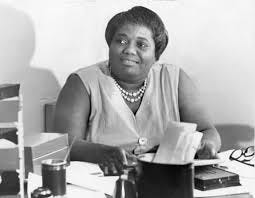
The METCO program was spawned in 1966 by Ruth Batson, who created a collaboration with Brookline Public Schools. The program grew rapidly to include 28 school districts outside Boston, by the time of Batson’s departure in 1968.
The idea behind it (prior to court-ordered integration of Boston Public Schools) was to offer select Boston students the opportunity to attend schools in the predominately-white suburbs. From the Scituate Public Schools’ website:
“METCO has been in existence since 1966. The partnership with Scituate began in 1968 when 20 Boston resident students entered Scituate High School. Today, there are around 70 students in the Scituate METCO program each year.”
However, it was not until the middle of the 1970’s that Scituate distributed “METCO kids” to all of its then-four elementary schools. The closure of the Central Elementary School made fiscal sense with the shrinking Gen X cohort, and with the consolidation the town finally integrated its remaining elementary schools (there was only one junior high and one high school).
The South Boston Busing Riots that followed Judge Arthur Garrity’s 1974 desegregation order for Boston Public Schools were happening concurrent with Scituate’s integration. Scituate’s large Irish-American population had close connections to South Boston residents. The racism being expressed in the city existed in Scituate as well; not all parents were pleased with integration and there was an uptick in kids who went to the mostly-catholic private schools in the area. Some took a daily bus from Scituate to Boston College High School, just south of South Boston.
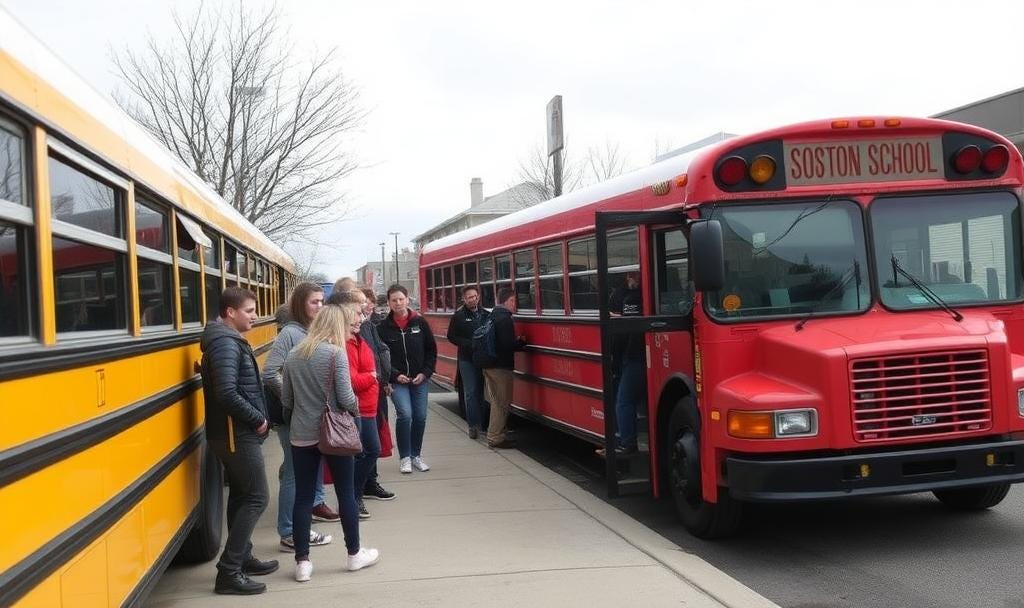
I am unusual, in that I am white, was raised in Scituate, and my son is Latino and has been raised in Boston. As a parent who considered METCO from the other side—that of sending my son from Boston, out to the disproportionately white suburbs—I was acutely aware of how much more is expected of Boston kids than suburban kids, for the “opportunity.”
The failure of the METCO program, structurally (not individually—it can be much to the benefit of students) is that while the focus was on exporting the most "promising" of Boston students to the suburbs, there was no reciprocity. No Scituate students went to Boston Public Schools.
To some, the thought of sending Scituate students to Boston schools is absurd, and they have already dismissed the prospect. But the underlying driver of their dismissal is their belief that inequality is untreatable, and that schools in cities are inevitably worse than schools in suburbia.
And part of that is true. But only because suburban parents have no interest in improving urban schools, despite having resources to do so. They are willing to accept a token amount of screened imports, to teach their kids about "racial equality," but they don't want their kid to be a racial minority in their school.
Better would be some type of sister school program, where students are co-educating at two different sites, and rotating between them, that would do more to bring us closer than to "cream" the talented and fortunate from the city. The Scituate parents most averse to having their kids share the local classroom with racial minorities (literally one or two per classroom, maximum) put their kids on long bus rides, too.