
Owning Alaska
Information control and legitimacy

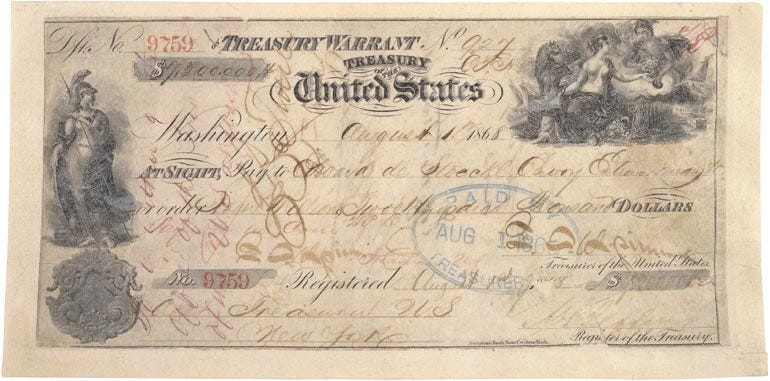
It is widely-known that Alaska was once a Russian colony, purchased by the United States for literally two cents an acre, in the middle of the 19th century. Less thought about is that Alaska (and before it, Louisiana) became part of the U.S. by the exchange of money for claim to the land, with non-Native populations. The legitimacy of U.S. claims rests on the legitimacy of the prior French and Russian claims.
The meeting was purportedly due to a diplomatic mix-up. Trump’s Special Envoy (appointees to real offices are subject to scrutiny…yadda-yadda-yadda) Steve Witkoff doesn’t speak Russian and in a cost-cutting measure perhaps, relies on Putin’s translators.
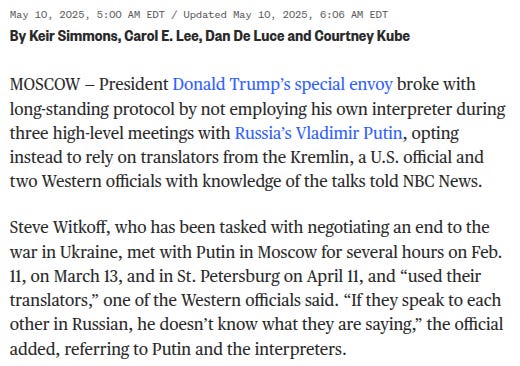
MOSCOW - President Donald Trump’s special Envoy broke with long-standing protocol by not employing his own interpreter during three high-level meetings with Russia’s Vladimir Putin, opting instead to rely on translators from the Kremlin, a U.S. official and two Western officials with knowledge of the talks told NBC News.
Steve Witkoff, who has been tasked with negotiating an end to the war in Ukraine, met with Putin in Moscow for several hours on Feb. 11, on March 13, and in St. Petersburg on April 11, and “used their translators,” one Western official said, “If they speak to each other in Russian, he doesn’t know what they are saying,” the official added, referring to Putin and the interpreters.
Prior to the meeting, Trump claimed that less than a cease-fire would not be acceptable. Shortly after, Trump announced that these are not the droids we are looking for and no cease-fire is needed. He believes Putin when the former KGB agent says that Russia’s claim to Ukraine is legitimate—that they “annexed” Crimea, rather than violated Ukrainian sovereignty a decade ago. Ukraine once was part of the U.S.S.R. and despite no longer being Soviets, Putin wants Russia to return to the geography of the contiguous Soviet Empire, especially when it comes to strategic ports.
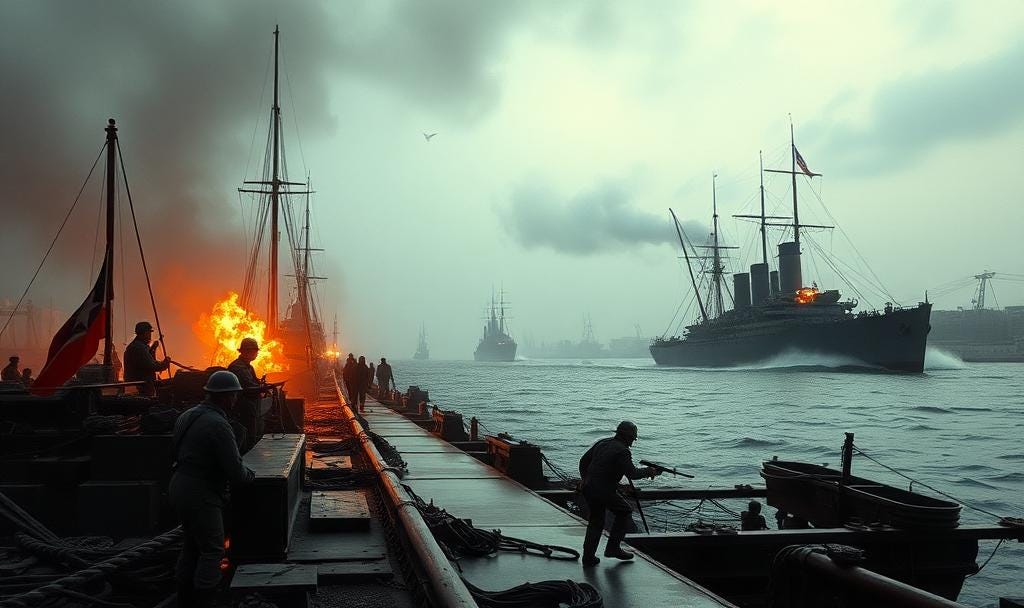
Most Americans do not know that the U.S. drew first blood against Bolsheviks, in 1918.
The October Revolution of 1917 led to Russian withdrawal from the Great War. The U.S., Britain, and Canada then took up arms against the Bolsheviks. In locations spanning ports from the White Sea to Siberia, they made futile attempts at reclaiming weapons stores from the war and a halfhearted stab at regime change from August 1918 through April 1920 — largely after the Armistice in Central Europe. It was the War to End All Wars that birthed the Cold War, not the end of WWII.
The U.S. refused to recognize the Soviet Union until the mid-1930’s. The alliance formed for the sake of defeating Germany lasted as long as the Nazis did. By summer 1945 the U.S. and the U.S.S.R. were scrambling to see who could grab the most German scientists, while setting out to apportion the country between them.
Despite differently-ordered economies (supply-constrained vs. demand-constrained), both the U.S. and U.S.S.R. were institutionalized as nation-states and behaved accordingly, expanding their influence via a series of diplomatic and economic partnerships, and military interventions. 20th century decolonization meant shrinking pre-Modern empires and opening a fresh playing field for the American and Soviet Empires’ proxy wars.
If we examine the language of the Cold War, we will see that both sides claimed to be acting on behalf of the people. The Soviets quite overtly naming nations and public resources after the “People;” the United States claiming the political process as the source of freedom, and set about making the world “safe for democracy.”
If we examine the practices of the Cold War, we will see that both governments imposed strict discipline upon their populations, taking turns (with China) imprisoning more per capita than other nations, and propagandizing the need for social stratification to their populations via print and broadcast media. Both the Soviet and the American governments set their secret police (KGB/FBI) to internal spying and subterfuge of those who would seek to liberate the People from state-enforced oppression.
The State exists for the People—the social body alleged (by both nations!) to be the purpose of the state.
If others claim to represent the People, then the legitimacy of the state’s violence comes called into question and these offenders must be violently quashed, in the name of the People. The same thing goes for those who would claim that folks like themselves are people and should count among the People, when the state concerns itself with the People.
This is another way of looking at the identity movements of the 20th century and the pursuit of civil equality—it is a contest over state legitimacy between those who had benefited from inequality and those who suffered from it. A state seeking legitimacy would not only have to recognize in theory, but also realize in praxis, a civil equality.
The movement against “woke” today in the U.S. indicates a struggle over legitimacy—not only of the identity groups that seek civil equality, but of the state itself.