
Partial Persons
What if they got the 14th amendment wrong, and all that follows from that?

The legitimacy of the state has been thrown into crisis. General public dissatisfaction was evident in 2016, when corporate party outsiders took over; with one of them winning both the nomination and Presidency. Despite political outsider status, Trump, as Republicans do, prioritized the interests of the wealthiest and most powerful.
He took office to a manufactured (McConnell’s refusal to hold confirmation hearings while Obama was in office) Supreme Court vacancy. Then Ruth Bader Ginsburg’s insistence that the first woman President nominate her successor proved to be a miscalculation, on two fronts. Those spots were filled with Federalist Society-approved constitutional fundamentalists, who—as fundamentalists always do—interpret the canon toward their own desired ends, regardless of the content of the canon.
Rather than comprehend state-formation as a process, these Justices seek to tie the state to its foundational epoch. The nation exists in (not through) the document and in so much as that document is of a particular social order, our social order must continue in the same way.
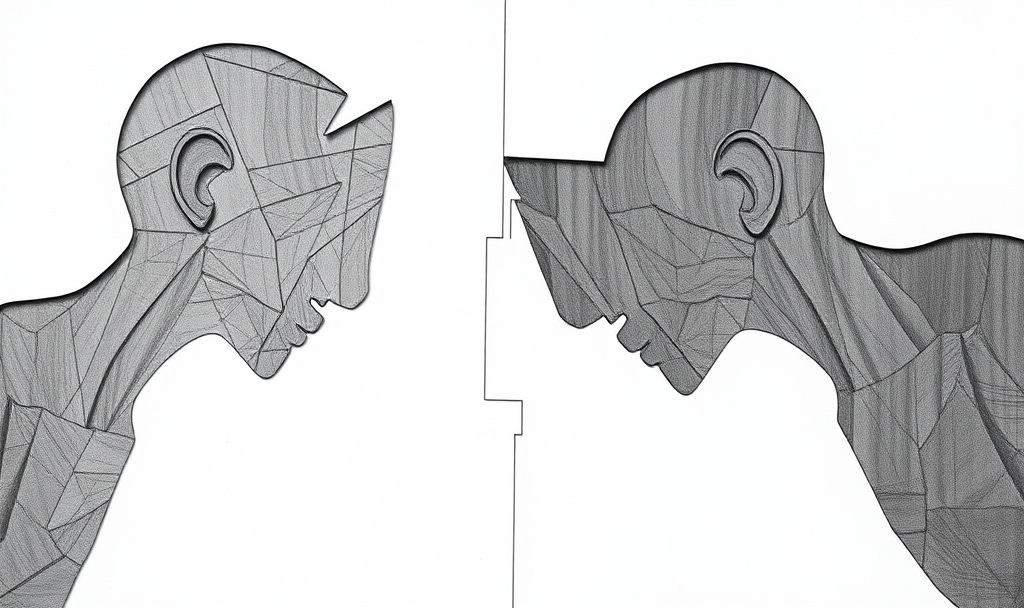
Partial humans are still, in theory, legally possible, as there is only one amendment that changed that original condition. Amendments and Supreme Court precedents have both been overturned. They are of the nation, but they are not the nation. Suffrage, as well, is not universal—not even to this day. Again, there is only one amendment that changed Original Intent.
In the majority of sitting Justices’ eyes, the Court can serve as a corrective for too much democracy. Witness their de facto amending of the Constitution such that the Executive cannot commit the “high crimes and misdemeanors” that are the sole reasons given for impeachment, and by virtue of this concocted immunity, the Executive is also no longer bound to follow international treaties the Constitution declares to be “the law of the land.”
The Framers had no idea what their Liberalism might lead to, in terms of social identities and power. If, instead of assuming that these various “progressions” reflect a national improvement, what if the perception of them is as string of mass deviances, each to a further degree? Slavery was abolished and Black men got the vote, that led to white women demanding the same, and then we had people who were never intended to have a say starting to advance their own interests.
The Founders indeed sought to ensconce a strictly-ordered, caste society that reserved political and economic power to a select class of white men. The revolutionary bourgeoisie was not interested in human liberation, at all. They still are not.