PED Games
A reckoning of drugs and sport

My very first solo lecture was about performance-enhancing drug use in sports, to about 60 students in a Drugs & Society course at Northeastern University. I put forth a question: Why are players’ performance-enhancing surgeries acceptable, but their performance-enhancing drug use is not?
Performance-enhancing surgeries?
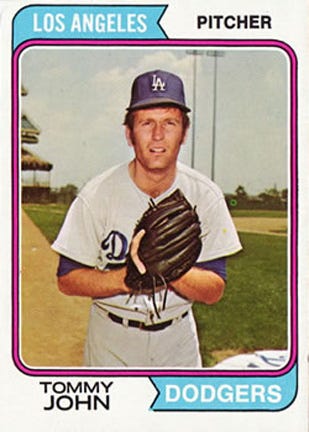
Major League Baseball pitcher Tommy John injured his throwing elbow so badly, he was told he would never be able to pitch professionally, again. He and his surgeon opted for what was an experimental procedure, where a tendon from elsewhere in the body is used to reinforce the ulnar collateral ligament, allowing pitchers to not only return to their former level of performance, but in some cases exceed it. Today, professional (and college) players routinely have “Tommy John surgery.”
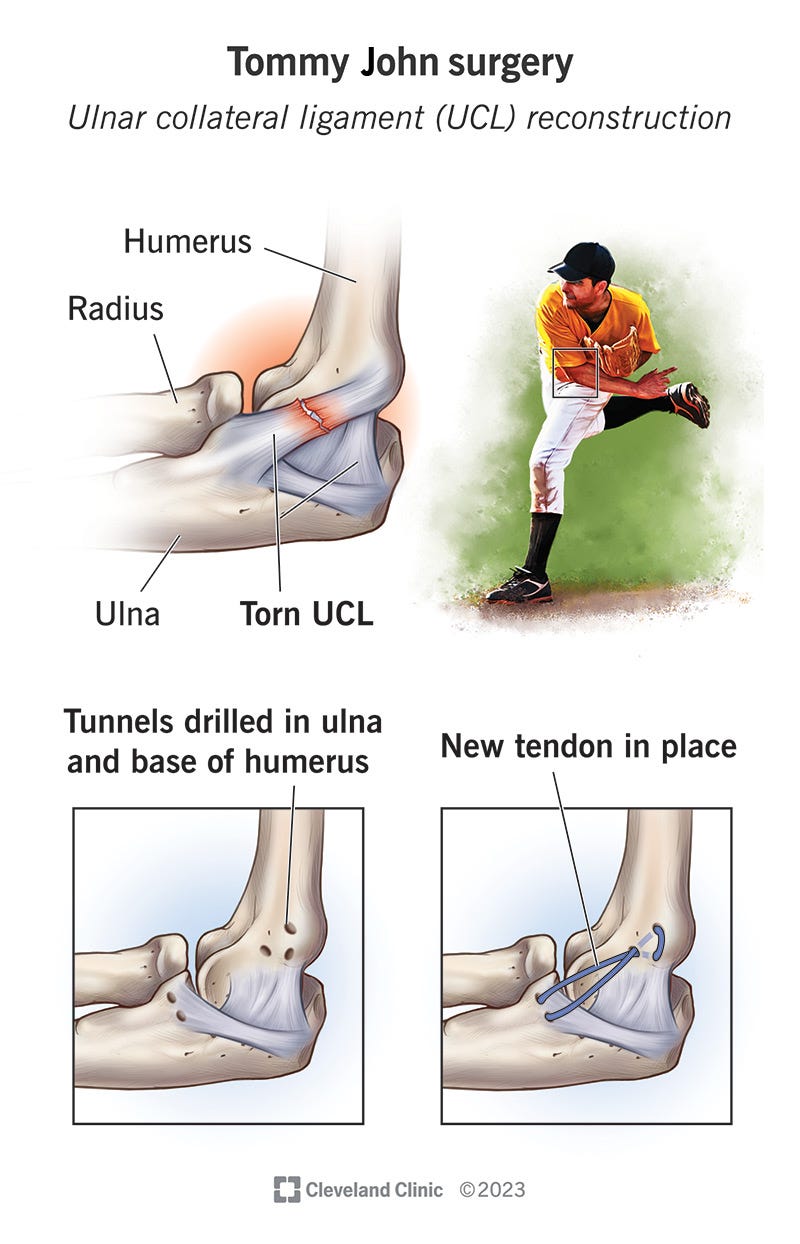
Similar procedures have been developed for knee injuries, and it is widely recognized that following a rehabilitation program, players can return to pre-injury levels of performance.
The player’s injury may have come from over-exertion, repetitive stress, a sudden event, or a combination of the three, but the result is the same: The ceiling on performance has been significantly lowered. Sparing the surgery, none of them would be able to compete any longer as a professional.
Athletes routinely suffer injuries due to their sporting competitions and training. The higher the level of competition, the more prevalent and severe the injuries. This is a risk athletes undertake voluntarily. At the highest levels, they know they will be injured by their sporting activities. Trainers’ rooms are stocked with all sorts of pills, creams, ice baths, and other temporary cures for pain. For professional and world-class athletes, there are staff physicians to prescribe and administer opiates (Tramadol injections happen before every NFL game).
The World Anti-Doping Agency (WADA) is an administrative body charged with eliminating performance-enhancing drug (PED) use in international competitions such as the Olympic games.

We project moral values onto sport, not least being “purity” of competition which allows for a fair and just ranking of competitors via outcomes. The idea of “fair play” confused with moral purity itself. One may play fairly in ways that may offend the moral senses of others. Baseball, for example, allows competitors to steal. Not just bases, but the opponents’ signs to each other.

There is a subset of advanced baseball knowledge observable through the sign systems employed by pitchers and catchers, base coaches, hitters and runners, and fielders. These are employed because teams understand stealing signs provides a competitive advantage, and it is within the rules to do it. One may choose to play baseball without attempting to steal opponents’ signs, but at higher levels of competition it will mean losing more than one should.
Because the athlete has suffered an injury, attempts to recover from that injury allows them to play what sociologist Talcott Parsons named the sick role. The sick person has a moral responsibility to try to recover, if possible. The injured athlete is lauded then, for having surgery in an attempt to return to their prior state.
PED’s on the other hand, are seen to provide athletes the ability to achieve states of being they would not otherwise reach. Ultimately, though, the administration of PED’s without concomitant practice and training will not produce any discernable difference in performance. Absent the athlete’s discipline, there can be no enhancement.
There are also questions relative to the sporting competition as to what may be considered “performance-enhancing.” While stimulants may benefit a football player in games, they are not likely to aid in shooting sports or archery. In those sports, we might look for beta blockers or benzos to slow metabolism (Olympic shooters fire between heartbeats).
MLB pitcher Dock Ellis once threw a no-hitter while on a significantly large dose of LSD. He struck out six batters, but he walked eight and hit a batter.
It’s remarkable he did not give up a run. While no doubt the LSD affected his performance, it’s not clear it was enhanced at all.
We have historical records of drug use in sporting competitions going back to the original Greek Olympic Games. The first modern Olympics featured marathoners eschewing water in favor of brandy during the race. It was thought that drinking water would produce cramping. Performance-enhancing drugs are drugs taken with the belief they will improve athletic performance. Whether they do is of secondary concern.
Athletes at or near the highest levels of their sports routinely take drugs to allow themselves to compete. They take drugs to help recover from injuries suffered from competition and training. They take drugs they believe will enhance their performance—and they will attempt to hide this when their league forbids the drugs they use.
This is why WADA forbids masking agents, drugs that offer no performance-enhancing qualities, but are taken to cover the presence of the other drugs being taken, that do.
In the past 24 hours, I discovered for the first time that Junior Trump and I have ideas in common. Now that Mission: Turn Greenland Red-White-and-Blue is last week’s news, he’s promoting the idea of the “Steroid Olympics,” where PED’s are encouraged. His advocacy is more on the douche-baggy side of “greatness” and spectacle, while mine focuses more on critiquing the cultural messaging in sporting competitions, but there is a tiny bit of overlap.
While he looks forward to chemical monsters in gladiator games, I know that injuries will become more common as larger muscles put more strain on ligaments (which never get stronger via PED’s), the more rapid recovery time offered by steroids will produce more repetitive-stress injuries, and the imbalances resulting from chronic growth hormone or testosterone injections will alter endocrine systems with affects ranging from ‘roid rage to cancers.