
Place Your Bets
Professional sports gambles with their workers' health and well-being

I have been able to grind a month’s utilities payment out of a $100 stake with enough regularity to be comfortable with a built-in 2.1% player disadvantage at Blackjack.

I do not, as a rule, bet on other people’s performances for money. I have found people are less reliable than a card game where I am guaranteed to lose 2.1% more often than I win or break even.
Now, the opportunity to gamble on human performances, once only available through illegal betting networks and at licensed casinos in just two municipalities,
is legal in most states. It can be done either in-person at one of the licensed casinos popping up like mushrooms, or anywhere inside the geographic boundary of the state via mobile app.
The Original Sin of professional baseball was fixing the outcomes of the 1919 World Series by ethnic gang members in Chicago and New York. Eight players on the White Sox were banned for life, including Joe Jackson, whose career had rivaled peers’ who would later make the Hall of Fame. Almost seventy years later, another would-be Hall of Famer, Pete Rose, was also banned for life, for having bet on games.
Today Major League Baseball, and the other North American men’s professional sports leagues with national broadcasting contracts, have partnerships with the gaming industry, collecting a percent of the vigorish—the bookmaker’s commission for taking a bet. The leagues directly benefit by attracting more dollars to wagering. It does not matter to the league upon which team’s or players’ performances the bets are placed. If a league gets a 15% cut (“licensing fee”) of the traditional 10% vigorish, that’s one and a half cents of every dollar wagered. The state does not mind, as cash wagering markets can be good tax revenue generators that cost the state very little in terms of monitoring infrastructure.
But in this brand new era of mobile gaming we have already seen a concerning number of professional players violate league rules and federal laws.
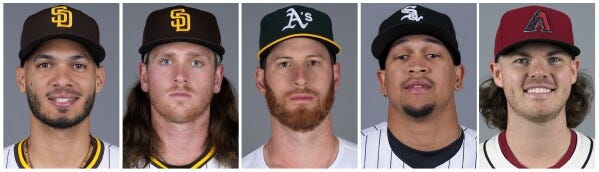

MLB said Marcano placed 387 baseball bets totaling more than $150,000 in October 2022 and from last July through November with a legal sportsbook. The 24-year-old Venezuelan with 149 games of major league experience became the first active player in a century banned for life because of gambling.
The motivation to fix performances was supposed to be overcome by the huge salaries professional baseball players in particular were capable of earning. Aside from blackmail, who could come up with enough money to get a player to risk a playing career worth many millions of dollars? Last season, we discovered it was about $10,000, and no one had to blackmail anyone.
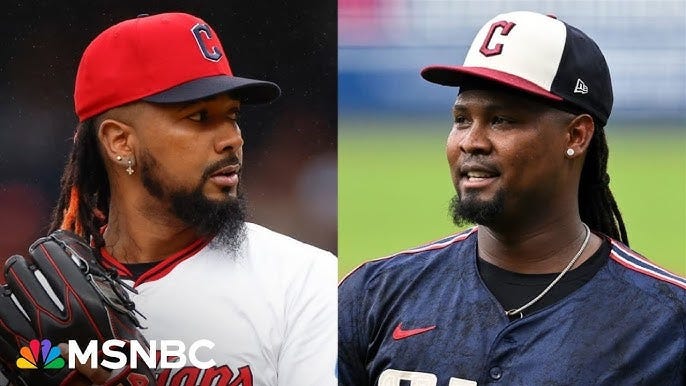
Clase, a three-time All-Star and two-time American League Reliever of the Year, had a $4.5 million salary in 2025, the fourth season of a $20 million, five-year contract. The three-time AL save leader began providing the bettors with information about his pitches in 2023 but didn't ask for payoffs until this year, prosecutors said.
More concerning for MLB would be former umpire Pat Holberg, who was fired in 2024 for having a third party place bets on baseball. While fixing the outcome of games requires coordinating with multiple players, a home plate umpire makes dozens of play-determining calls (balls and strikes on decisive counts, mostly) per game. As we learned from the Ortiz and Clase case, bets can be placed on particular pitches (first of an inning, first to a batter), for which home plate umpires make the judgment call.
From a labor perspective, the athletes are expected to allow others to bet on their performance, but they are banned from doing so. As people lay material value in the balance on a degree of faith in the performance of a player or a team, the spectator may come to have a proportionally-greater investment in the outcome than the player. The player collects a paycheck for the game, whether they succeed or fail that particular day; the gambler only collects should the player succeed, relative to the wager.
Players are being exposed to a new risk—the losing bettor. The upcoming Major League Baseball work stoppage (due to start the day after the 2026 World Series ends) will involve the Players Association hashing out what rights and protections players will have. Imagine if players demanded an opt-out on sports betting—that a player or team could refuse to allow wagers to be placed on their performance. Now that it is a licensed league activity, players have a say in how they may be exploited. The most successful labor unions of the past 50 years are pro sports unions.
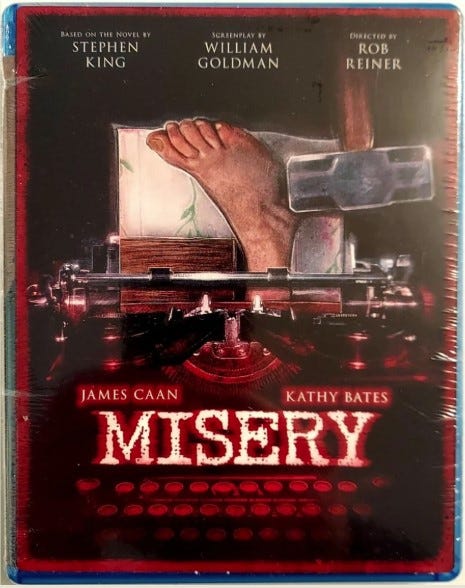
The relationship between the creator and the over-indulgent fan is the centerpiece of Stephen King’s Misery.
Professional sports fandom is an investment of the self in an affective alliance with other fans of the same franchises. Fans collect information and mementos, signs and symbols that represent their favored teams and players. Fans emotionally invest in performances, suffering biochemical changes based on in-game events and outcomes. Some fans expand their team-related expenditures to placing bets on games.
Experienced sports bettors understand it is generally a losing proposition to bet on teams because you want them to win. It is far more lucrative to arbitrage point spreads in the days before events, regardless of teams. But fans tie their identity to their teams’ success on the field, not in the sports book.
An alcoholic in recovery would be ill-advised to take a job in a brewery, with temptation all around, a gambling addict in recovery should avoid situations where they could place bets. Unlike alcohol in a brewery, however, there is nothing endemic to the business of baseball that ties it to gambling. In fact, MLB had a full century of banning gambling by its players, managers, and officials. The league still bans gambling on baseball, but promotes gambling on every baseball game the league produces.
Do not be surprised if a previously-banned player someday files suit under the Americans with Disabilities Act, to get their job back, claiming their employer created a hostile work environment by placing an unnecessary temptation in front of them, knowing they are an addict.