
Re-scheduling and De-scheduling
The Controlled Substances Act was designed to justify criminal prohibition.

[On January 18, 2025, hearings on re-scheduling cannabis due to begin on January 21 were postponed, ostensibly due to the DEA screwing with the process (like Japanese soldiers on a deserted island in 1949, they think the war is still going on). While the process of re-scheduling could be proceeding in the coming months, the change in administration leaves every one of Biden’s initiatives up for cancellation.]
From January, 2024:
Now that it has been leaked that the DEA is considering moving marijuana to Schedule III under the 1970 CSA, it is the perfect time for us to consider the differences between RE-scheduling and DE-scheduling a drug, and there are many other who are writing about just those things.
I am going to make a slightly different proposal from my activist colleagues, most of whom are firmly in the DE-scheduling camp, though there are some who are oddly comfortable with locating cannabis in a rubric of medicinal control despite recognizing the (large) majority of use is for nonmedicinal purposes.
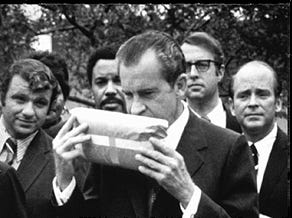
We need to go to the source: Richard Nixon, and his designs.
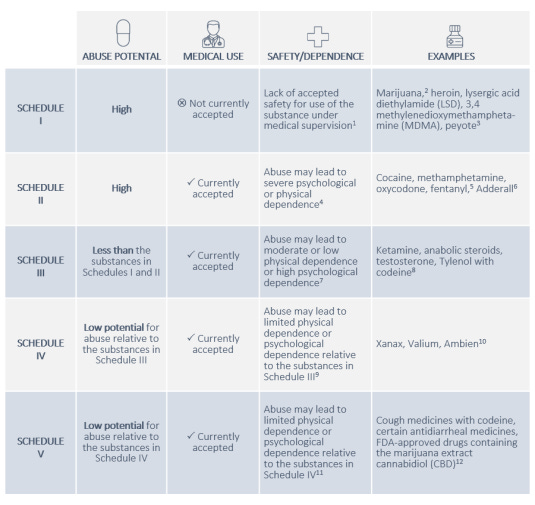
The CSA consolidated what had once been a patchwork of substance-specific drug regulations and prohibitions, under one rubric, with measures of Medicinal Value and Abuse Potential used to place all drugs under five schedules. The least-restrictive, Schedule V, consisting of OTC medications, and Schedule IV - II ascending in degrees of control with Schedule I reserved for drugs found to have no generally recognized medicinal value and a high potential for abuse
NORML sued the DEA (which was also created by Nixon, for the sake of enforcing the criminal drug laws now on the books) in 1972, claiming that marijuana has medicinal value and therefore its inclusion in Schedule I was in violation of the CSA's criteria. It took 16 years before DEA Judge Francis Young ruled that marijuana was "the safest therapeutic substance known," but Administrative Law meant Judge Young's careful, extended weighing of the evidence did not matter to policymaking, if the Administrator did not agree.
For the Bush I, Clinton, Bush II, Obama, and Trump presidencies *each* of them chose a DEA head who would continue to deny the truth. Thirty-six long years.
RE-scheduling marijuana (and renaming it "cannabis" under law) does nothing to fix the greater problem of the philosophy by which the Drug War was birthed--that drug use can only be medically justifiable, and that drug *abuse* is a crime.
From that foundation, our modern misery was born. After 54 years, we know waging war is the wrong approach to drug abuse, to public health, and to our communities. And we have yet to deal with the *other* elephant in the room--the most commonly-used drugs in America are caffeine, alcohol, and nicotine, and they are not covered by the CSA at all.


Those who created the CSA knew the three most popular drugs at the time were drugs, but they excluded them from regulation because they were not used medicinally. Using the measures of the CSA, alcohol and nicotine would be good candidates for schedule II--with relatively little recognized medicinal value and high potential for abuse (and high social costs associated with abuse).
Along with mistaking drug abuse and crime, the framers of the CSA also neglected to create a schedule for drugs that are popularly used for nonmedicinal purposes, one that would include caffeine, alcohol, nicotine, and today, cannabis. We can call it "generally accepted Cultural Uses," and we can schedule drugs based on the social costs of use. We can encourage harm reduction methods in our policies, and we can utilize known means of controlling use without criminalizing users. Such as how we reduced tobacco use without having to arrest a soul.
We should use this rescheduling of cannabis to reflect upon our nation's drug policies as a whole and to see where Nixon and his crew might have made some fundamental mistakes, back in the late 1960s.
The CSA was created with a default of criminalizing drug use and drug users, under a rubric that fails to account for the majority of drug consumption that takes place in the U.S. We know better and we can do better than to rely on a model designed largely to justify criminal prohibition.
We have been surrounded by cultural alcohol, caffeine, and nicotine, and created a “uniform” drug policy that was blind to everyday drug use in its goal to create criminals. We can have a drug policy focused on public health, but it means having to cover all drugs.