
Restorative Justice
The convicted is sentenced to complete their G.E.D.

Modern prisons were created for the sake of resocialization, where inmates are largely segregated from the rest of society, placed on daily and weekly schedules, and counted. Once each day in a minimum security prison, once each hour in a maximum security prison. What resources may be made available to prisoners: libraries and educational, exercise and physical fitness, work and training, legal aid, vary as much as historical era, location, and politics.
In common parlance, the prison does not serve to rehabilitate, but to punish, to exact revenge. Prisoners are thought to “pay a debt” to society, though the only uniform treatment that can be found is they were where they were expected to be, when they were supposed to be there.
In 1988, George Bush’s Presidential campaign attack ads centered around his opponent being “soft on crime,” highlighting a rape committed by a prisoner “on furlough.” The campaign wound up ending prison furloughs in Massachusetts, the state where Bush’s opponent, Mike Dukakis, was governor. The ad showed an ominous parade of prisoners, walking through a revolving door.
The ads laid the foundation for a line of questioning during a nationally-televised debate, where the moderator asked Dukakis if he would support furloughing a prisoner who had raped his wife.
Politicians seeking office warn there are dangerous people all around us, and we can never know when they may attack. Their answer is always more policing, more surveillance, and “harsher” sentences (i.e., more counting)—ignoring that the length of the sentence is determined by the perception of the crime, and not the cost of the act. The elder Bush Presidency brought us the 1988 Drug Control Act, where then-Senator Joe Biden championed 5-year mandatory minimum prison sentences for the possession of five grams of cocaine in one form (crack), and five hundred grams in another (cocaine hydrochloride).
It took $50,000-worth (retail) of cocaine hydrochloride to reach the same mandatory minimum prison sentence as would be assigned for about $50-worth of crack. This ignored that all the cocaine hydrochloride could be converted to crack. The lesson: When half a kilo of cocaine lands in your lap, convert it to crack 4 grams at a time—you will stay under the mandatory minimum prison sentence for each form.
American drug policy has never been rational.

Nor, if you think beyond slogans and surfaces, is our treatment of criminal deviance. We exaggerate the negative effects and outcomes of some forms of crime, while ignoring that our treatments seldom seek to improve anyone’s state of being—neither the offender’s, the victim’s, nor the society’s at large.
Building prisons in the hopes of reducing crime is akin to building hospitals in the hopes of reducing disease. We do nothing to address causality, and through the creation of a surplus of treatments we are provoking identification of deviance calling for such treatments.
Deviance is not inherent in any act or state of being. When we decide we are surrounded by it, we will find it everywhere around us. When we make the treatment of deviance profitable, capital will produce more deviance for the sake of achieving more profit.
Capitalism is a demand-constrained economy; as long as demand outstrips supply, the market is “healthy”. As soon as supply exceeds demand, profit is at risk. Too much supply and profit is impossible. We can see labor-power (capital’s expense) is treated in exactly the opposite manner. Capital seeks a larger supply of labor than needed, as it drives the price of labor-power downward, which is why Milton Freedman and Allen Greenspan considered 5% unemployment to also be “healthy.” Too much employment forces labor costs to rise and profit to suffer.
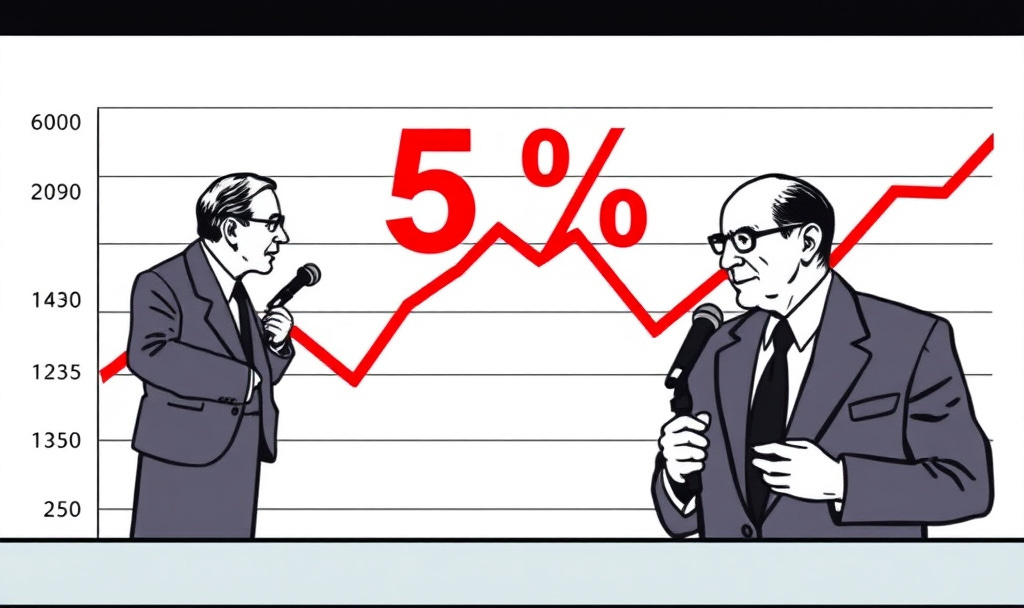
Despite claiming to be “job creators” the realist understands capitalists want an undersupply of jobs, at all times. Force the sellers to accept whatever price they can get at whatever job they can find.
With government subsidies covering food and housing, employers need not worry about labor-power being paid even the bare minimum required to have the worker return to work the next day! While the corporate media portray SNAP and Section 8 housing as “benefits” going to people incapable of generating a living wage (always due to personal shortcomings) from the sale of their labor-power, we can see they are actually employer subsidies allowing them to keep wages low and artificially inflate profits via public programs.
Some folks argue that we need lifetime limits on SNAP. I agree. If an employer has employees who qualify for SNAP for more than 30 months in total, that employer should have portions of their company patriated. They are not running a capitalist business, they are running a state-subsidized plantation while channeling all profit to themselves, and the People cannot cotton to that.
Okay. Corporations that are people can, and do cotton to the plantation model. Which gets me to a related question about labor: Is it legal to OWN people in the United States?
If not, then why is it legal to own a corporation, or why is a corporation only a person in some respects and not others? I believe one reason for the 14th amendment was to override the designation of disproportional personhood found in the original Constitution. The “due process” loophole in the 13th amendment permits slave labor, but forbids ownership. How can people be legally owned by others?
Prisoners may be forced to labor while in prison. For centuries, such labors were for the general public—laying roads, making license plates, farming, etc.—and a slice of prisoners still do public work as part of their sentences. However in the past forty years there has been massive growth in for-profit prisons, aided by the Drug War.
Profiting From Deviance

In the West we began institutionalizing deviants in Bedlam. It was not much for an institution—no rehabilitation, no “patients.” Prior to that landlocked, padlocked ward, we had the Ship of Fools—a sort of Pied Piper in reverse—where the captain would arrive in town and let the “fools” loose, demanding payment to corral them back onto the ship and sail …
The for-profit prison channels prisoner labor into private profits, for the corporation running the prison and for the corporations contracting prisoner labor. These slaves are working for particular individuals and not the society as a whole. They are repaying their “debt” to the Bourgeoisie, not society.
We are running prisons as employment centers of last resort, after people are convicted of engaging in illegal business practices (drug sales, fencing, acquiring commodities without authorization—theft) while trying to generate the money needed to exchange for their survival. Imagine, instead, that we sought to address the social conditions in which the deviant behavior was manifested.
Restorative justice focuses not just on the individual who committed the crime, but on the social conditions in which deviance becomes a rational choice. To the degree that it is justice, it does not subjugate prisoners to labors that do not go back to the “scene of the crime.” In other words, it involves crafting an approach where the deviant repairs the damage they caused (to the degree possible), repairs the social conditions that promoted the deviance, and repairs themselves of their own deviance.
Sentences might look more like “400 hours of community service and successful completion of an adult literacy program and the G.E.D.” instead of “5 years.” The former returning value to the community and making the offender better able to support themselves, while the latter makes money for a handful of corporations and their shareholders and releases the ex-con when mandated, regardless of whether the community or the prisoner saw any rehabilitation.
The authoritarian tendency, however, is to label more behaviors and states of being as criminally deviant, to lengthen (“harshen”) prison sentences, and to put convicts into legal slavery for just one social class, instead of the society as a whole.