
Risk and Root Causes
A real-life parable

I wanted to write a note for a baby shower gift so I asked ChatGPT (2.0) whether a lion or a bear would win a fight in a hockey rink.
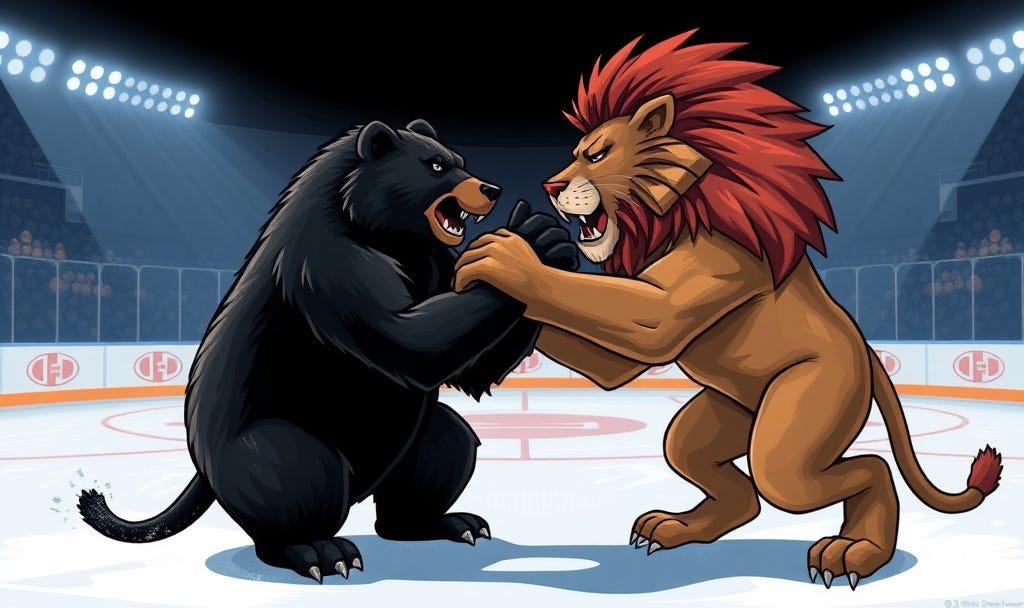
At first, the thing goes into a spiel about the ethics of animal fighting and how we should not be doing such a thing, and then notes that bears and lions come from very different habitats and the chances of them ever encountering each other are negligible.
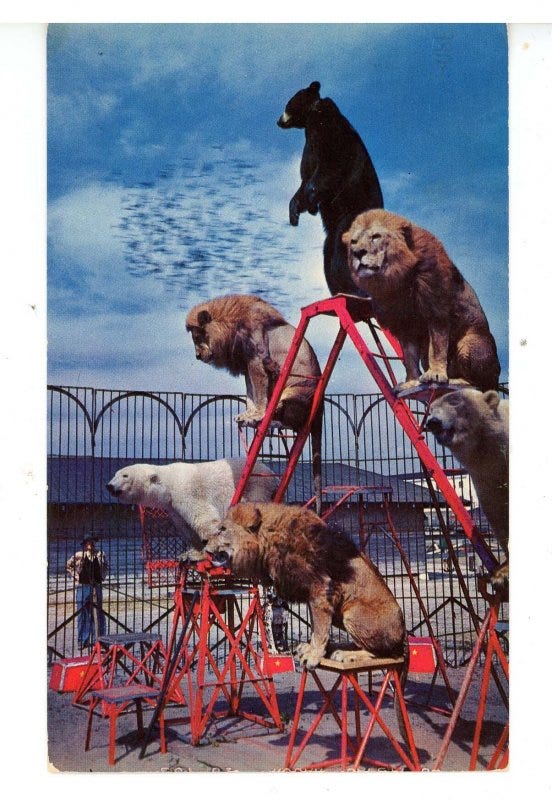
I countered—Au contraire! Ringling Brothers Barnum & Bailey Circus toured with both lions and bears at the same time. I once attended a show in the Boston Garden on a floor installed atop the ice rink where the Boston Bruins play, so the likelihood of the two animals being together on a hockey rink is not as small as one might assume.
Again, the bot goes into the ethics of animal fighting and how we should never do such a thing.
I point out that animal fighting is a part of many cultures, and outsider efforts to eliminate it would be a form of cultural imperialism. The chatbot replied that we can still maintain cultural tradition without ethical violations that would be present in animal fighting.
I questioned whether ethics are transposable across ontologies, and what should one do about a culture that has a fundamentally different framing of life than formed by the Western scientific epistemic? Such as a tribe that believes animals are gods and must be sacrificed and consumed so that the people may become one with the sanctity of that god.
The bot comes back with the importance of killing any animals for food humanely, but I can tell I have it on the ropes.
What, I ask, if the tribe believes that the more suffering before death, the purer the sacrifice and the more sanctified the god, pointing out that this belief runs through Western cultures as well. [n.b.: This was the logic of witch trials]. The bot acknowledged that many cultures subscribe to the belief that suffering is purifying and that in such a case there may be an ethical killing of animals for the sake of human beliefs, and that it need not be quick and painless.
Then I asked which is heavier, a female bear or a female lion. I was informed that the bear is most likely heavier, but that being heavier is not necessarily an advantage in a fight.
Then I wrote, “And don’t forget about the ice.”
“The ice would make a weight advantage much smaller, as it would be harder for either animal to get leverage.”
It will not be the AI that renders human beings near-extinct; it will be human beings using AI that will do it. When you hear about the “risks” of AI, they are talking about people.
If you have not already, please do subscribe. It’s free, though paid subscriptions are most appreciated and sustain this public sociology for just $5 a month or $50 a year.