
Sometimes I Say Things I Shouldn't
I always play to win when it comes to skin and bone

I got to meet the men hired by the Massachusetts NO on 8! Campaign against recriminalization via Zoom last evening. For me, it was a convoluted flashback to 2008 when the Marijuana Policy Project (MPP) sponsored the decriminalization initiative in Massachusetts. None of the consultants in attendance worked on that campaign, nor on the other Massachusetts cannabis reform initiatives that were voted into law.
While the prohibitionists’ attempting to recriminalize cannabis in Massachusetts should not stand a chance to succeed, the Fellowship of the Mediocre that has been assembled to prevent it are going to make it an unnecessarily close contest. What I witnessed in that Zoom meeting last night was the precursor to failureship.
I was invited to attend by current board members of MassCann who, by virtue of elections past, have no experience dealing with the professionalized cannabis reform movement. The board correctly anticipated that the meeting would be a combination of expressing the shared interests in the outcome, outlining the nature of upcoming cooperation, and the campaign consultants’ concerns about “messaging,”
I had the same meeting when I was President of MassCann and Rob Kampia, desperate for a win, had to come to Massachusetts where he was all but guaranteed one. Kampia was the NORML staffer who, when that organization was in deep financial crisis, stole the members’ and donors’ lists and ran his freshly-pilfered resources to Peter Lewis for the funds to launch the Marijuana Policy Project. Perhaps it was the guilt that kept Kampia avoiding initiatives in states with large and active NORML chapters; though it may have actually been fear of volunteers proving false his core reason for professionalizing the marijuana reform movement.
While sponsoring state initiatives over the years, MPP sought to silence NORML volunteers in Massachusetts, Maine, and other states. Their greatest concern at that time was messaging, and that MassCann members were the embodiments of prejudice against marijuana users. Worst of all was the fact they used marijuana.
MPP once took the public stance that they were not in favor of marijuana use—they were opposed to prohibition. They were a marijuana policy reform group that officially did not like marijuana users. After last night’s meeting, I can say the professionalized stigma-managers have barely changed—with legalization they will admit to tolerating marijuana use, just not in public.
MPP represents the professionalization of stigma, a category of advocate sociologist Erving Goffman identified as being disconnected from the stigmatized they claim to represent. The professionalized advocate for the stigmatized will often share in the stigma (though they do not have to), but they are different from those they claim to represent; the stigmatized who have not been professionalized are not able to gain acceptance from the normals. The professionalized stigma-manager has to maintain an illusory normalcy of the stigma for the sake of acceptance, while having internalized the normals’ subordination of the stigmatized.
It is very important, therefore, under cannabis prohibition that the public advocate for reforming the laws not resemble those the law is being changed for the sake of. At least that is the theory.
Pride means rejecting the subordination.
In actuality, if the stereotypical stoner is going to repulse voters so much they will vote against whatever it is the stoners are advocating, then those leading the No on 8 Campaign are seeking to deceive, rather than win outright. They want to minimize the appearance of the stigmatized; thus confirming and validating the negative stereotyping that was used to justify the prohibition.
Imagine white Freedom Riders (who were well aware of racial stereotypes and privileges) telling Blacks to stay on the bus, while the unstigmatized whites went out and tried to fix things.
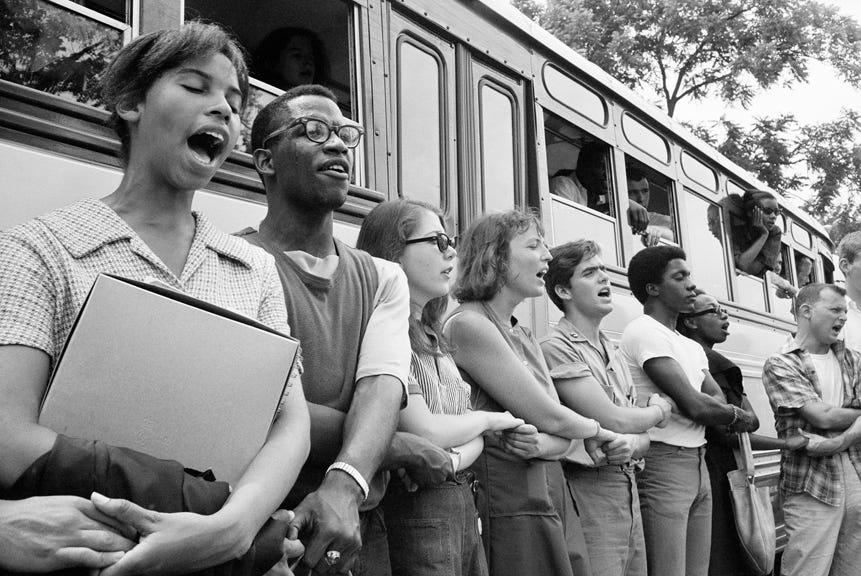
Yeah. It’s like that.
The corporate capitalist hegemony of our pseudo-democratic political system has distilled most electoral issues to a hair’s-breadth difference between the franchises, in terms of votes. Thus professional political consultants are accustomed to fighting for the smattering of Undecideds, and have spent the past several decades discerning which milquetoast messaging will pull the largest number of them in their direction.
Campaign consultants are most concerned with offending Undecided voters, believing a fraction of a percentage might determine any election. That is why the Gang of Five running the Massachusetts No on 8 Campaign asked MassCann to avoid public marijuana smoking at their events before Election Day.
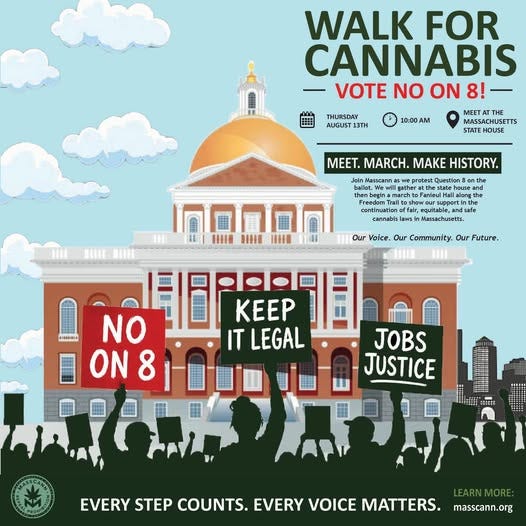
It was the same message I heard from Kampia and his in-state operatives in 2008, before the marijuana decriminalization initiative vote. Despite MPP’s concerns, their bargaining ($1,000 to MassCann if we did not hold the 2008 Freedom Rally), their empty threat to pull the initiative because MassCann board members published an “unapproved” op-ed in the Boston Herald, and copious civil disobedience at the Rally, the 2008 decriminalization initiative passed with 63% approval.
It was true then and is truer now: Massachusetts voters like marijuana reforms. Every time voters were given a chance to express their support, they have done so. It happened with the Big 3—statewide Decriminalization, Medicinal, and Legalization—on the very first tries. Prior to the statewide initiatives, MassCann had run Public Policy Questions in more than 70 state Representative and Senatorial districts, from 1998 through 2006, and reform questions prevailed every time.
California has a well-earned reputation as a marijuana Mecca, and the state pioneered legalization activism and medicinal marijuana, but Massachusetts residents have shown greater support in the voting booth. Unlike earlier ballot initiatives, legalization is now the default condition that the outsiders seek to change. [n.b. for the Mass dispos—Picking outsiders to fight for the locals against other outsiders is a bad look. You should have gone to MassCann, first, rather than have your hired guns approach them months into the process].
For Question 8 to pass this November, Massachusetts voters would have to favor prohibition for the very first time.
It is literally unprecedented for the People to seek more restrictions and criminalization of cannabis. Given we now have a thriving industry that employs thousands and drives over $700,000 a day in voluntary consumer tax payments to the Commonwealth, we can point to the massive benefits being drawn from legal weed.
The consultants were concerned that “the media” will be showing clips of people smoking pot in public at MassCann events, and this will drive Undecided voters (if there are any) to kill jobs and businesses and starve the state of more than $250million a year. Because they don’t like the smell.
I noted that local broadcast media audience has cratered since 2008. The Boston Freedom Rally’s role for getting an anti-prohibition message into the public through terrestrial media ended more than 15 years ago. MassCann has been creating its own Freedom Rally content for YouTube and other platforms. Besides, FOX’s producers will just use stock footage if they cannot find what they want to show.
To another consultant, this vote is about the stores.
No, chief, that’s what your opposition is framing it as. This vote is about tax revenues and personal freedom—that is the messaging the voters will respond to—and the margin of victory will be determined by voter turnout. For that, the No on 8 Campaign’s is focusing on voter pledge cards.
Meanwhile, I am talking with the MassCann folks about a North-South Berkshires dispensary rally and caravan. Meet the consumers and workers where they are and cause a line of traffic that will get the attention of folks in the area. A campaign with a decided advantage needs to do outreach and awareness at the start, and pound getting out the vote in the weeks before early ballots may be cast.
In terms of allocating resources, the dispensary operators’ campaign to preserve the status quo would be well-advised to let MassCann use the Freedom Rally (a Boston institution alongside First Night and the St. Patrick’s Day Parade) to inform the public there is a recriminalization question on ballots, and that they need to register and vote against it in November.
The people with the greatest motivation to vote in November are the dyed-in-the-wool prohibitionists and the cannabis consumers. There are far more cannabis consumers than prohibition supporters in the Commonwealth. To me, a winning strategy would be for the dispensaries and others in the industry to reward consumers for voting in their own interests. Here are a few suggestions I cooked up after my morning puff.
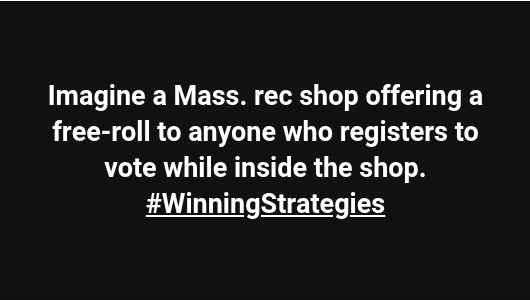
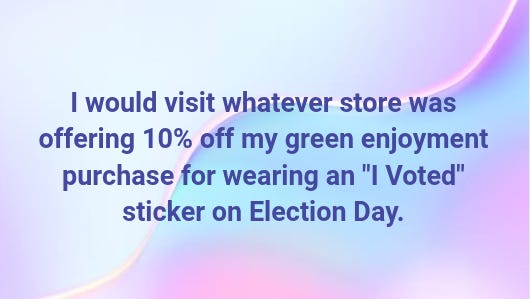
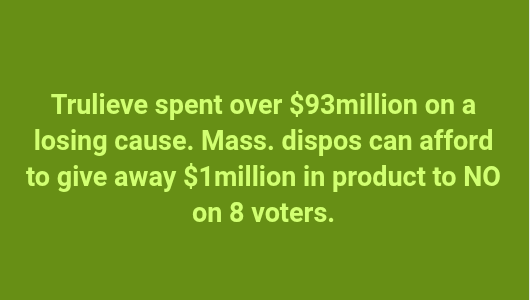
The folks who made the industry possible are now being asked to save it. There are not enough consultants or cannabis business licensees for them to do it by themselves. The industry does not know prohibition as Massachusetts marijuana-users have lived it; they are only beginning to learn the importance of the foundation we built. It’s time the industry pay us back. They have the resources; they need to mobilize them wisely. Every dollar they have given these consultants has been wasted.