
Suffrage is a Problem
Is democracy giving too many people a say? Kill it, or kill them. Or both.

Reading Heather Cox Richardson is not going to help us much.
Historians, even critical historians (i.e. Tad Stoermer) are not of much help when a society’s customs and institutions are being destroyed from within. Revolutionaries always share the goal of rending from the past. A revolutionary Bourgeoisie created the United States and promoted the development of the liberal-democratic nation-state—truncated as they may have been by Imperial hegemony—for two centuries.
We now have a new subset of that same social class who believe they are leading a second American revolution, this time, against democracy. We have a value-distribution crisis and their preferred method of resolving it is to eliminate the voices of those who suffer from it the most. From the ballot boxes, first, then from the nation.
The bourgeois long ago created a political cartel to control inputs into state power—the Republican party was formed to directly represent bourgeois interests and, after the Civil War, found itself engaged in a multi-generational “civilizing” of the Democrats. Republicans and the Northern industry that sponsored them showed the old Southern masters that “free” labor was less costly than slave-holding; while allowing them to preserve and perpetuate the racial caste system (i.e., Plessy v. Ferguson).
Federalism, as manifested in the last quarter of the 19th century and through the Progressive Era, was a largely-Republican invention. Capital development via interstate trade needed to be governed by an overarching authority. Supreme Court cases started to focus on railroads, telegraphic and other interstate communications, and federal taxation.
From its establishment, the political cartel was dominated by the Republican franchise. From the first post-Civil War election (Grant) through the early 1930’s (Hoover) there were sixteen Presidential elections, with eleven Republicans winning office, and just two Democrats (Cleveland & Wilson) having served a total of four terms, over 64 years.
While migration was a necessary part of nation-formation and capital development in the United States—especially in the Progressive Era—it has always been met with reactionary nativism by those who believe themselves to be of the state, and who see migrants as outsiders.
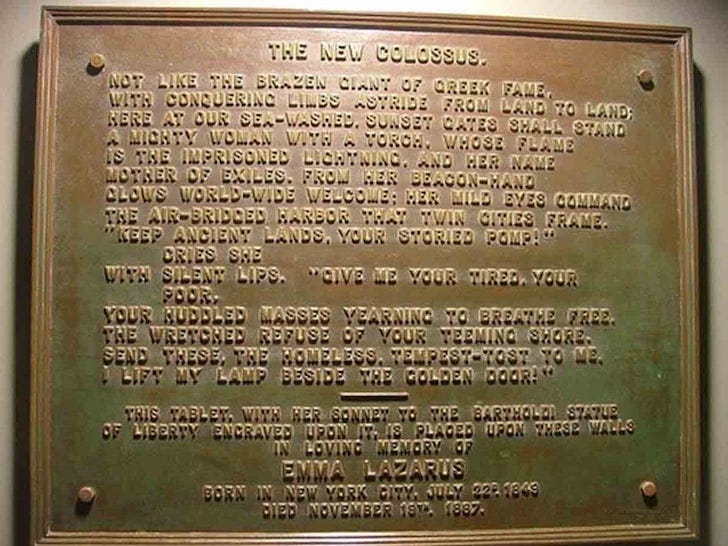
Contrary to the sentiments in Lazarus’ “The New Colossus,” the United States as a nation unto itself has hesitatingly accepted those immigrants it might have allowed, in a given era. The concept of nationalism necessarily produces outsiders and this general condition is crucial for creating the nation, in practice.
Then, in 1929, capitalism broke down. Hoover refused to leverage the state to relieve the suffering, and the ensuing economic crisis threatened bourgeois rule. Roosevelt (of the “Old Guard,” with his cousin having been president) first recast the state as the employer and purchaser of last resort, to preserve the nation. Roosevelt then leveraged the federal government to preserve the relations of production, with concessions made to the proletarians. Social Security, the right to organize on the shop floor, and a minimum wage were put in place to get workers to accept the otherwise-exploitive relations of production that had collapsed upon themselves.
This new, state-supported mode of production mitigated the crisis, but it also brought with it public/private partnerships—augmented through the war effort in the 1940’s. While the War Powers Act permitted the federal government to direct private industry production (and ration consumer goods), it was involuntary and temporary. Despite the Democratic Roosevelt being elected to four consecutive terms, the Republican franchise—despite failing to prevent economic depressions in the 1870’s and 1930’s—still represented bourgeois interests directly.
The Democrats, once a backward, regional party fixed on preserving the cultural inertia (“tradition”) of slavery, found supporters from outside the South. With Roosevelt’s New Deal, the Democratic franchise was re-branded as pro-capitalism and pro-worker. Having a rising Soviet Union in the post-WWII era made for a glaring distinction between Democrats and actual state socialists.
It was a pro-labor Democrat though—Eugene McCarthy—who led the first foray into federal authoritarianism, with the Red Scare. By definition, Capital was safe from persecution by virtue of being Capital, so while workers were considered suspect and potentially dangerous, their employers were above suspicion.
Why would a pro-labor Democrat pursue laborers? It’s because the Democrats are part of the political cartel, sponsored by the bourgeoisie. They will attack outsiders because that is how nationalism works—the Red Scare, the Drug War, and the War on Terror all appealed to Democrats, who gladly contributed to intruding on workers’ autonomy and civil rights.
Meanwhile, the Republican agenda since the Powell Memorandum in the early 1970’s has been to privatize state services, from education, to the military, to governance itself. The Federalist Society focused on identifying for Republican presidents those federal judges who had shown a commitment to “original intent” (the overtly racist and classist Constitution, with only 10 real amendments), a belief in a democratically-elected (by white, male property-owners, or at least in their interests) government made up of the bourgeoisie, and privatization over public accommodation.
It took just twenty years for the Democrats to abandon the philosophy of state support for markets or populations and steal Reagan’s economic plan, rebranding it Neoliberalism. Then it took just twenty years more for the proletariat to decide their falling quality of life needed to be addressed by finding a candidate from outside the cartel.
Trump and Sanders commanded the majority of public support in 2016. A deciding factor of the 2016 election—one of several that would have changed the outcome—was Sanders voters putting change ahead of policy and casting ballots for Trump, rather than Her Turn.
To those deep in the cartel, it is indeed a matter of turn-taking, like with baseball. You might produce three outs before I can produce a run, but then I get to pitch and if my team stops you, then it becomes our turn to hit again!
Democrats, like Cory Booker and Elizabeth Warren (testing their messaging right now for their planned primary runs in 2028), are deeply invested in maintaining the political cartel where they made their careers, “fighting” Republicans. But the Trump Administration plans to reduce electoral influence to near zero. Unlike the Democrats, they are playing for keeps, while the D’s hold out hope to preserve the stunted version of democracy that has kept them relevant.
Our relations of production no longer work well, for most people. When an American worker produces one dollar in new value, 80 cents of it goes to the top 10% of existing wealth-holders. Labor makes wealthy people wealthier than the laborers. Of the remaining 20 cents, more than 15 are claimed by the remainder of the top 50% of wealth-holders. That leaves less than 5 cents for more than 50% of the population to split amongst themselves.
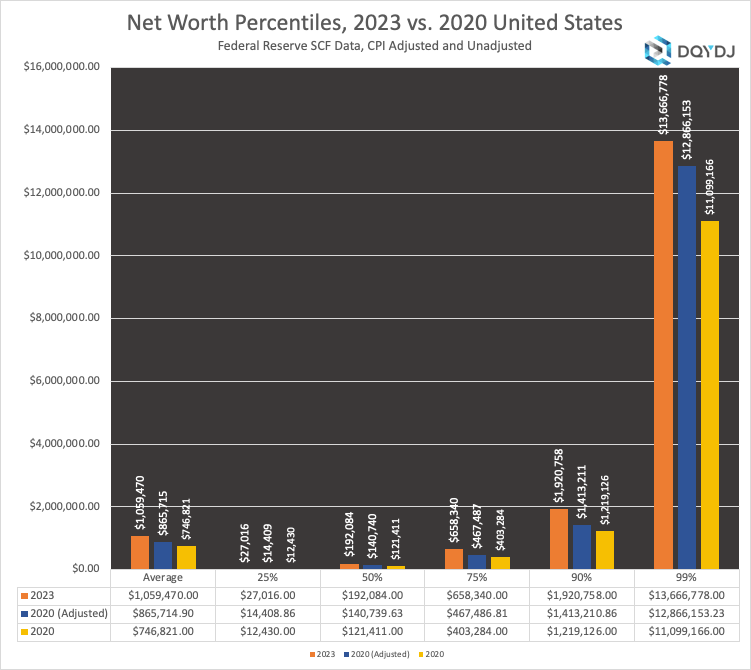
And this redistribution of wealth is accelerating. It will not stop, without intervention, and it is not a natural outcome, but a social one that is within our abilities to control.
We have business schools that at once teach that markets should be unplanned, and that they will fulfill human needs through an inherently (and thus fair) “invisible hand.” Students also attend classes where they are taught that businesses must plan inputs and outputs, expenditures and revenues, and must specialize.
In other words, practical capitalism requires planning, but unplanned outcomes are ideal. Chew over this contradiction, keeping in mind who gets total say in the planning, and who is locked out by this version of a “market.” Don’t just look at the material goods and services involved, look at the material social class relations, too.
The most vulnerable workers are the first targets. Their employers are immune from ICE—no business owner will be deported for violating immigration laws. And if you have $5million, Trump’s got a gold card and a fast-track to citizenship for you.
We are in direct, militarized Class War, taking place in front of our eyes. But bourgeois historians cannot see it or talk about it for what it is.