
Talking Baseball
Observations alter what is being observed

Torpedo Bat Shit Crazy
The talk of the first two weeks of Major League Baseball has been of a new bat design, called the “torpedo bat.” Though the bats resemble a tenpin more than a torpedo. Torpedoes do not feature a bulge near the business end.
As Major League Baseball has given itself to exacting quantitative measurements of offensive production, we’ve come to learn the most effective means of generating runs is to hit home runs. Thus the turning of a new bat silhouette, the first innovation in shape since the “bottle” bat.
The bottle bat featured a narrow handle that tapered to a barrel close to the maximum diameter allowed, from the end of the label to the end of the bat.
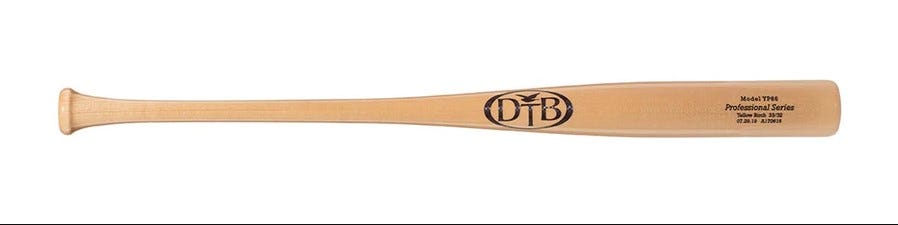
This design put more of the mass of the bat in the contact zone, where a bat striking the pitch will cause it to bounce back in fair territory. Along with greater mass, the thicker barrel produced a larger “sweet spot” where contact produces the strongest rebound.
The mass of the bat is one of the main factors that contribute to how a ball rebounds; more significant is the speed at which the bat is traveling toward the ball. A 30-ounce bat that is swung 10% faster will hit a ball farther than a bat that is 10% heavier (33 ounces) and swung at the standard speed. Part of this is due to greater spin rates imparted to the spheroid at greater impact velocities.
Lightening a bat is one of the most common means by which players adjust their equipment. There are legal ways (“cupping” the end, by carving out a shallow hemisphere is legal and can remove close to an ounce from a maple bat), and illegal ways (“corking,” by drilling a 1” wide hole in the end and filling it with cork).


In both cases, two things happen. First, the bat becomes lighter, and second, its center of gravity is moved closer to the hitter’s hands. Either of these will cause a faster swing.
Enlisting an engineer to look at the raw physics of baseball bats, the New York Yankees have started having bats turned that feature a shorter maximum barrel width located about two inches past the label and extending for just a few inches before tapering back to the same thickness as just past the label. This moves the bat’s center of gravity up toward the hitter’s hands, allowing a faster swing at the same weight.
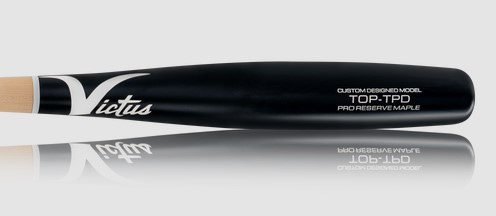
The “sweet spot” migrates up toward the hands, as well, though it seems the loss in rotational velocity between the old location and the one on the bottle bat does not cost any speed or distance. The torpedo bats are unusual, but they seem at least as productive as bottle bats. Less contact area at the base of the bat does not matter in a game where striking out has become acceptable, and fouling off unwanted pitches has become a lost skill.
Lies, Damned Lies, and Statistics
The New York Yankees set early-season home run records in the first week. While the Boston Red Sox’ Dwight Evans remains the only MLB player to hit a home run on the very first pitch of the season, the Yankees’ players hit home runs on three consecutive pitches in the first inning of their first game, and went on to hit nine home runs in the game.
Applying sabermetrics (the name derived from The Society for American Baseball Research—SABR) has placed emphasis on run production. All sports have an economy. The most obvious one involves labor relations between the athletes and those who administer the sport, whether it be a professional league like MLB, the NCAA, or even Little League Baseball (the CEO of LLB is paid $500,000 a year—LLB’s main revenue source is the TV contract with ESPN for the Little League World Series; the players pay to play).
While the connection to the larger economy plays a significant role, we can also see in-season and in-game economic decisions in the form of game strategies.
All competitors seek wins (this is America—we invented overtime to reduce the occurence of ties) and in baseball, the understanding is that runs produce wins. First, by design, baseball games very rarely end in a tie score, so it makes sense to focus on outscoring one’s opponent, since merely keeping up will not produce a recorded outcome of the game. Unlike soccer or hockey, a team cannot be satisfied to carry a tie to the end of the game—you must score to win.
However, without producing outs a baseball game never progresses to the end.
Strikes are a ticking measure and an at-bat changes with each, but until the third one is recorded, that measure nets nothing in particular. Outs move innings and change offensive strategy directly. But until the third out is recorded, no half-inning ever ends.
Defense starts with pitching and every pitcher is measured through the efficiency with which they are able to produce outs. Strikeouts are the negation of offense. One would think, then, that for the sake of producing runs a team would seek to minimize strikeouts. But this is not the case. It turns out that while having runners on base increases the likelihood of scoring a run, it also increases the likelihood of multiple outs on one play. Recording two outs with one pitch is more efficient than striking out two batters, when it comes to producing outs and ending games.
A team wants runners on base when a home run is hit, for that means more efficient run production with that one swing of the bat. However, if a home run will not be hit, those runners can become liabilities. Mathematical models built on the assumption that scoring more runs will lead to more wins—in a game that cannot end, absent outs—have changed strategy so much that the administrators have altered the rules in hopes of again making “manufacturing runs” a viable offensive approach.
They’ve made the basepaths half a foot shorter and the bases 25% larger, while constraining pitchers’ ability to keep runners close to first base. All of these measures are meant to increase steals, which had been mathematically shown under the old rules to be a horrible risk to take, and which teams therefore stopped attempting. When a runner is on second base with first base unoccupied, the chances of a double play are greatly reduced, compared to when having a runner on first base. There has been a conscious attempt to bring the single/steal of second back into the game.
I am hosting an in-person Special Session Saturday, April 19 at the Summit Lounge 116 Water St. Worcester, MA at 6 p.m. I will cover subscribers’ admission fees if they RSVP by the 18th.
#BakruptElon