
Thanks, Tomor
How I became the Most Dangerous Stoner in America

My undergraduate school ran on a 4-1-4 course schedule, with students taking four courses in the fall and spring semesters, and a “January,” a 4-week intensive course on campus, or an independent study of some sort. I spent January 1987 working in the sports department of Boston’s ABC network affiliate. It was the very early days of ESPN, which I watched daily, and I was looking into sports-related careers.
My gig was to be at the TV station before 6:30 p.m., just as they were wrapping up the 6 o’clock broadcast. The sports department got together to review the segment they just did, go over any fuck-ups, and plot out the 11 o’clock broadcast—built around what local teams were playing that evening, mostly. We would also check out the two other channels’ pieces, and talk shit about them as we grabbed dinner to eat while watching the games.
I did my first pirate radio broadcast on the university radio station immediately after, during Intersession Weekend. The station went off the air late Friday afternoon when the last DJ on campus closed his show, and came back to life just a few hours later. A friend and I held it down for close to 60 hours, until the station manager returned to campus and kicked us off.
That was the extent of my broadcast media experience, for the next 23 years. By the time I returned, I had swapped sports for marijuana as the topical focus of my professional career. I was living in Boston, teaching, and had recently been elected to the board of directors for the National Organization for the Reform of Marijuana Laws (NORML), after having served five years as president of the Massachusetts Cannabis Reform Coalition (MassCann).
When I assumed the MassCann presidency in March 2005, the organization was tens of thousands of dollars in debt, for having been hit by a hurricane on the day of its signature, outdoor event the previous September.
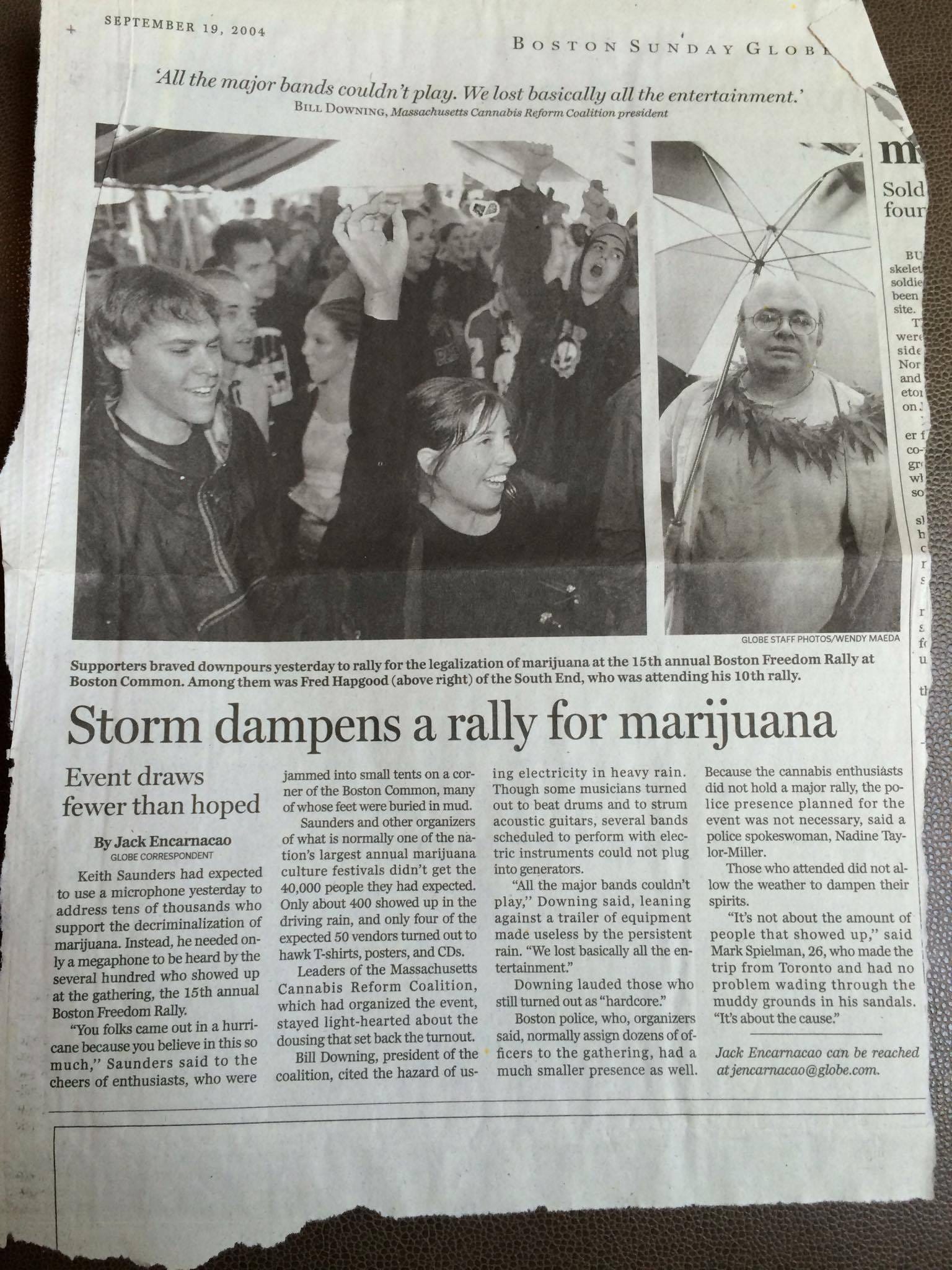
As a nonprofit, MassCann’s board could have decided to close the 501c(4)—donations proved to be insufficient to meet expenses. No harm, no foul; just some bad luck with weather.
However, MassCann was founded and organized at the height of the Reagan/Bush Drug War, in 1989. Every member expected there to be struggle and strife, though they probably envisioned the cops and politicians as being the adversaries, rather than the weather. When the membership was polled, they resoundingly agreed to put in the work needed to bring the coalition back to solvency. One way we did this was through holding pot parties.
The Illicit Drug Anti-Proliferation Act of 2003 made federal felons of event hosts, where “illicit drugs” were being consumed by attendees. The legislation was targeted toward MDMA raves, but just as easily applied to our chosen means of fundraising to end marijuana prohibition. Massachusetts would not decriminalize marijuana until November, 2008.
We were hit by another hurricane, in 2006, which put the coalition deeper into debt than before, but furthered our resolve, and we stepped up the frequency of our events. The immediate problem every marijuana smoker runs into—whether in a legal setting or under prohibition—is the opportunity to smoke it.
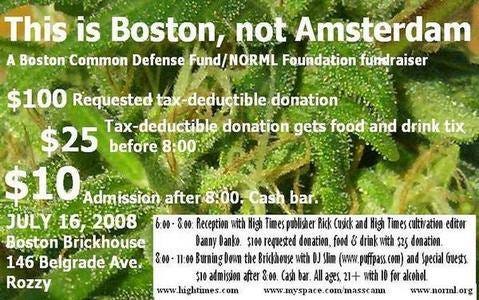
Our fundraising strategy provided these opportunities while also serving the purpose of gathering resources and contacts. We needed locations and attendees to make it work, and the post-decriminalization boom in MassCann memberships (from a few dozen to over 250) was a direct result of the work we did.
I was seeking a location for a 2010 NORML fundraiser when I got word of a place just outside Chinatown in Boston. A loft with two doors and a full flight of stairs between it and the street below. With decriminalization, we had become more open about our activities, knowing the police could neither arrest us for smoking it, nor use marijuana as the reason they breached multiple thresholds to find some other reason to arrest us.
I met John, who was running an internet radio station from the spot—UNregular Radio.
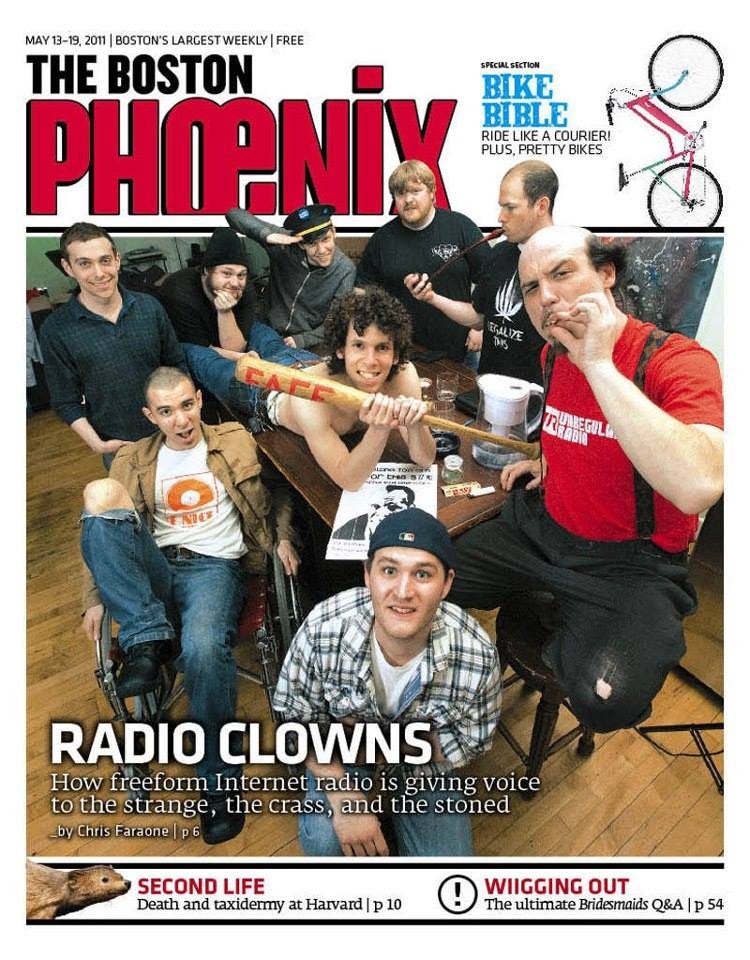
He wanted to run a marijuana-themed show and wondered if I would be interested in hosting it. I agreed, knowing it would become a way for me to promote reform and “the culture,” to give local activists and those involved in the thriving unregulated cannabis market a space to talk up their shit.
And so The Boston Pot Report was birthed: Marijuana News, Politics, and Culture, with Taste Tests on the :20’s, every Friday afternoon. Four hours (while on UNregular) of improvisational radio, interviews, live music, and talking Boston Pot.
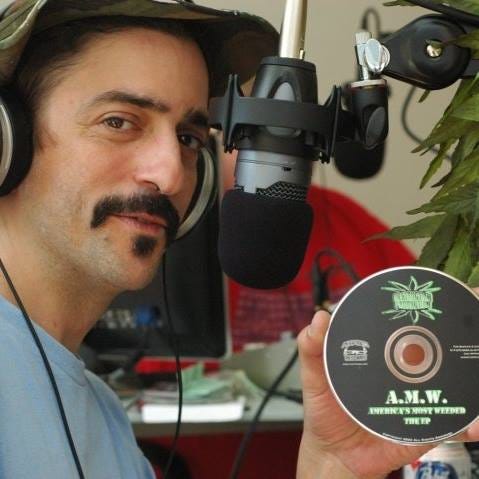
The shortcoming of applying terrestrial radio’s business model to internet “radio”—audio streaming—comes not from its inherent lack of visual appeal, but from the placelessness of the web. The BPR had regular listeners from across America and Canada—brought to the show via interviews we had done with local notables in San Francisco, Seattle, Denver, Montreal, et cetera.
Lacking a national market for the focal commodity, garnering sponsorships was a constant challenge. Prior to the CBD explosion and later the Hemp Bill, the only nationally-sold products with a tie to marijuana were either competing media (High Times did their own internet broadcasts), a narrow genre of popular music, or rolling paper companies.
I suppose now, with state-legal industry and no more need for cat-and-mouse, the show could work again. I occasionally am asked by folks if I would ever bring it back (i.e., my producer—thus this morning’s piece). I can see it happening as part of a larger project of promoting cannabis consumers’ interests under a legal rubric. Given the massive push for privatization, consumers are going to begin holding as much or more leverage than citizens.
My original thought upon waking this morning was to write about vandalism and how it has become a fundamental form of resistance, in the face of oligarchs whose power is drawn from the objects they sell. But that’s for another day. Still…
#BankruptElon