
The Last Word
Discourse and dead labor

When you die, your social media existence sticks around. The Marxists console themselves that while there is no Heaven, there is an afterlife in the forms of discourse and dead labor. Dead labor persists in material form. To illustrate the significance of dead labor to students I would give the classroom building I was teaching in at the time as the example. Work that may have been done a century prior was still providing value—those who built the structure “lived” through what it continued to offer.
The other manner in which we socially persist is through discourse. Both as the former participant in discourses as well as the future subject of them.
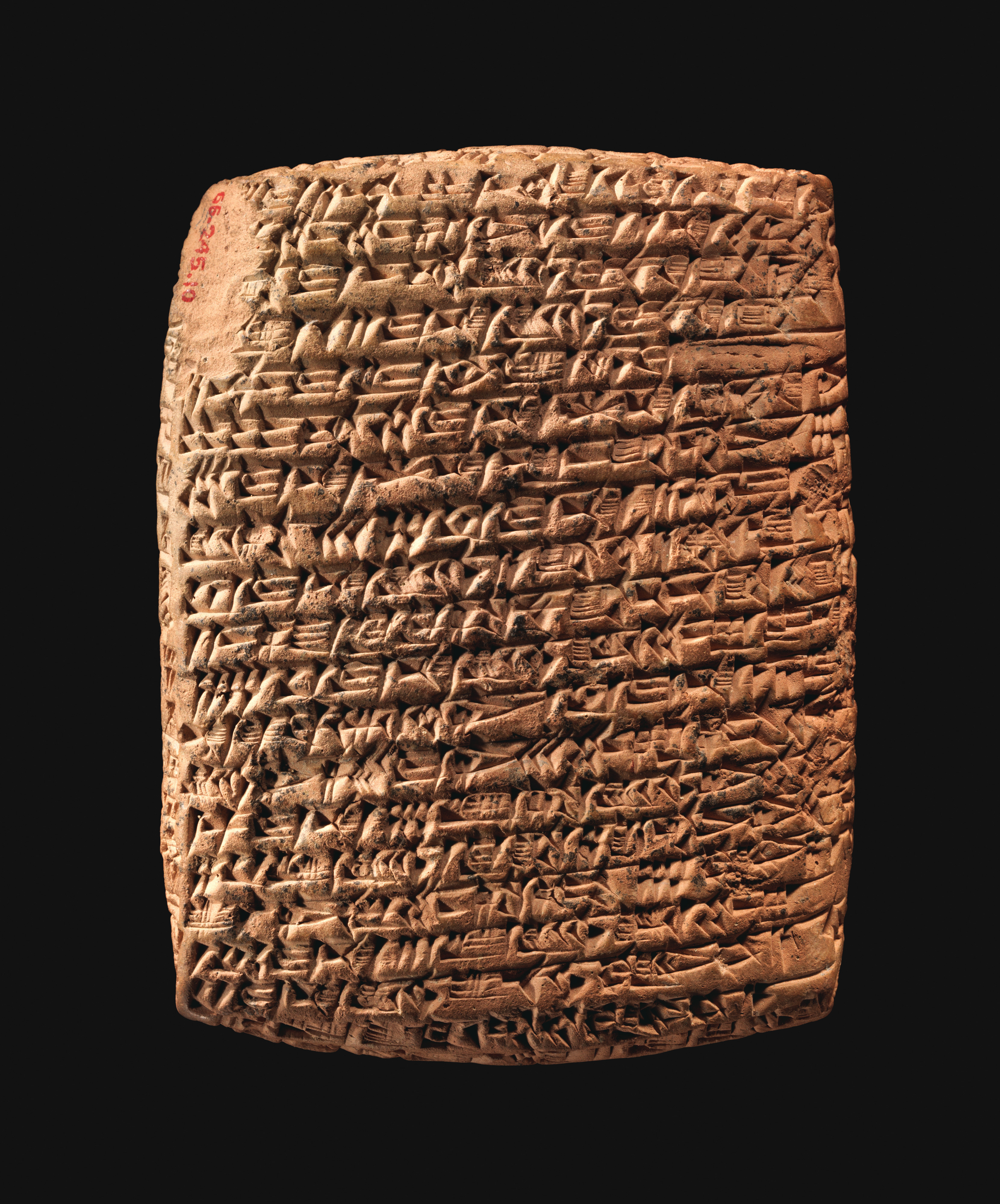
One thing that is going to set the upcoming Great Depression apart from the 20th century’s will be the quality of items we have surrounded ourselves with. While the ancient Assyrians carved stone, and the American Founders put ink on parchment, we record growing amounts of our discourses in strings of 0’s and 1’s that we cannot read without machines. If a large part of social life is in discourses and we are incapable of accessing them without machines, we indeed are giving those who control the machines control of us.
The material goods our ancestors could get years of use from through their durability and repair are no longer available to most consumers. Our appliances, electronics, cars, and clothing simply will not last as long as my grandmother’s did in the 1930’s, because they are not designed to. You are unlikely to own a sewing machine—Americans no longer make as much of their own clothing after WWII, and the cost of replacement has become (in most past circumstances) less than the cost of repair.
I was an early-adopter to Facebook. The earliest public incarnation required a “.edu” email suffix, and I used my Northeastern University address to open an account. MySpace was a useful organizing and event promotion tool, but Facebook would come to offer a broader subscriber base and more effective tools for creating and promoting events. In the matter of a year or so, I stopped using MySpace and went exclusively at the time to Facebook.
In recent years, several folks whom I would see regularly in my feed—some of them regularly IRL, too—have passed away. It has me thinking about what we leave behind on our social media accounts, and what it is to make a final social media post.
Some of my friends knew they were dying, but to others it happened suddenly and unexpectedly. One was killed by a drunken driver going the wrong way on a highway ramp, another suffering a widow-maker heart attack while waiting in the hospital to have a broken bone set, the latest seldom used Facebook. But all of them, and all of those who have social media accounts, will be making a final post. In ways, they are your final words, to be preserved for as long as this corporation may find them valuable.
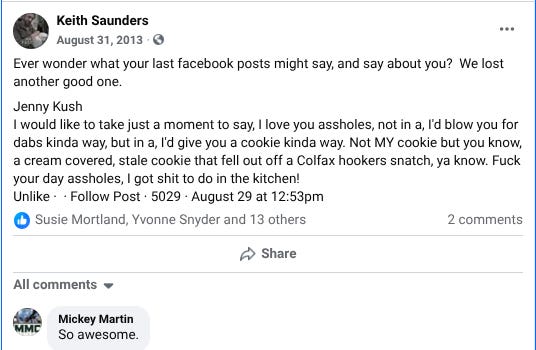
Keith Saunders—August 31, 2013
Ever wonder what your last Facebook posts might say about you? We lost another good one.
Jenny Kush
I would like to take just a moment to say, I love you assholes, not in a, I’d blow you for dabs kinda way, but in a, I’d give you a cookie kinda way. Not MY cookie but you know, a cream covered, stale cookie that fell out of a Colfax hookers snatch, ya know. Fuck your day assholes, I got shit to do in the kitchen.
Cheap material goods and encoded discourse will make for a much shorter real existence for us all. Capital won’t mind, as it does not labor and cannot therefore exist as dead labor, and it seeks to shape and control discourse such that it becomes eternal. It will become the literal end of history, should we let it.
Another brilliant missive of relevant madness.