
The New Style
Acts of violence migrate between forms, which tells us they are NOT random.

The “random act of violence” is generally accepted as true. Violent action without personal motivation seems to be a constant in our media reporting. Hegemonic purposes are served by randomizing violence and making it seem more a chance occurrence than institutional.
We focus more on homicide than suicide, though we still see more suicides than homicides in the United States. The person most likely to intentionally kill you is you. Similarly, domestic violence is normalized, especially by adults against children when under the cover of discipline.
Random violence, especially extreme violence, is not the most common form. However there are two particular forms of “random” extreme violence in the United States that have drawn considerable attention: Homicide by serial killer and homicide by mass shooting. Both forms produce multiple victims who seldom have any personal connection to the perpetrator(s). Despite this fact, I would argue that serial killing and mass shootings are not random manifestations of extreme deviance against strangers, but an evolution of social class conflict where those of greater privilege turn against fellow members of the working class under conditions the ruling class allows to persist, because neither form presents a threat to them.
“Of 2,604 identified serial killers in the United States during the twentieth century, an astonishing 89.5 percent (2,331) made their appearance between 1950 to 1999, with 88 percent of those appearing in just the three decades from 1970 to 1999—the ‘epidemic’ peak years.” — Peter Vronsky, American Serial Killers: The Deadliest Years, 1950 - 2000.
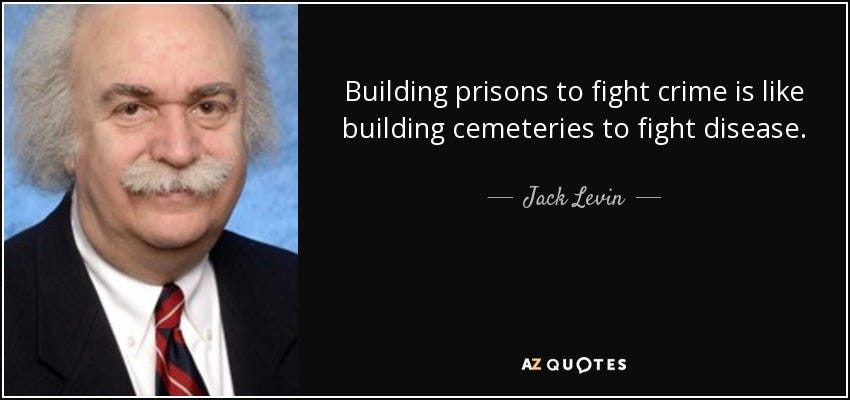
Jack Levin was the second reader on my doctoral dissertation, his work focused on deviance, serial killers in particular. Thanks to both the general interest in his area of specialization (it was at the height of serial killing) and his passing resemblance to Albert Einstein (though he thought himself more resembling David Crosby) made him a natural for daytime talk show television.

In addition to lessons in sociology, Jack imparted lessons on doing a public sociology through mass media that I later put to use through The Boston Pot Report.
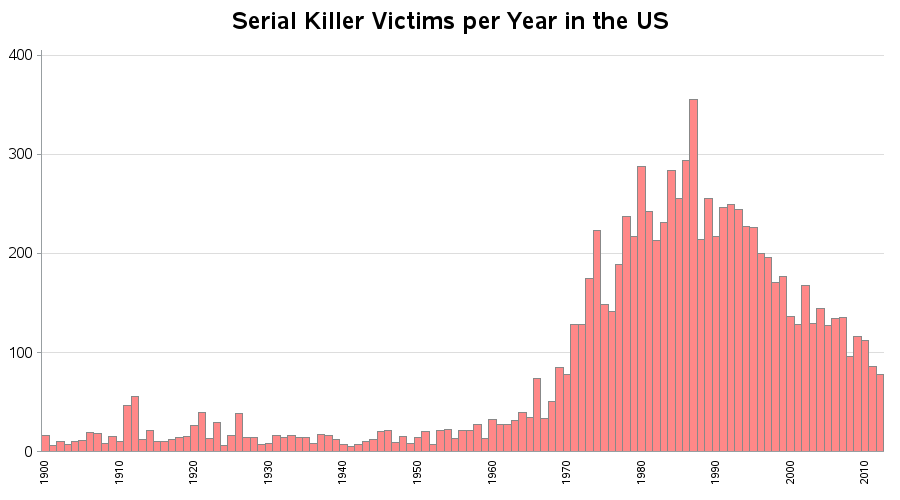
We have seen a decline in identified serial killing victims in the U.S. over the past 25 years. Most serial killers who have been caught are males, white, and committed their crimes while in their 20’s and 30’s. Those who were in their 20’s and 30’s at the time of peak serial killing were born during the Baby Boom. If there was to be a post-WWII birth cohort effect upon serial killings similar to that found among marijuana use, we would expect to have seen a resurgence in serial killing starting in the 2010’s, as the Millennials aged into their 20’s. We have not. However, that may be due to an extraneous variable: Detection.
Serial killers, by definition, kill multiple victims in a similar and progressive fashion. Later victims exhibit the same methodologies as earlier ones, with additional actions taken such as removing body parts, in what becomes ritual. Serial killers require multiple opportunities, with each victim producing a more defined trail back to the killer. Given advanced DNA testing and data-sharing capabilities, we should be able to divine an active serial killer in fewer murders than ever before, and also be more likely to find them before they are able to accumulate tens or dozens of victims.
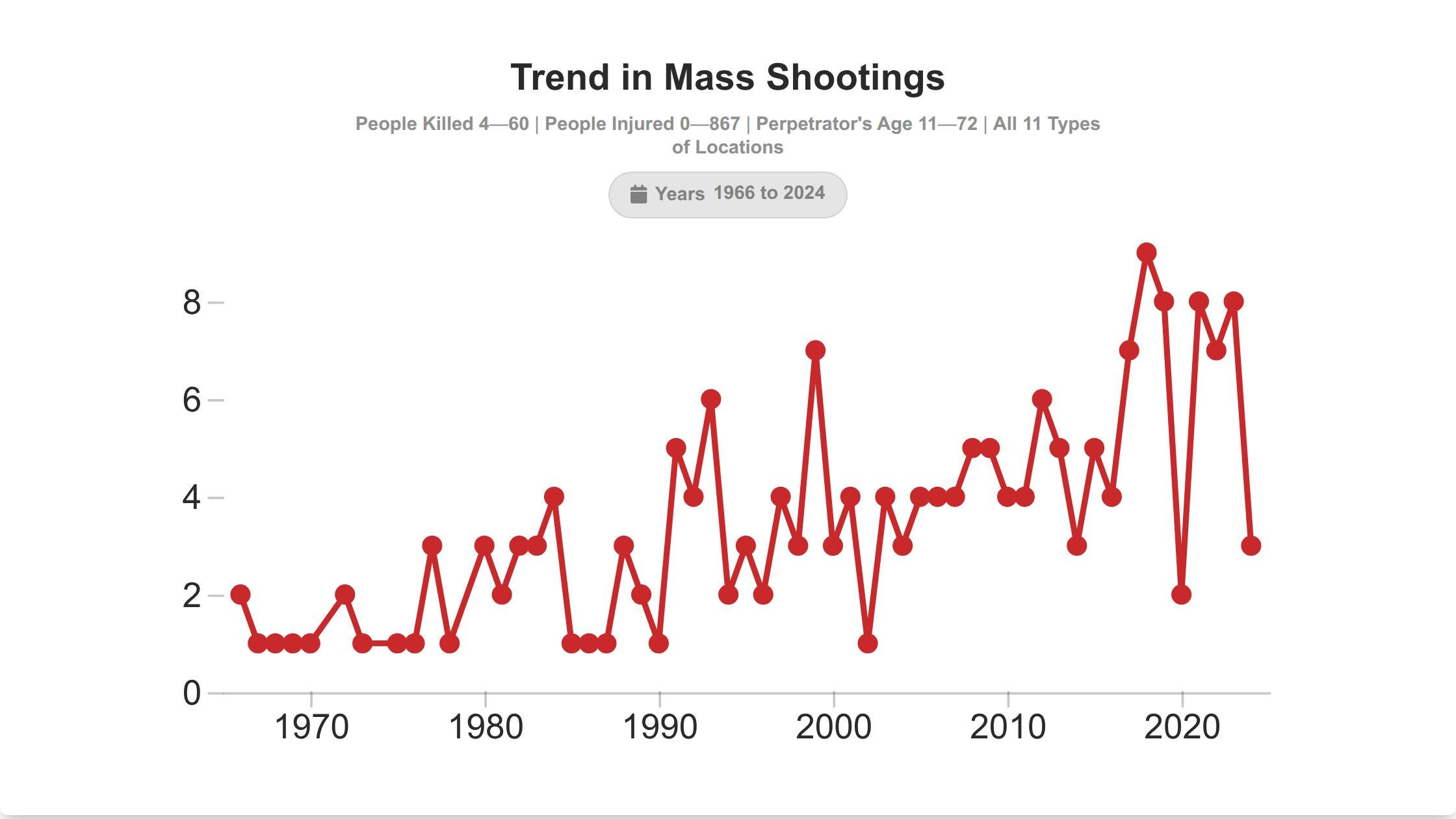
The rise of DNA testing and monitoring has not itself reduced the homicide rate, though. Instead, we have seen a rise in mass shootings. While serial killers typically touched their victims while killing them in isolation (strangulation and stabbing), today’s mass murderers operate their killing machines at a distance, in places of assembly (schools, churches, stores). It’s about a 50-50 chance their actions are part of a planned murder-suicide.

The concept of the “superpredator” teen was introduced in the middle of the 1990’s and rose to a moral panic of a sort, seized upon early by First Lady Hillary Clinton who in 1996 said, They are not just gangs of kids anymore. They are often the kinds of kids that are called ‘superpredators’—no conscience, no empathy. “Gangs” in the middle of the 1990’s was code for racial minority teen males, and the media leaned heavily into the progression from organized, violent drug gangs to uncontrollable individuals with a personal mission to seek and destroy.
It could well be that the rise in mass shooters is due to a disaffected, alienated fugue state provoked by social class conflict. However, as with all else that is to the extreme in America, we find those who hold relatively more social power and undoubtedly more social privilege to be overrepresented among extreme deviants. Most of these “superpredators” are white and male, just like their serial killer predecessors. They tend to be younger, however.
“College is for learning, not getting shot.” Unnamed survivor, Umpqua Community College (OR) mass shooting.
More shared benefits, fewer homicides.
Mass murder is a symptom of oligarchic takeover. The ruling class have no fear of guns, because guns cannot stop their legal and financial controls over the electoral system. Easy access to guns keeps the populace on edge, though, and wary of extending favors to strangers. Despite the fact that most Americans have more in common with their neighborhood deviant than they do with members of the ruling class.
The takeover of our democracy is legal because the United States of America is the world’s greatest resource, and it is worth it to a ruling, global elite to invest a couple billion dollars, every four years, to control the Most Badass Military (Don’t believe us? Take a look at U.S. military bases in your country. How many of your military bases are in ours? Yep. Z-E-R-O.) and the largest economic base in global capitalism. A couple billion dollars, to control trillions in spending, and a financial and military machine. Who would not see such a system as ripe for pilfering?
All you have left is the ballot, or the bullet. Pray they don’t fix the outcome against us, this time around.
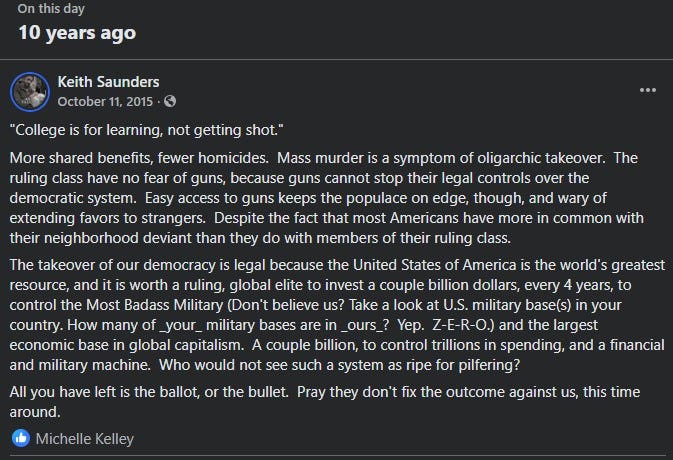
October 11, 2015.