
Privatized Justice
What to do with a criminal, when there is no Criminal Justice

The “tax” that spurred the Boston Tea Party was an import tariff on tea.
Today, Americans drink far more coffee than tea. That’s the kind of long-term cultural impact trade wars can have. Following the American Revolution, there was no trade between the newly-formed United States and any part of the British Empire, and the British had long controlled the global tea trade.
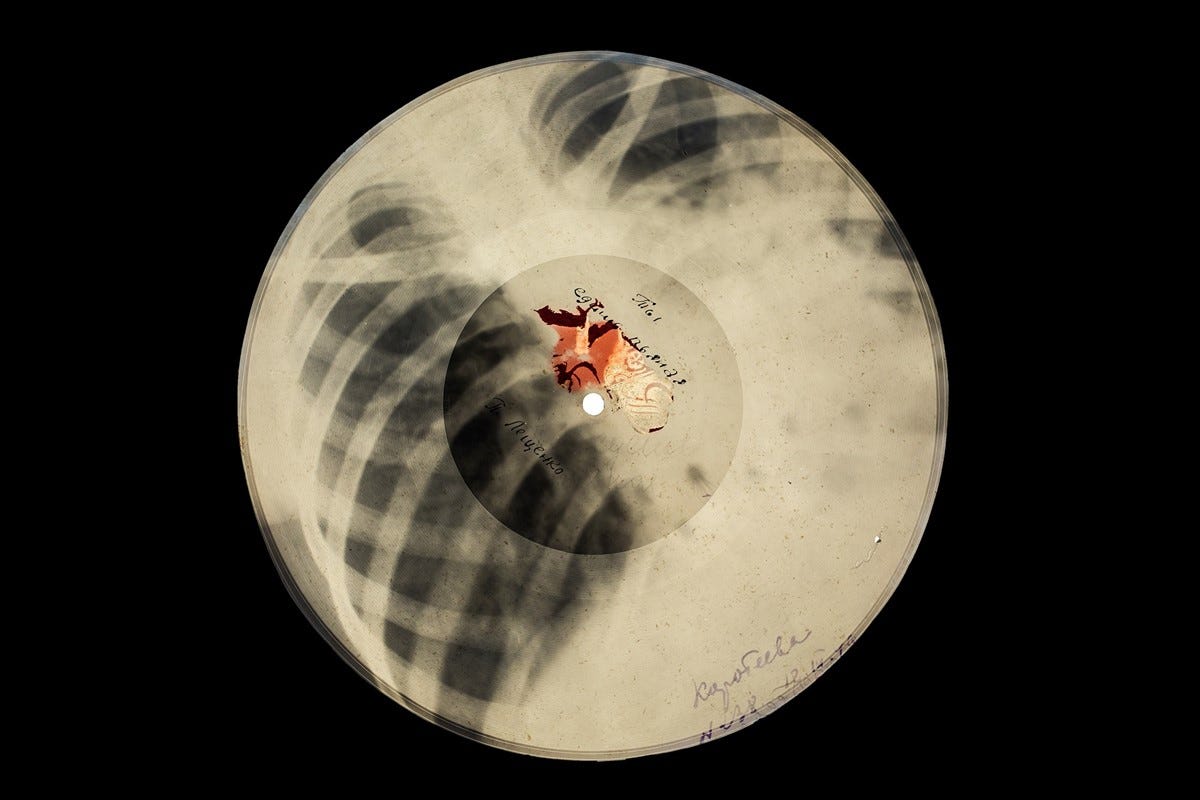
Trade wars produce cultural adaptations: There remain phonographic rock and roll albums, pressed into Soviet X-ray printouts.
There will be greater incentives to smuggle, despite the bogus assertion that the Trump tariffs are some form of retaliation for allowing a couple suitcases-worth of Fentanyl to cross the Northern Border.
Fascism relies upon constant war. George Orwell was not a prophet—he was merely describing what had been witnessed. American Fascism is not new, and we can see from our own lived history what it does. The War on Drugs, the War on Terror, and now the War on DEI (to be followed with wars on Inefficiency, the Deep State, Waste, et cetera).
The first step is always to delineate Us and Them, and for that we use visual cues. This is why the various drug criminalizations (e.g. marijuana, crack) relied first on existing racial stratification, and why turban-wearing Sikhs were persecuted in the months following 9/11. Ignorance is foundational—it is important the targets be reduced to singular stereotypes and conjured into threats. Drugs and terrorism will continue to be used as cultural shorthand to justify the elimination of constitutional protections—restrictions on assembly, expansions of police detention and investigatory powers, and mandatory minimum prison sentences (the legislature doing jurisprudence for the judiciary)—that will never be restored.
The state’s disciplinary role will be expanded and its support role all but eliminated. We will soon be getting to the point where snow removal from streets and putting out house fires will be privatized. Of course it will cause chaos and disarray—the folks who bought the government are seeking to cause that outcome.
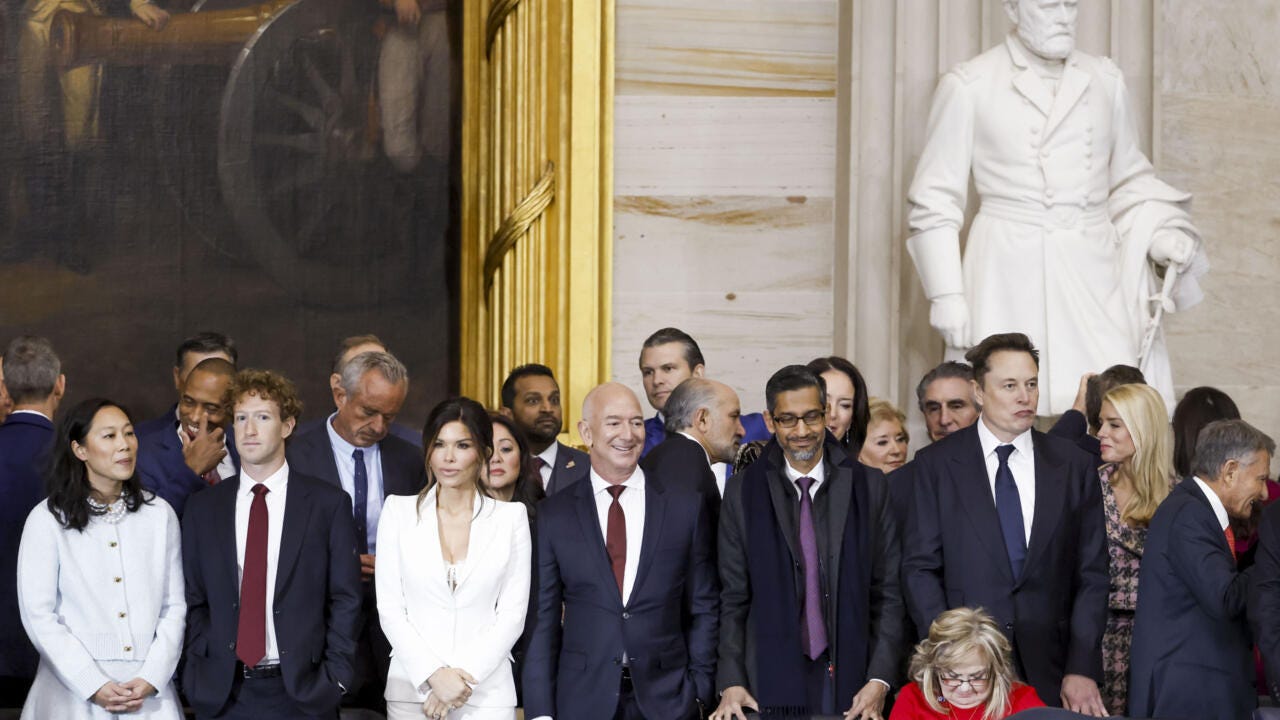
The state will no longer serve the hegemonic purpose of insulating the ruling class through institutions such as democracy. The boldness of information barons participating in a presidential inauguration closed to the public is not merely symbolic. They were seated in front of prospective Cabinet members.
While this marks a change in how the social order is framed, this does not mark a change in which social class holds power. It is unusual, in that it seemed the former hegemony was sufficient and did not require a gutting. That I attribute to the short-term logic of capital accumulation (to get rid of all taxation and regulation would maximize profitability) and a growing social crisis in the U.S.
As the United States went, so did the global economy. As an institution it is so huge and so powerful that any attempt by other nation-states to gain dominion over it was sure to fail. It presents both the opportunity for massive personal wealth accumulation, but also the threat of democratic rule.
As John Berger pointed out in Ways of Seeing, America had a revolution and then stopped halfway. We semi-democratized the political process (it took over a century to extend the popular vote to all racial minority men, and all women) but failed to do the same to the economy. Predictably, the economic sphere has come to dominate the political one, and thus voting is an insufficient means of affecting meaningful social change.
Despite apparent control over information channels, the ruling class has no capacity to control social sentiment, regardless of laws. This is how we went from a series of criminal drug prohibitions to legalizations—the sentiments held by the population contravening the policy became too great for the policy to be upheld. When deviance becomes normality, there remains little energy to prosecute the deviance, formally or informally.
When a rule or law is broken and there is no response, the rule itself is undermined. By failing to bring a criminal to justice, the legitimacy of the justice system itself falls away.
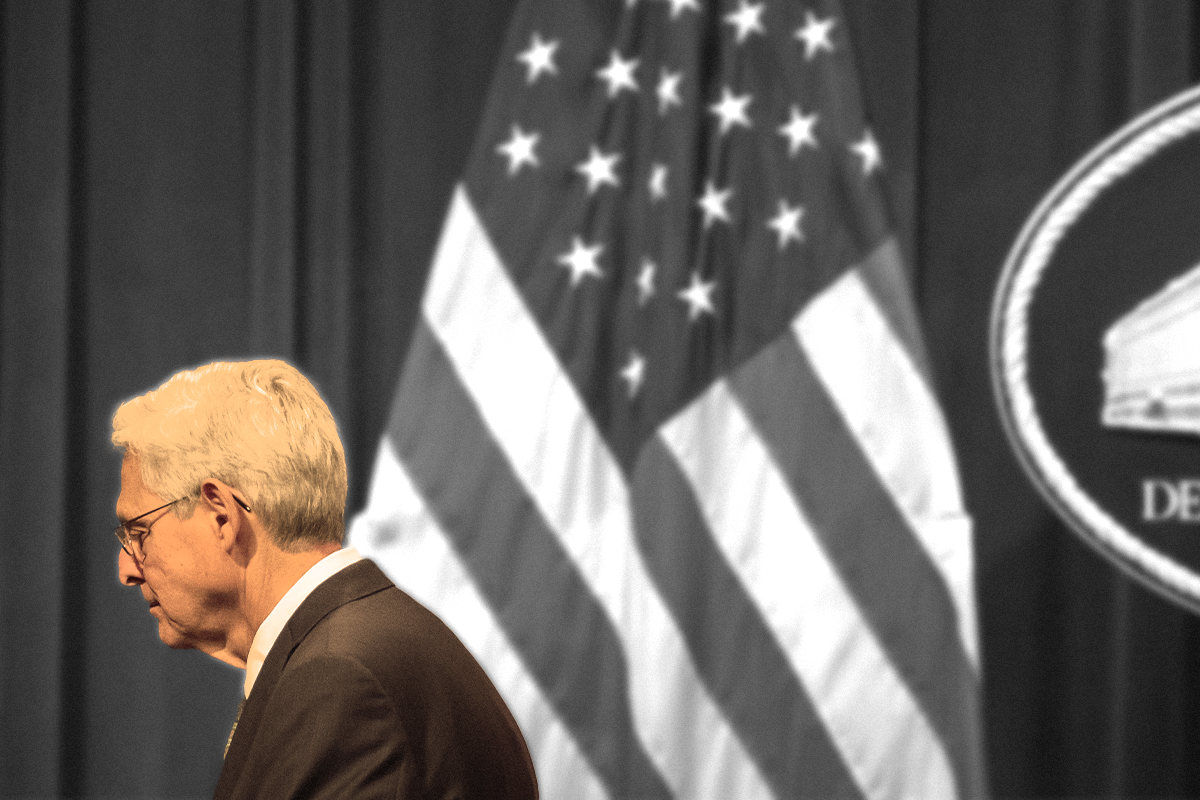
The Democrats were willing to sacrifice the Rule of Law itself through their reluctance to take up the criminal prosecutions of Trump and his co-conspirators.
I wrote in November about the disciplinary avenues remaining for the American people, now that the Republicans hold power in Congress and will do nothing to resist the coup-in-process. The Democrats will claim their hands are tied, because that is what the Good Cop does when the Bad Cop gets their turn at softening up the subject—they let it happen.
Elon Musk neither won an elected office, nor was he appointed to a position in the federal government like Secretary of a Department and put through Congressional approval. Therefore, he holds none of the personal liability protections afforded to elected or duly-appointed federal officials. When he grabbed all our Social Security data, he violated our privacy, and We the People have a tort.
If an administrator’s decision disrupts the delivery of Social Security payments, those who wake up to find no money for rent and food in their bank accounts cannot sue the administrator if their decision was within the scope of their responsibilities.
But people can sue volunteers.
Musk certainly does not want the Senate to be able to scrutinize him as a job applicant; he’ll avoid any confirmation hearings. Someone would ask about the interview he did where he said here was here on a student visa and dropped out of school to start a business. Visa violations are reasons for revocation of citizenship, and will undoubtedly be part of later stages in the grand deportation plan. But not for those with enough money to live wherever on Earth they might choose to.
My hope is that we might as a nation find unity as a class in suing him for the inevitable torts he will lay upon the citizenry. $330 billion dollars splits among 330 million people at $1,000 apiece. With the right combination of dipshittery and authoritarianism I would imagine damages of $1,000 a person would not be unachievable, especially with inflation about to take off the way it will if the Tough Guy with the Tariffs gets his way.1
We need attorneys willing to take the case; it appears cut-and-dried. A person stole our data and should be held accountable. The Department of Justice will not do anything, so it is up to us. If there is no justice offered by the state, it is up to the People to claim it for themselves.